About this artwork
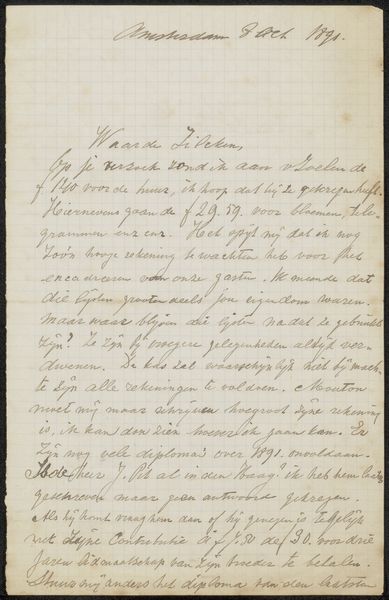
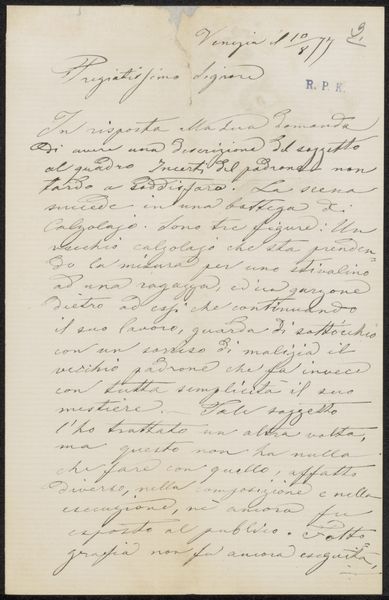
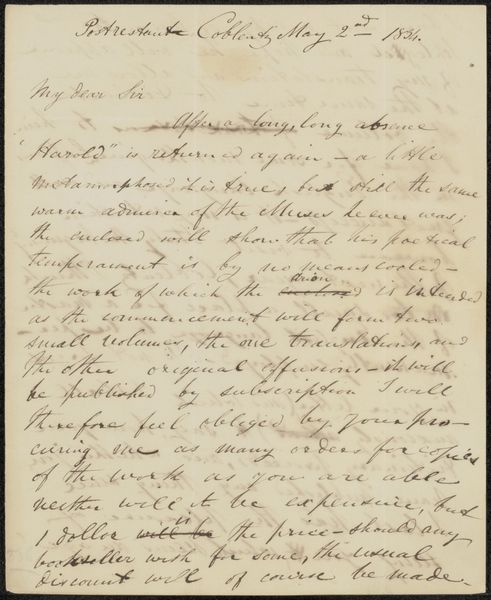
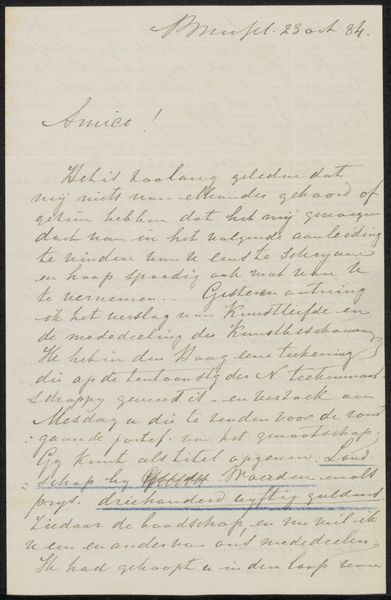
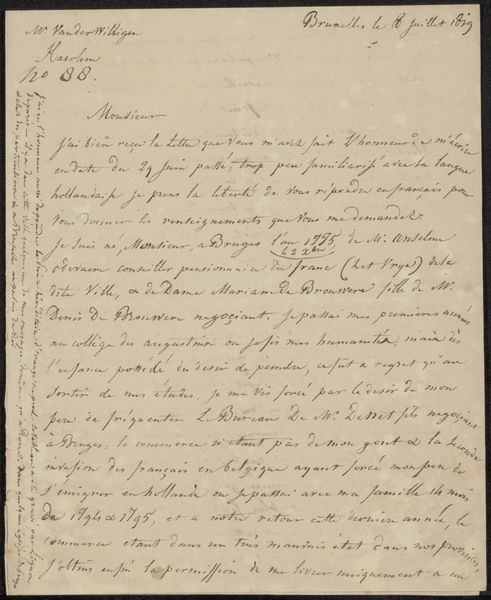
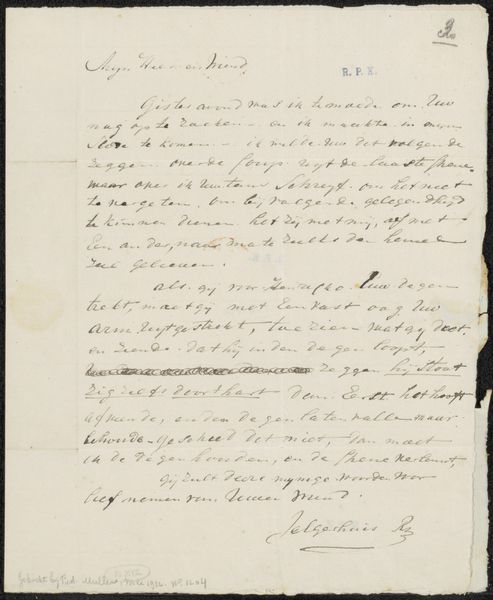
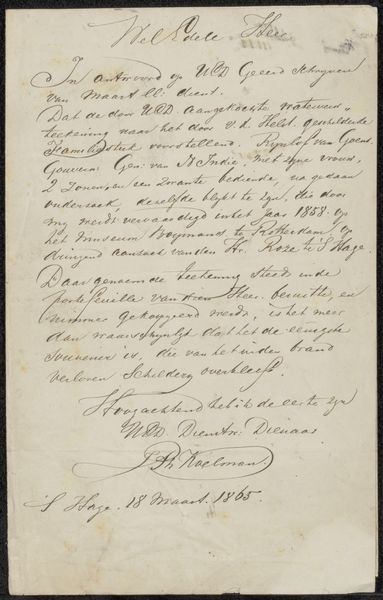
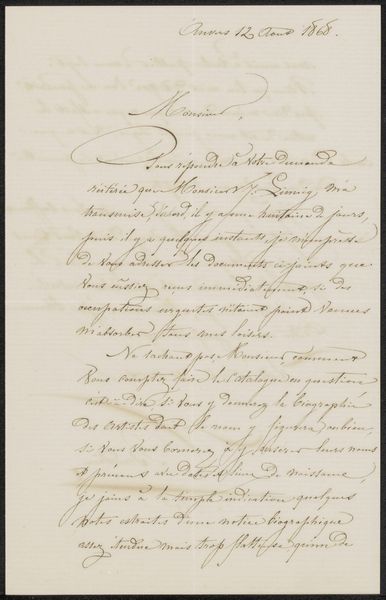
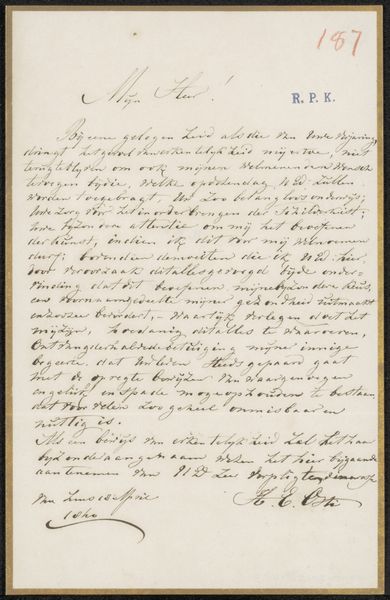
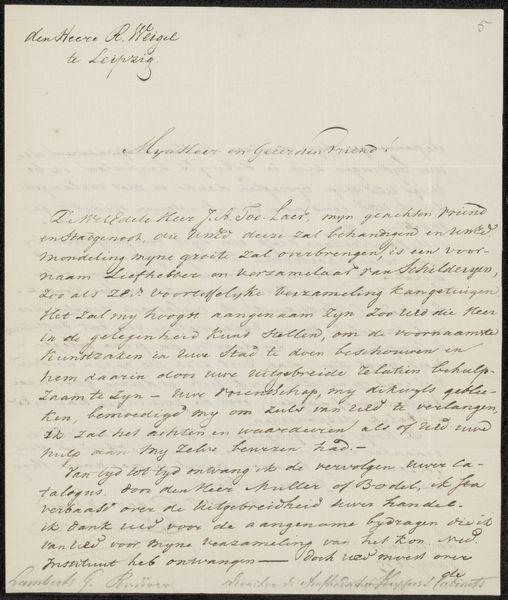
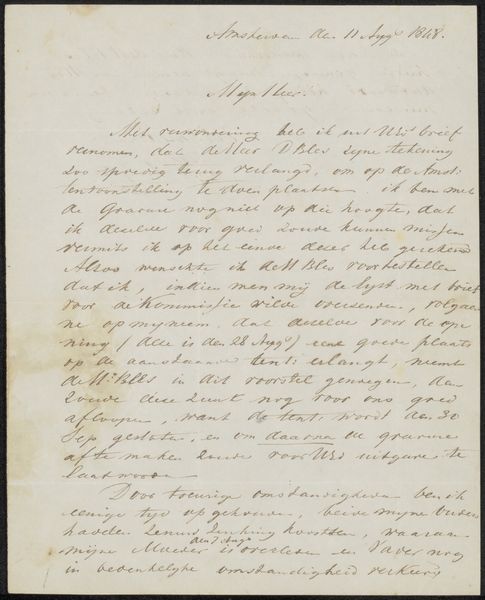
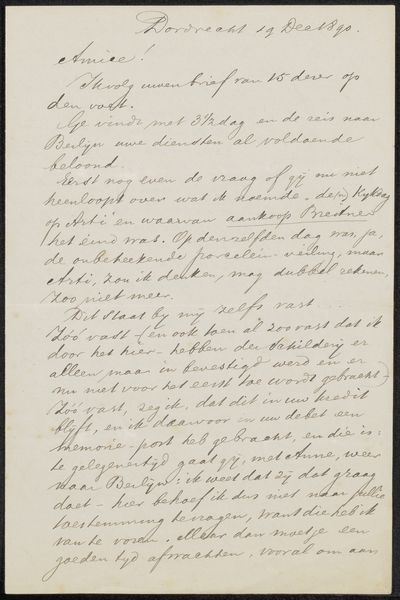
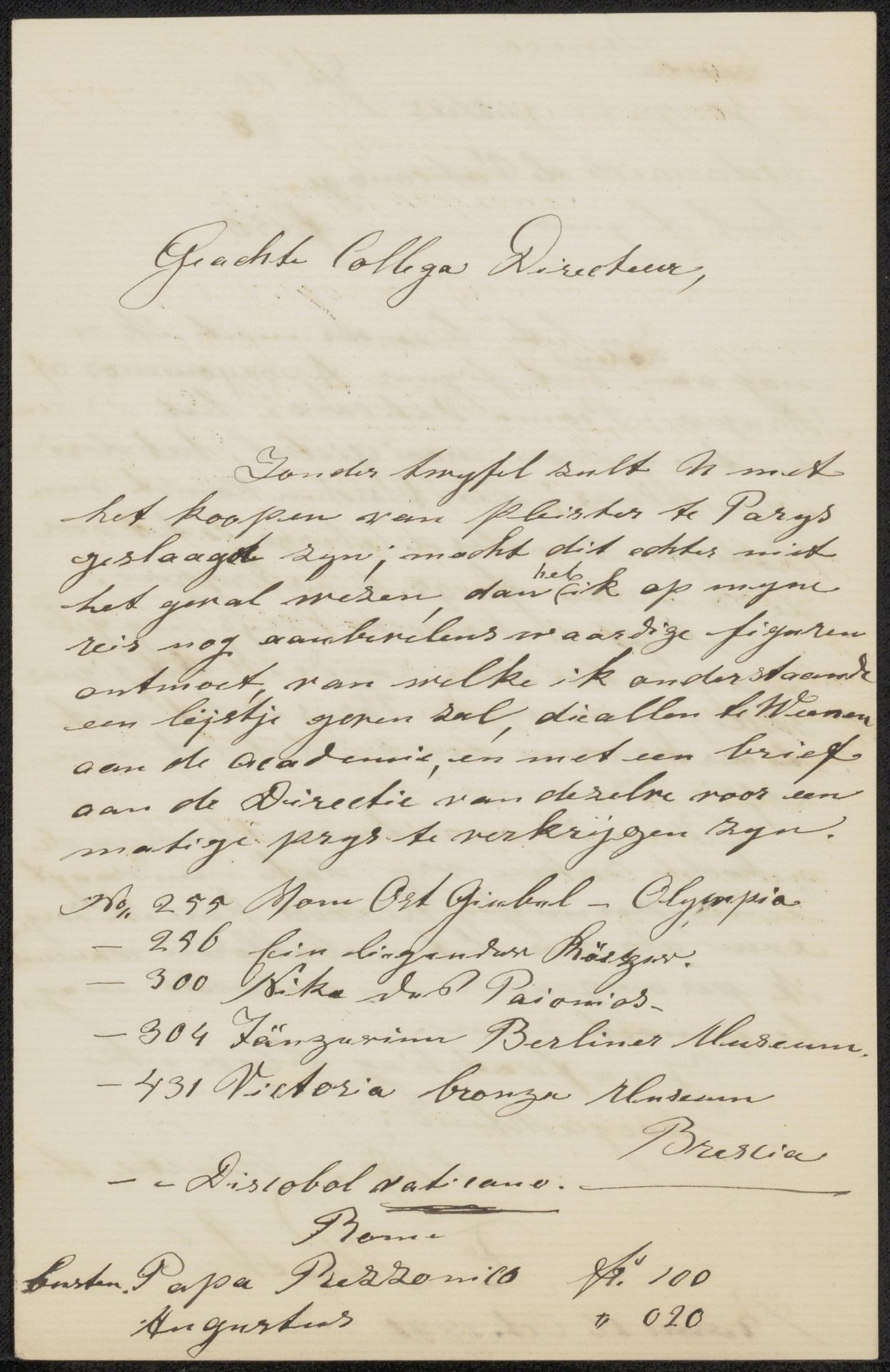
This is a letter penned by Frans Stracké, crafted with ink on paper. This written correspondence is a vessel carrying not just information but also cultural memory. In the letter, Stracké references classical sculptures of antiquity: the 'Discobolus Vaticanus' and the 'Tänzerinn Berliner Museum', each a sign that transcends its immediate form. The Discobolus, a symbol of athletic prowess and classical ideals, echoes through time. Its dynamic pose, frozen in the moment of action, recurs in various forms across eras, reflecting humanity's enduring fascination with physical perfection and heroic narrative. Consider how these motifs, born in ancient Greece, resurface during the Renaissance and continue to inspire artists today. The act of referencing these classical forms is not merely an aesthetic choice, but a conscious engagement with a lineage of cultural and artistic values. These symbols evolve, adapting to new contexts while retaining a vestige of their original power. This enduring presence speaks to the deep psychological resonance of archetypal forms and their ability to evoke powerful emotions and associations across generations.

Artwork details
- Medium
- drawing, paper, ink, pen
- Location
- Rijksmuseum
- Copyright
- Rijks Museum: Open Domain
Tags
drawing
paper
ink
pen
Comments
No comments
About this artwork
This is a letter penned by Frans Stracké, crafted with ink on paper. This written correspondence is a vessel carrying not just information but also cultural memory. In the letter, Stracké references classical sculptures of antiquity: the 'Discobolus Vaticanus' and the 'Tänzerinn Berliner Museum', each a sign that transcends its immediate form. The Discobolus, a symbol of athletic prowess and classical ideals, echoes through time. Its dynamic pose, frozen in the moment of action, recurs in various forms across eras, reflecting humanity's enduring fascination with physical perfection and heroic narrative. Consider how these motifs, born in ancient Greece, resurface during the Renaissance and continue to inspire artists today. The act of referencing these classical forms is not merely an aesthetic choice, but a conscious engagement with a lineage of cultural and artistic values. These symbols evolve, adapting to new contexts while retaining a vestige of their original power. This enduring presence speaks to the deep psychological resonance of archetypal forms and their ability to evoke powerful emotions and associations across generations.
Comments
No comments