About this artwork
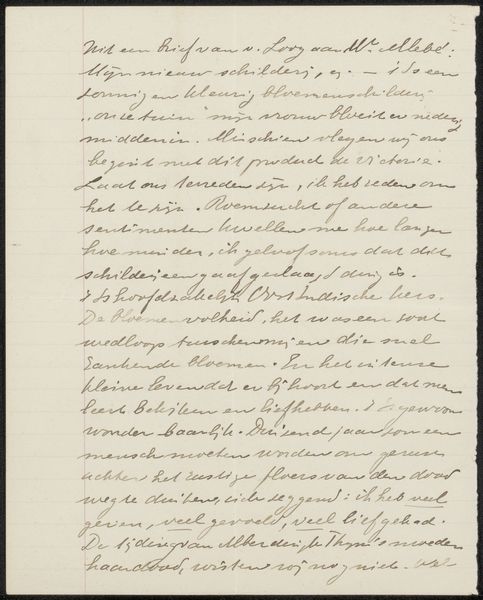
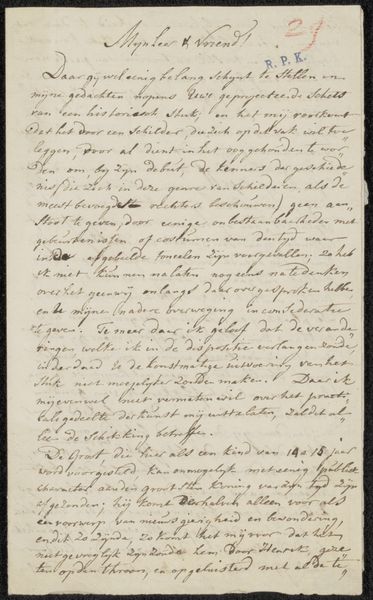
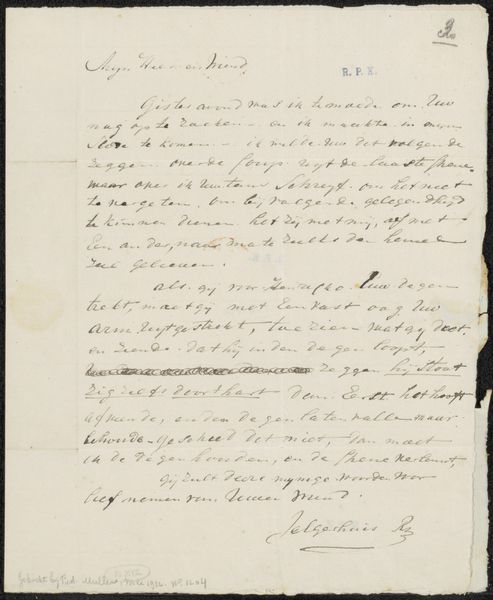
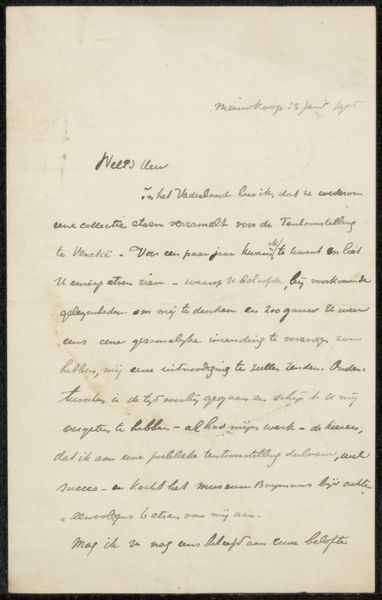
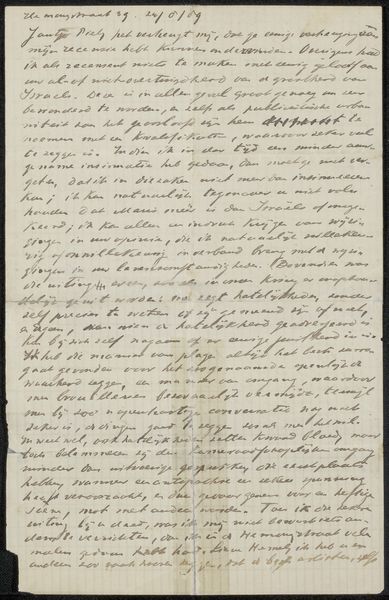
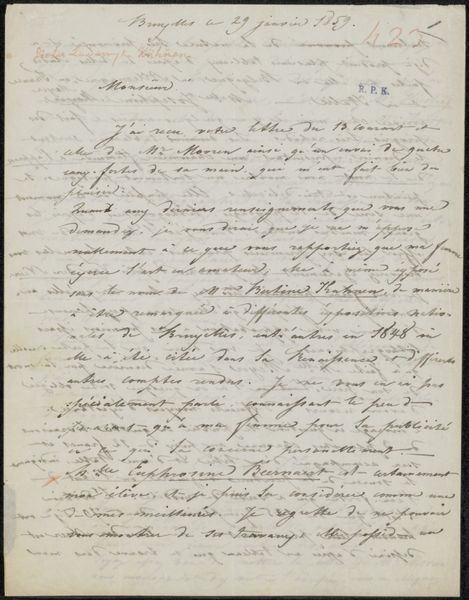
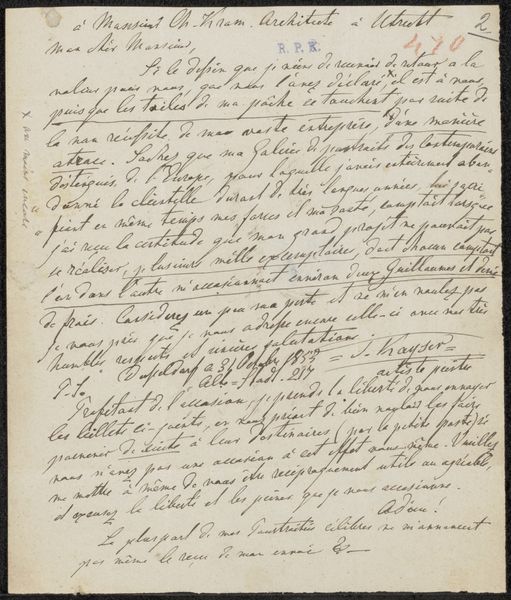
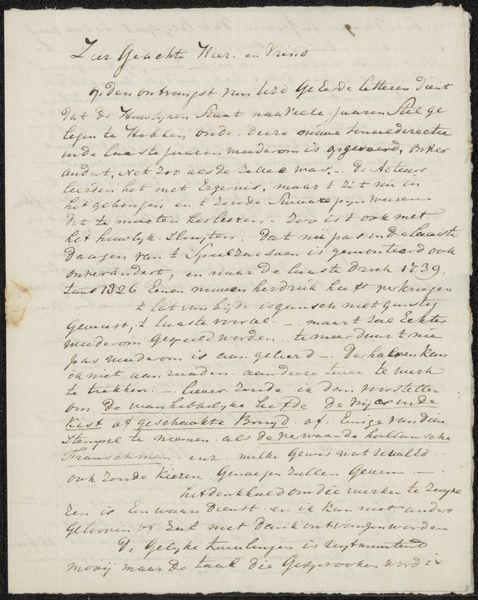
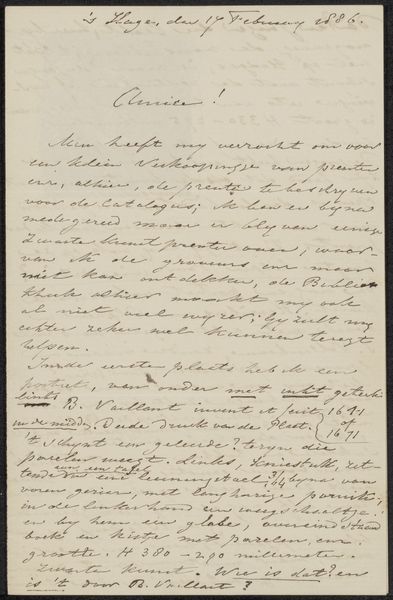
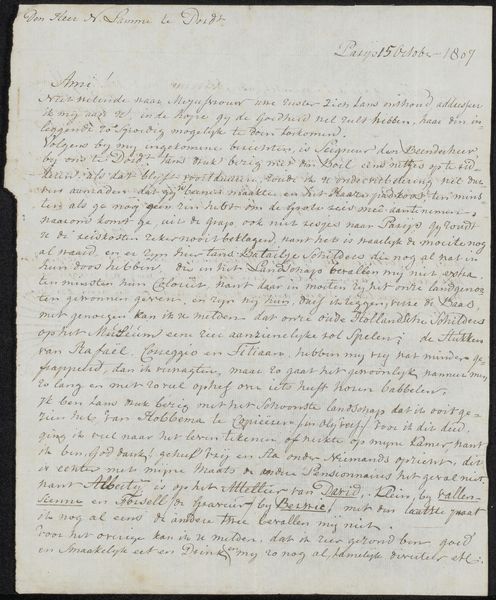
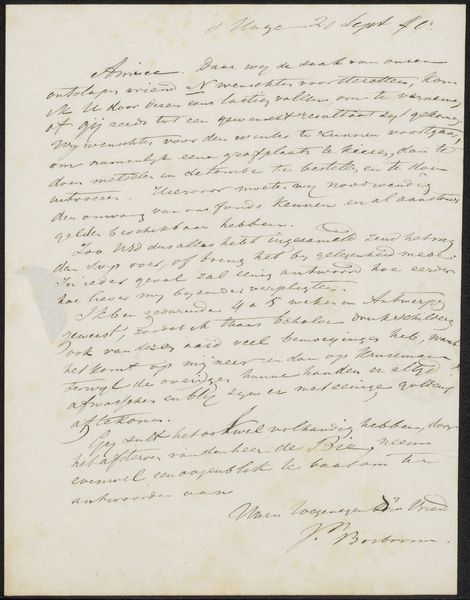
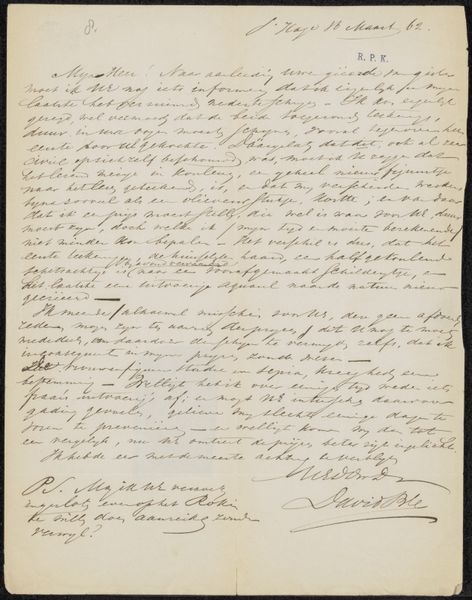
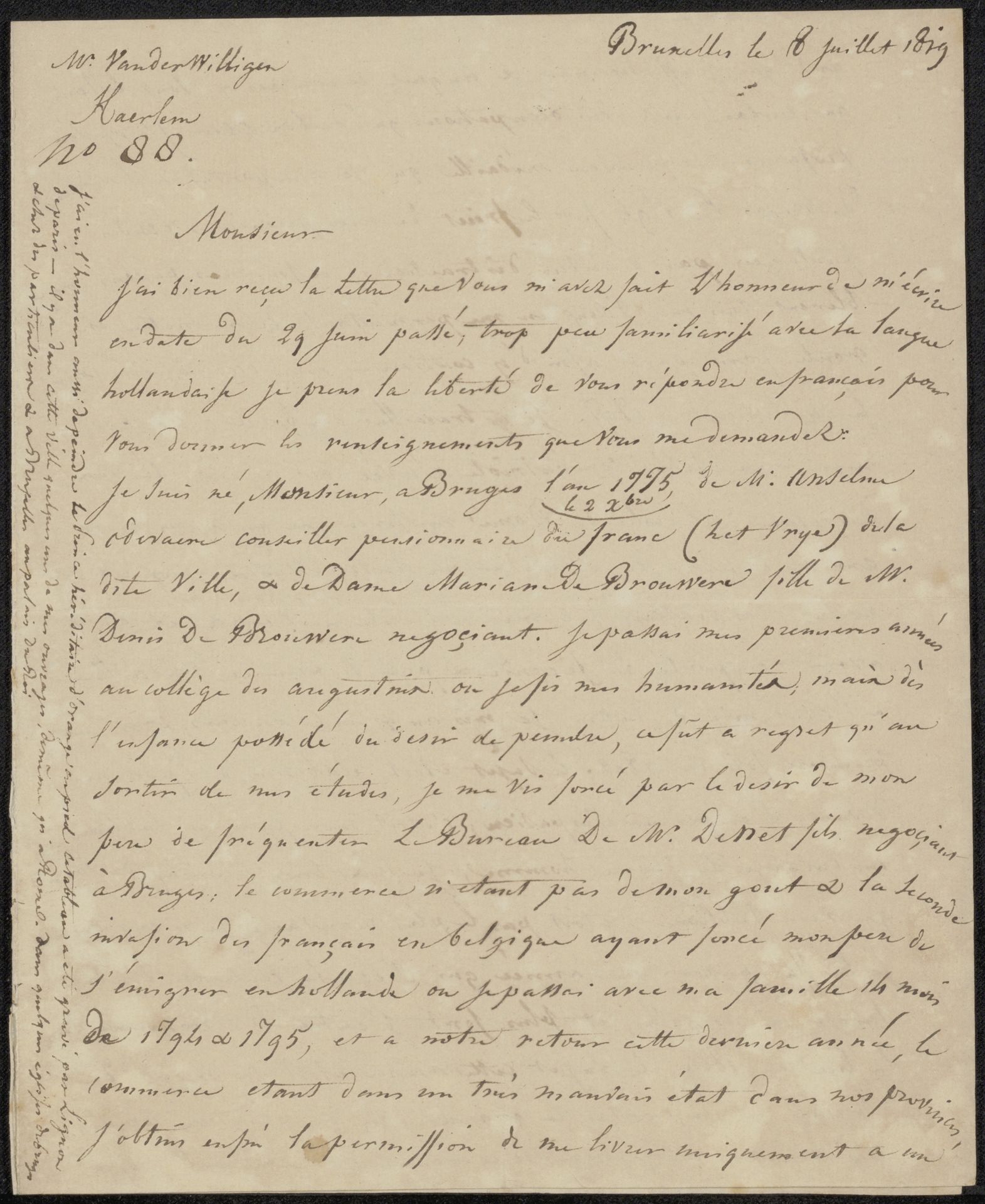
This is "Brief aan Adriaan van der Willigen", a letter created in 1819 by Joseph-Denis Odevaere, held at the Rijksmuseum. The letter presents a textured surface, rich with the tonal variations of aged paper and faded ink. Observe how the lines of script, penned in a careful hand, cascade across the page, creating a visual rhythm that guides the eye. The density of the writing contrasts with the blank space, establishing a dynamic interplay between figure and ground. This handwritten form subverts the impersonal nature of official documents. The letter is a narrative, a form of personal expression that resists the rigid structures of formal communication. Its materiality speaks to a specific moment in time, challenging any singular interpretation. The letter becomes a palimpsest of meaning, open to re-evaluation. Consider how the visual elements of this letter transcend its original communicative purpose, engaging with broader cultural and philosophical questions.
Brief aan Adriaan van der Willigen
Possibly 1819

Joseph-Denis Odevaere
1778 - 1830Location
RijksmuseumArtwork details
- Medium
- drawing, paper, ink
- Location
- Rijksmuseum
- Copyright
- Rijks Museum: Open Domain
Tags
Comments
Share your thoughts
About this artwork
This is "Brief aan Adriaan van der Willigen", a letter created in 1819 by Joseph-Denis Odevaere, held at the Rijksmuseum. The letter presents a textured surface, rich with the tonal variations of aged paper and faded ink. Observe how the lines of script, penned in a careful hand, cascade across the page, creating a visual rhythm that guides the eye. The density of the writing contrasts with the blank space, establishing a dynamic interplay between figure and ground. This handwritten form subverts the impersonal nature of official documents. The letter is a narrative, a form of personal expression that resists the rigid structures of formal communication. Its materiality speaks to a specific moment in time, challenging any singular interpretation. The letter becomes a palimpsest of meaning, open to re-evaluation. Consider how the visual elements of this letter transcend its original communicative purpose, engaging with broader cultural and philosophical questions.
Comments
Share your thoughts