About this artwork
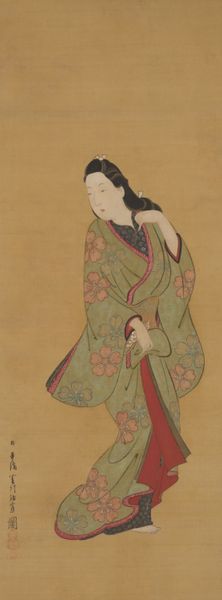
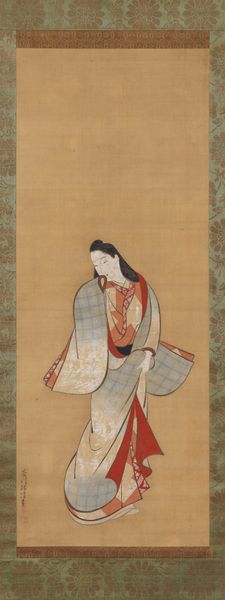
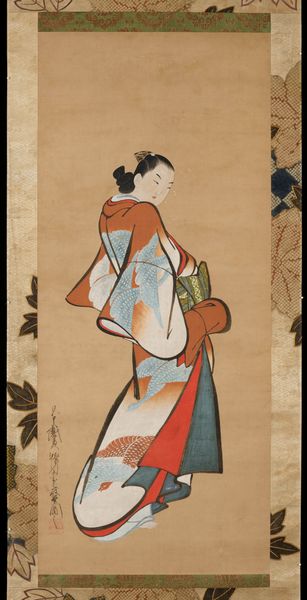
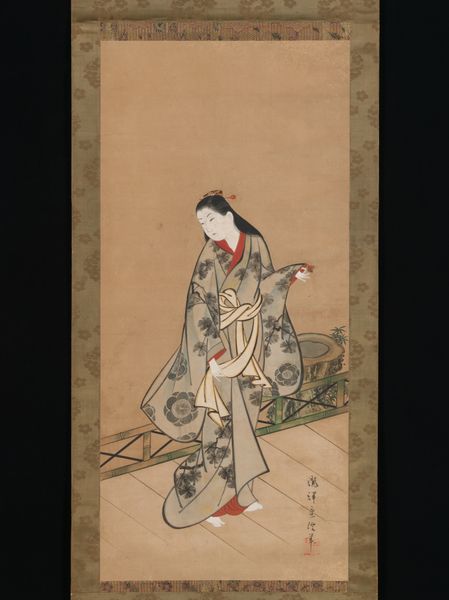
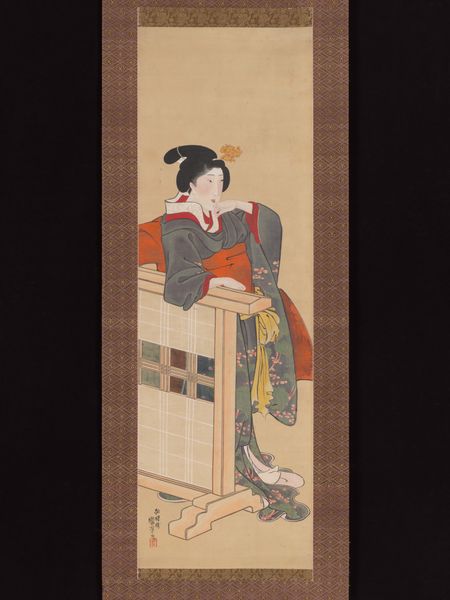
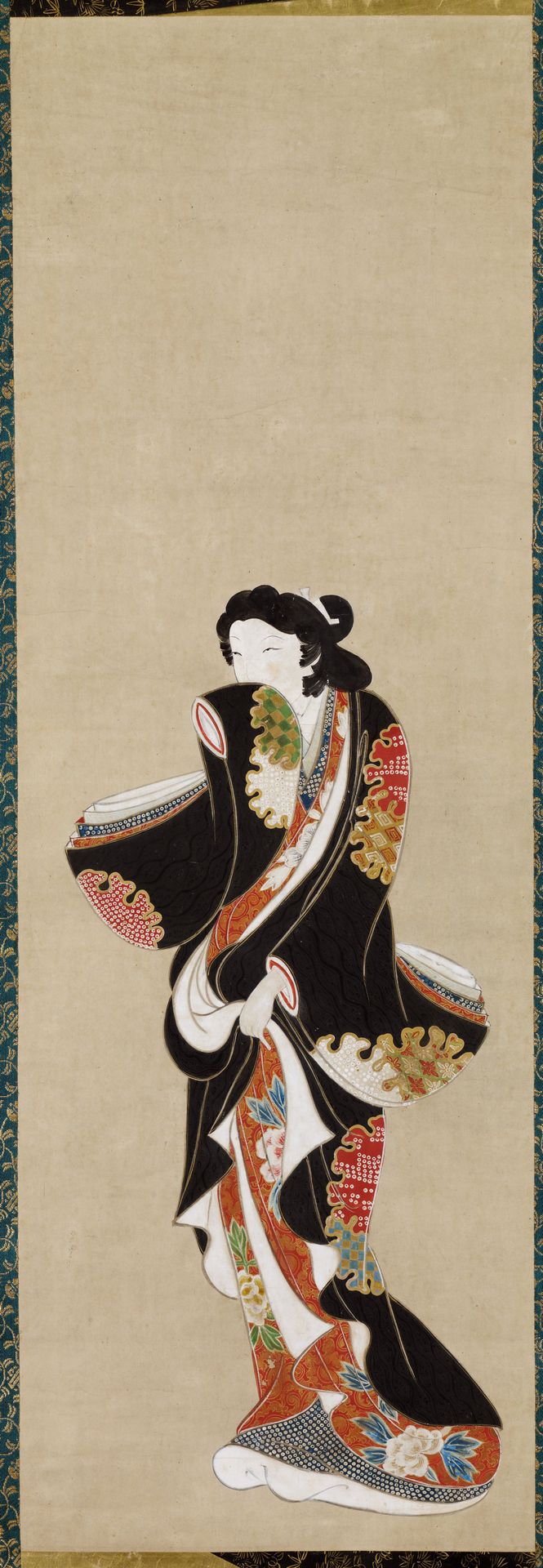
This hanging scroll attributed to Iwasa Katsushige features a woman painted on silk. The gesture of the sleeve held to the mouth is not merely a depiction of modesty but resonates with a deeper, more universal language of secrecy and concealment. Consider how this same gesture appears across cultures and centuries, from ancient Greek sculptures of veiled figures to Renaissance paintings of secretive Madonnas. The act of covering the mouth can signify a multitude of suppressed emotions and unspoken words. It evokes a sense of mystery, inviting the viewer to contemplate what is being hidden. The image acts as a mirror, reflecting our own experiences of withholding and revealing, reminding us that the most potent expressions often lie in what remains unsaid, echoing through the corridors of time and culture.
Standing Beauty with Sleeve to Her Mouth
c. 1650 - 1660


Artwork details
- Medium
- drawing, hanging-scroll, ink
- Dimensions
- 14 13/16 x 10 5/16 in. (37.7 x 26.2 cm) (image)64 9/16 x 14 15/16 in. (164 x 38 cm) (mount) 42.7 cm W w/rollers
- Location
- Minneapolis Institute of Art
- Copyright
- Public Domain
Tags
portrait
drawing
asian-art
ukiyo-e
japan
figuration
hanging-scroll
ink
Comments
Be the first to share your thoughts about this work.
About this artwork
This hanging scroll attributed to Iwasa Katsushige features a woman painted on silk. The gesture of the sleeve held to the mouth is not merely a depiction of modesty but resonates with a deeper, more universal language of secrecy and concealment. Consider how this same gesture appears across cultures and centuries, from ancient Greek sculptures of veiled figures to Renaissance paintings of secretive Madonnas. The act of covering the mouth can signify a multitude of suppressed emotions and unspoken words. It evokes a sense of mystery, inviting the viewer to contemplate what is being hidden. The image acts as a mirror, reflecting our own experiences of withholding and revealing, reminding us that the most potent expressions often lie in what remains unsaid, echoing through the corridors of time and culture.
Comments
Be the first to share your thoughts about this work.