Dimensions: mount: 27.6 x 34 cm (10 7/8 x 13 3/8 in.) image: 19.2 x 24.4 cm (7 9/16 x 9 5/8 in.)
Copyright: CC0 1.0
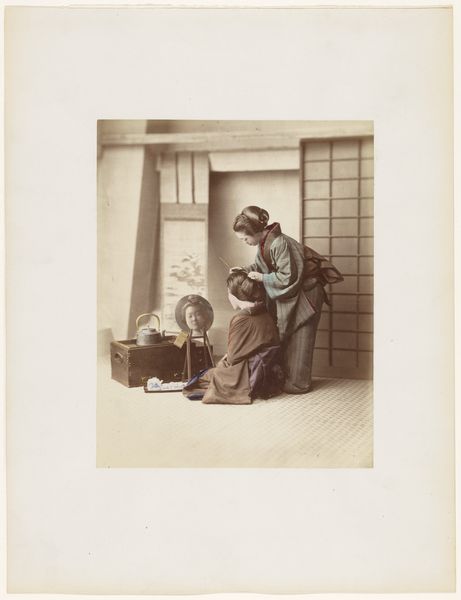
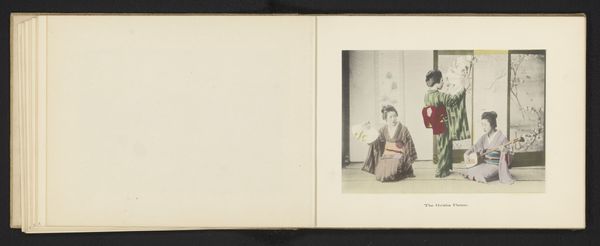
Curator: Let’s consider Adolfo Farsari's hand-colored albumen print, "Ojingi," housed here at Harvard. I find the soft, muted tones quite striking. Editor: The image radiates a remarkable stillness. The geometric patterns of the shoji screens contrast intriguingly with the organic motifs painted on the screen behind the woman on the left. Curator: Precisely. The women’s posture in the photograph—kneeling, almost bowing—conjures notions of respect, perhaps deference, embodying a sense of formalized interaction. Editor: The composition definitely suggests a carefully constructed tableau, likely staged for Western audiences. I wonder about the authenticity of the moment versus the constructed image. Curator: That is a valid point. These images served as visual currency for the West, shaping perceptions of Japanese culture, perhaps reinforcing certain stereotypes. The ritualized act of bowing holds deep cultural significance. Editor: The muted palette, though, subverts the potentially exoticizing gaze. It pulls the viewer into a more introspective space. Curator: Indeed, it asks us to consider the weight of cultural representation and the power of visual language. Editor: A potent reminder that images, even seemingly simple ones, carry complex cultural and historical baggage.
Comments
No comments
Be the first to comment and join the conversation on the ultimate creative platform.
 Collect
 React
React Comment
More like this