About this artwork
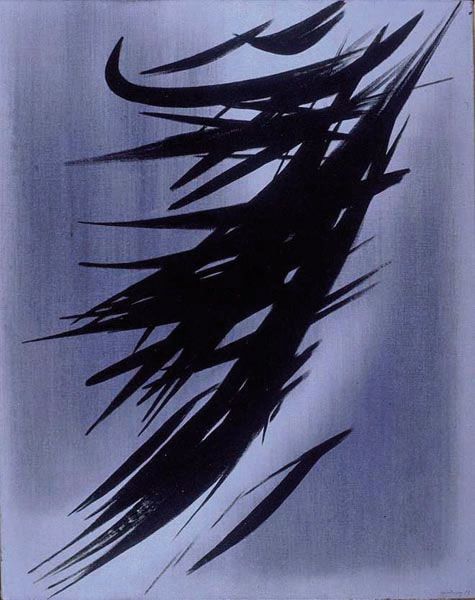
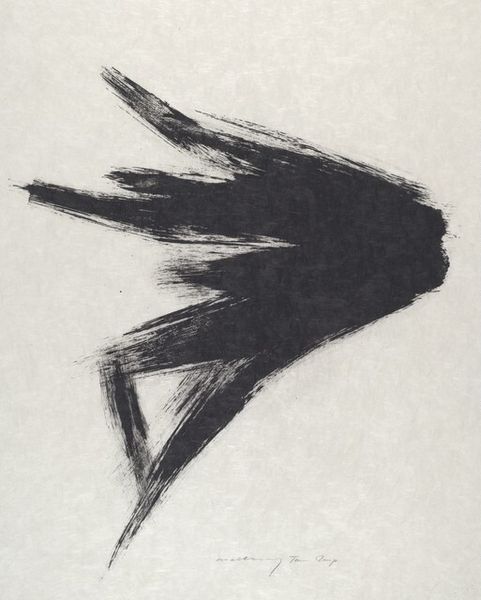
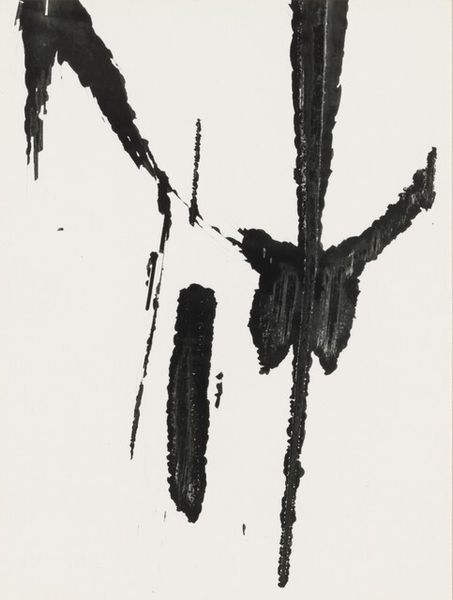
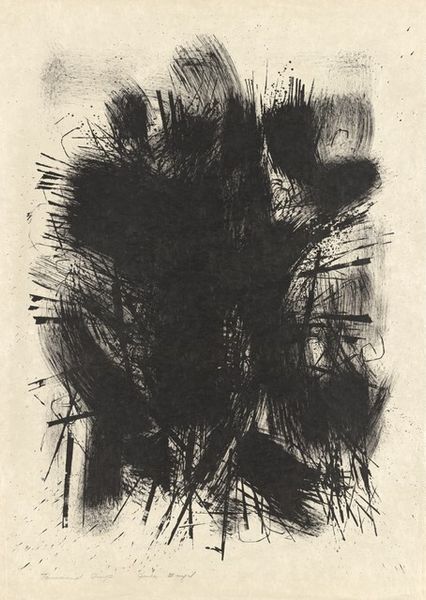
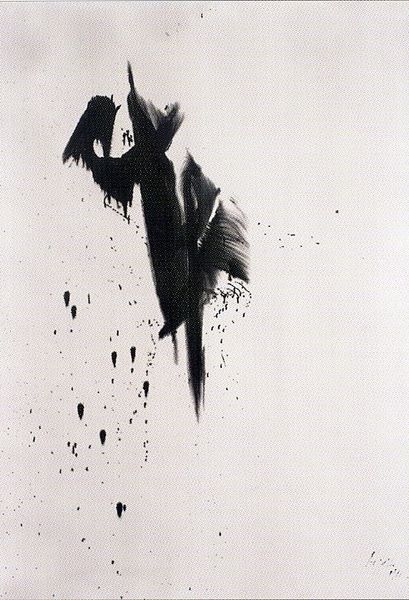
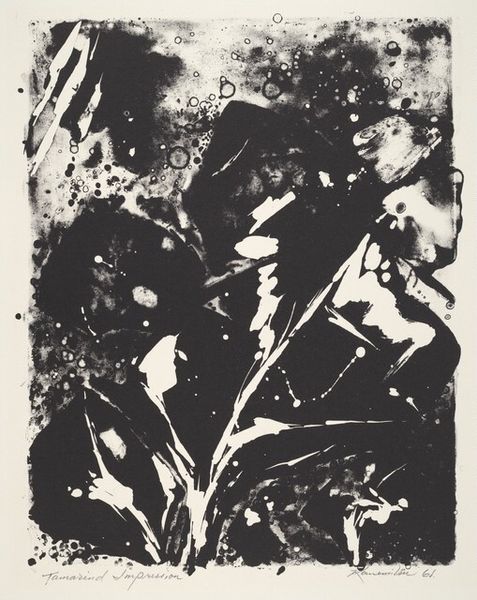
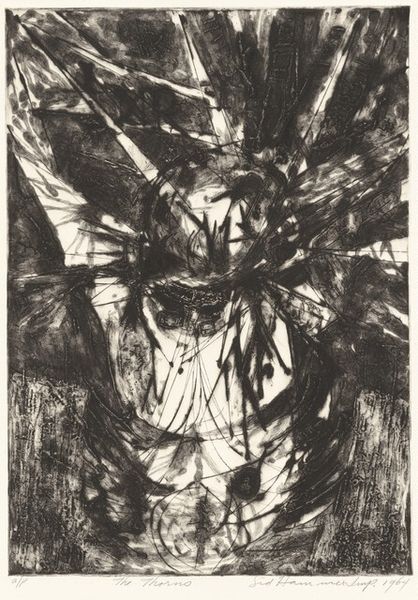
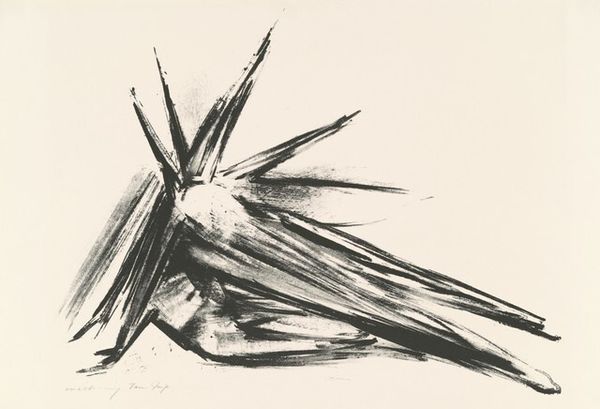
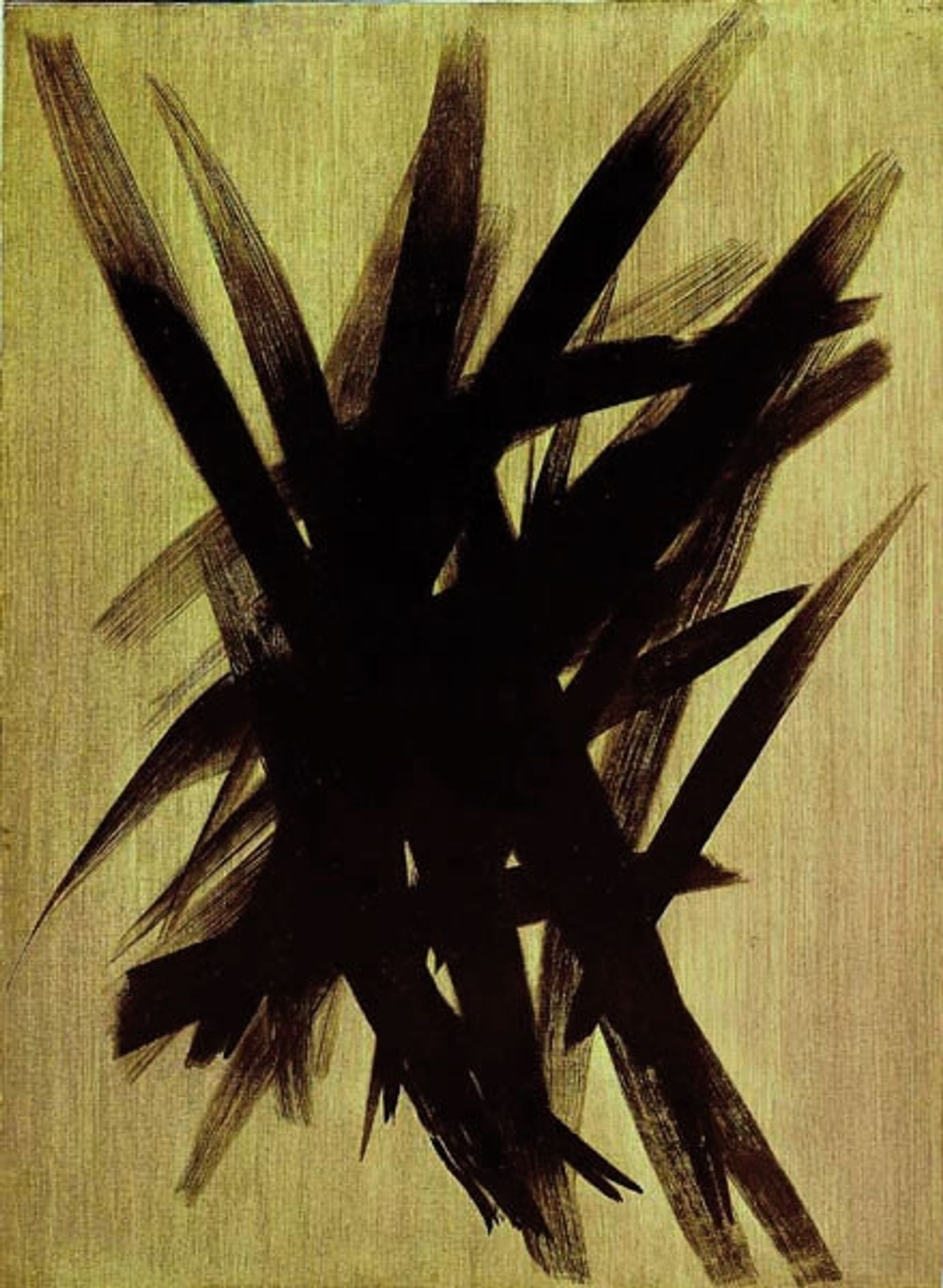
Editor: Here we have Hans Hartung’s "Untitled (T1955-23)" from 1955, executed in acrylic paint. I’m immediately struck by the raw energy of the piece; the brushstrokes seem almost violent against the muted background. How would you interpret this work from a formalist perspective? Curator: Note the dominance of the monochrome palette—a foundational element. Consider the surface: the weave of the canvas asserts its presence. Hartung's slashing, gestural strokes deny any illusionistic depth, foregrounding instead the sheer materiality of paint applied to a surface. Do you see how the lines, although appearing random, are in fact carefully calibrated to create a dynamic, almost aggressive, visual field? Editor: Yes, I see that. The contrast between the light background and dark lines creates a strong sense of tension. But it still feels very… unstructured. Is there a compositional element that I’m missing? Curator: Think of the composition not as unstructured, but as anti-representational. Hartung challenges our expectations of harmony and balance. The converging lines create a focal point, disrupting any sense of traditional pictorial space. It demands that we appreciate the painting as an object, a field of pure visual sensation. Notice how the varying thickness of the strokes and varying pressure impacts that field of sensation. Editor: So, it's about experiencing the raw qualities of the paint and the act of painting itself? It’s less about what it represents and more about how it presents. Curator: Precisely. Through line, color, and texture, Hartung provides us with an aesthetic encounter predicated on the pure formalism of art. Editor: That clarifies things considerably. I appreciate the focus on the materiality and the active construction of visual tension. Curator: A pleasure. Recognizing that the canvas and the paint is indeed "the thing" itself allows us to move towards new visions in artmaking.

Artwork details
- Medium
- acrylic-paint, gestural-painting
- Copyright
- Hans Hartung,Fair Use
Tags
Comments
Share your thoughts
About this artwork
Editor: Here we have Hans Hartung’s "Untitled (T1955-23)" from 1955, executed in acrylic paint. I’m immediately struck by the raw energy of the piece; the brushstrokes seem almost violent against the muted background. How would you interpret this work from a formalist perspective? Curator: Note the dominance of the monochrome palette—a foundational element. Consider the surface: the weave of the canvas asserts its presence. Hartung's slashing, gestural strokes deny any illusionistic depth, foregrounding instead the sheer materiality of paint applied to a surface. Do you see how the lines, although appearing random, are in fact carefully calibrated to create a dynamic, almost aggressive, visual field? Editor: Yes, I see that. The contrast between the light background and dark lines creates a strong sense of tension. But it still feels very… unstructured. Is there a compositional element that I’m missing? Curator: Think of the composition not as unstructured, but as anti-representational. Hartung challenges our expectations of harmony and balance. The converging lines create a focal point, disrupting any sense of traditional pictorial space. It demands that we appreciate the painting as an object, a field of pure visual sensation. Notice how the varying thickness of the strokes and varying pressure impacts that field of sensation. Editor: So, it's about experiencing the raw qualities of the paint and the act of painting itself? It’s less about what it represents and more about how it presents. Curator: Precisely. Through line, color, and texture, Hartung provides us with an aesthetic encounter predicated on the pure formalism of art. Editor: That clarifies things considerably. I appreciate the focus on the materiality and the active construction of visual tension. Curator: A pleasure. Recognizing that the canvas and the paint is indeed "the thing" itself allows us to move towards new visions in artmaking.
Comments
Share your thoughts