About this artwork
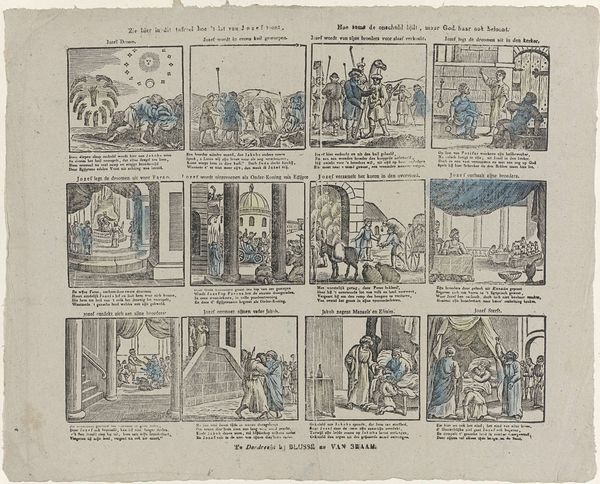
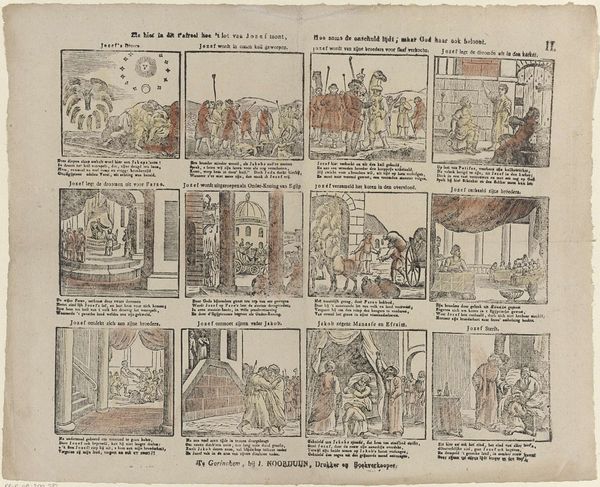
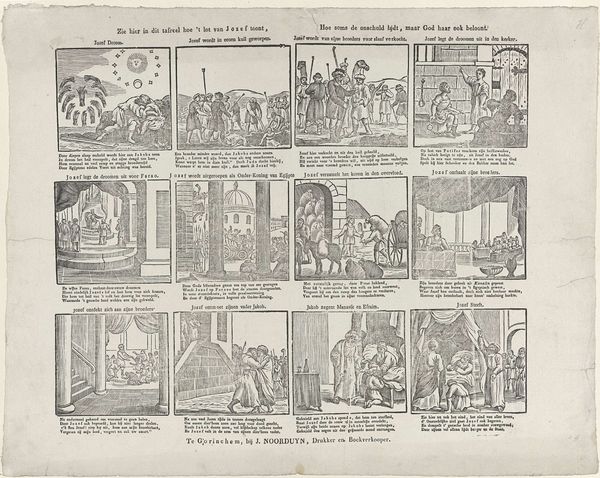
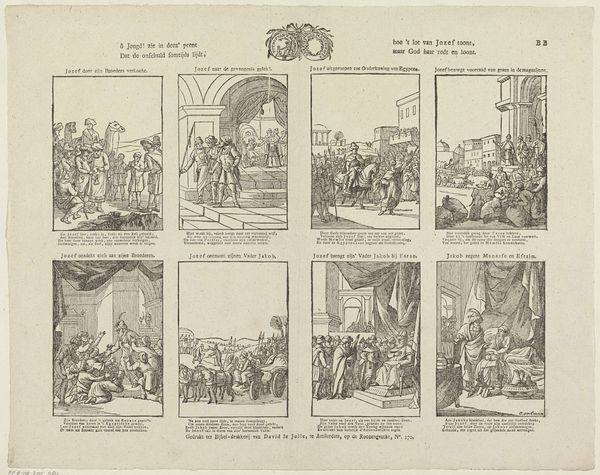
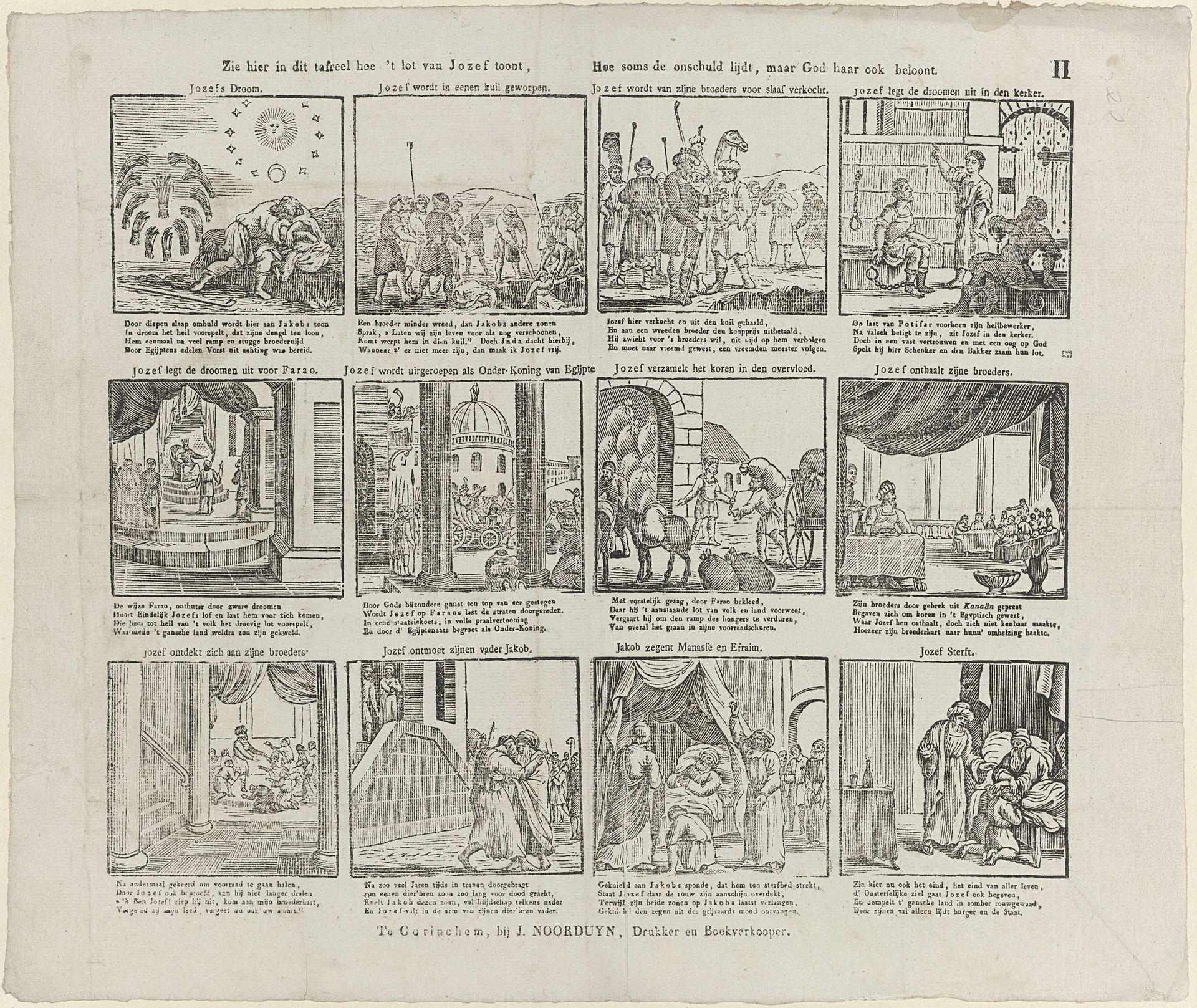
This print, made by Alexander Cranendoncq, presents a series of scenes from the biblical story of Joseph. The composition is structured as a grid, compartmentalizing the narrative into discrete episodes. The use of line, particularly in the architectural details and figural outlines, creates a sense of order and linearity. Each panel functions almost as a stage, with minimal background to focus the viewer's attention on the figures and their interactions. The print employs a visual semiotic, utilizing recognizable symbols to communicate its message; for example, gestures of supplication or domination clearly convey power dynamics. The sequential format encourages us to read the story as a progression, but also invites a structuralist reading, wherein each scene gains meaning through its relation to others. The artist uses repetition and variation within the grid to establish visual rhythms. This artwork offers a rich ground for analyzing how visual structure shapes narrative and theological interpretation.
Zie hier in dit tafreel hoe 't lot van Jozef toont, / Hoe soms de onschuld lijdt, maar God haar ook betoont
1819 - 1840

Alexander Cranendoncq
1799 - 1869Location
RijksmuseumArtwork details
- Medium
- print, engraving
- Dimensions
- height 330 mm, width 412 mm
- Location
- Rijksmuseum
- Copyright
- Rijks Museum: Open Domain
Tags
Comments
Share your thoughts
About this artwork
This print, made by Alexander Cranendoncq, presents a series of scenes from the biblical story of Joseph. The composition is structured as a grid, compartmentalizing the narrative into discrete episodes. The use of line, particularly in the architectural details and figural outlines, creates a sense of order and linearity. Each panel functions almost as a stage, with minimal background to focus the viewer's attention on the figures and their interactions. The print employs a visual semiotic, utilizing recognizable symbols to communicate its message; for example, gestures of supplication or domination clearly convey power dynamics. The sequential format encourages us to read the story as a progression, but also invites a structuralist reading, wherein each scene gains meaning through its relation to others. The artist uses repetition and variation within the grid to establish visual rhythms. This artwork offers a rich ground for analyzing how visual structure shapes narrative and theological interpretation.
Comments
Share your thoughts