About this artwork
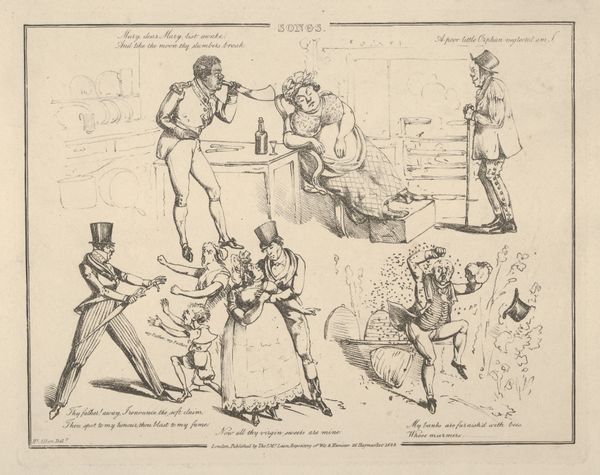
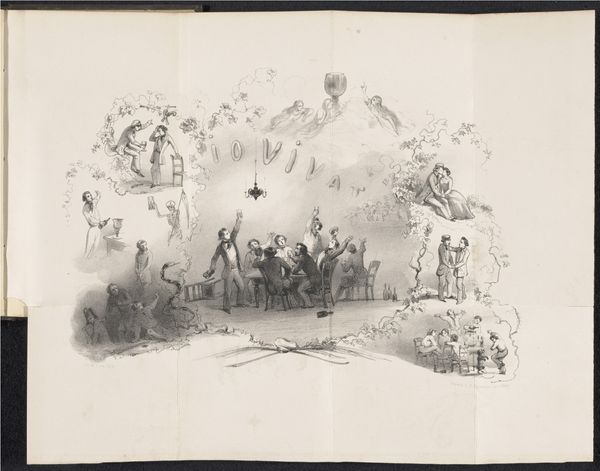
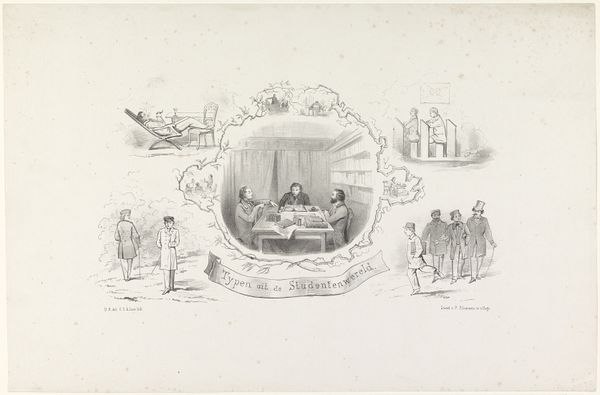
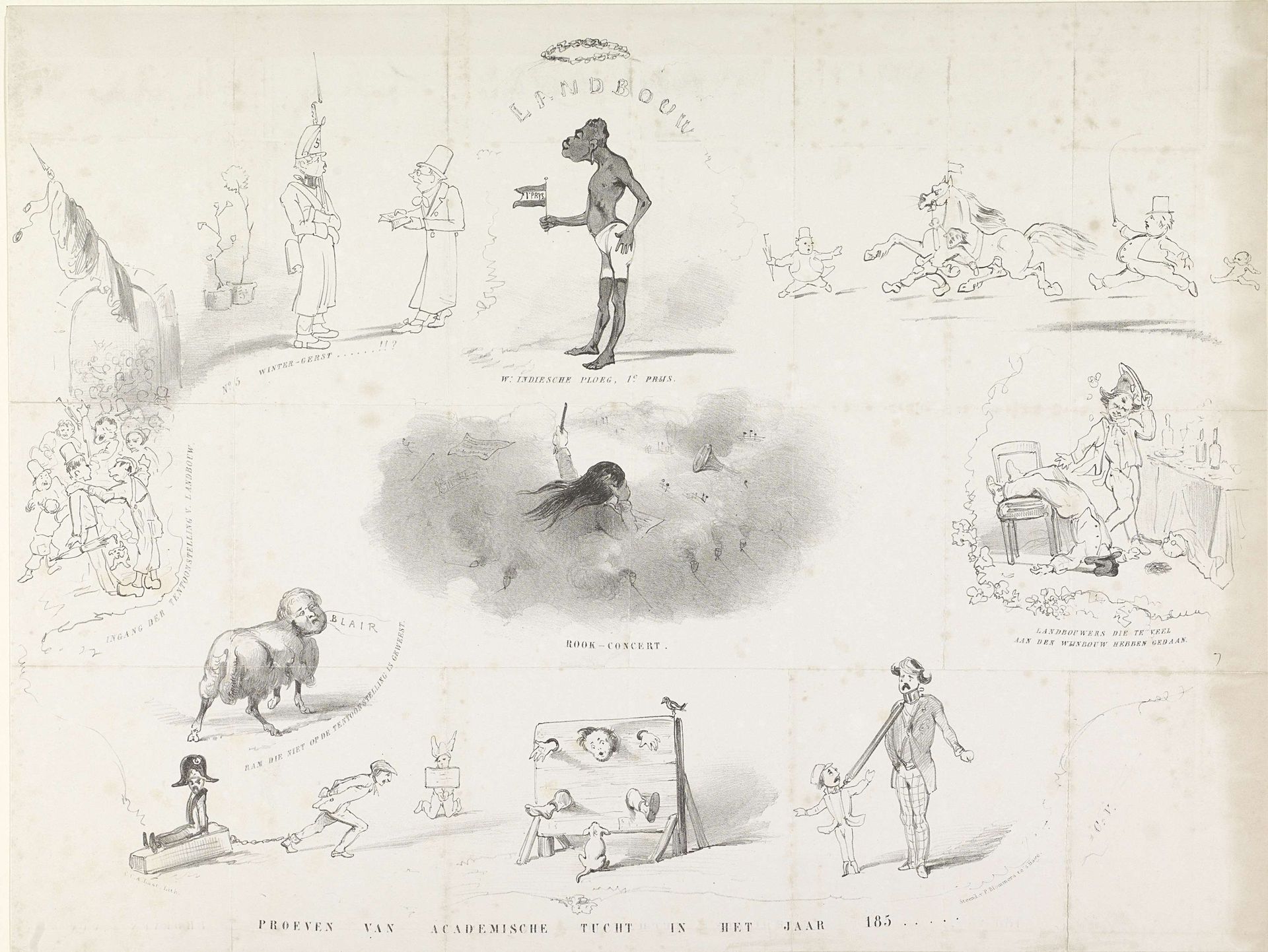
Carel Christiaan Antony Last created this satirical print in 1850 for a student almanac in Leiden, rendered in ink. Note how the artist depicts a series of vignettes mocking academic life through caricature. Observe the figure of a black man holding a flag, labeled "W. Stookschok, Polit. Prot." This image, rife with colonial undertones, reflects the period's prevailing attitudes towards race and empire, embodying both power and exoticism. Consider the symbolism of the flag—a symbol of sovereignty and control—juxtaposed with the figure's submissive pose. Such a symbol, when traced through history, carries different meanings. This motif—the subjugated figure bearing the standard—appears in ancient Roman art, where conquered peoples were depicted as trophies. Here, in this print, it resurfaces, yet its meaning has been corrupted, imbued with the prejudices of the colonial era. This manipulation speaks volumes about the psychological underpinnings of colonialism. The emotional weight is palpable—a visual encoding of historical power dynamics, engaging viewers on a subconscious level.
Spotprent uit Leidse studentenalmanak, 1850
1850

Carel Christiaan Antony Last
1808 - 1876Location
RijksmuseumArtwork details
- Medium
- drawing, print, etching
- Dimensions
- height 350 mm, width 465 mm
- Location
- Rijksmuseum
- Copyright
- Rijks Museum: Open Domain
Tags
Comments
Share your thoughts
About this artwork
Carel Christiaan Antony Last created this satirical print in 1850 for a student almanac in Leiden, rendered in ink. Note how the artist depicts a series of vignettes mocking academic life through caricature. Observe the figure of a black man holding a flag, labeled "W. Stookschok, Polit. Prot." This image, rife with colonial undertones, reflects the period's prevailing attitudes towards race and empire, embodying both power and exoticism. Consider the symbolism of the flag—a symbol of sovereignty and control—juxtaposed with the figure's submissive pose. Such a symbol, when traced through history, carries different meanings. This motif—the subjugated figure bearing the standard—appears in ancient Roman art, where conquered peoples were depicted as trophies. Here, in this print, it resurfaces, yet its meaning has been corrupted, imbued with the prejudices of the colonial era. This manipulation speaks volumes about the psychological underpinnings of colonialism. The emotional weight is palpable—a visual encoding of historical power dynamics, engaging viewers on a subconscious level.
Comments
Share your thoughts