Possibly 1774
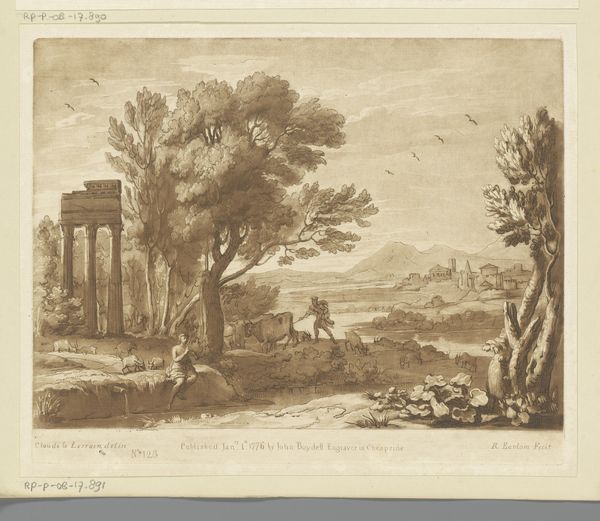
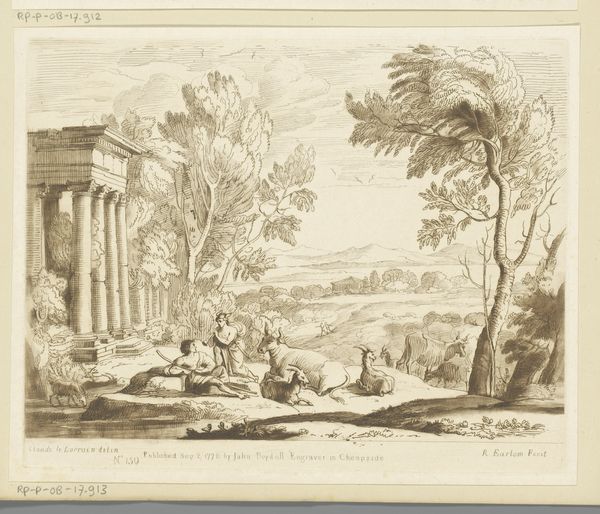
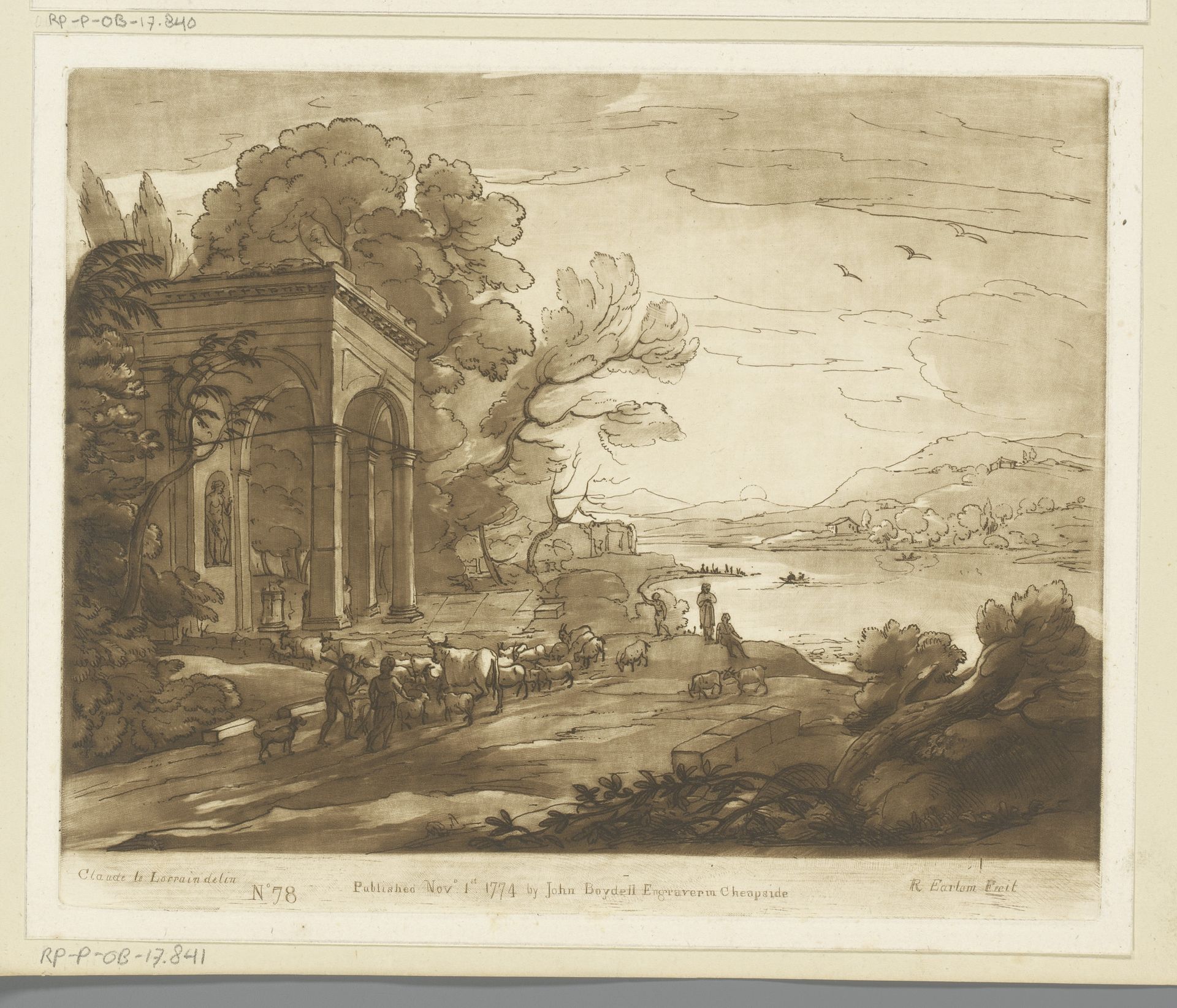
Landschap met veedrijvers langs een meer en een klassiek gebouw

Richard Earlom
1743 - 1822Location
RijksmuseumListen to curator's interpretation
Curatorial notes
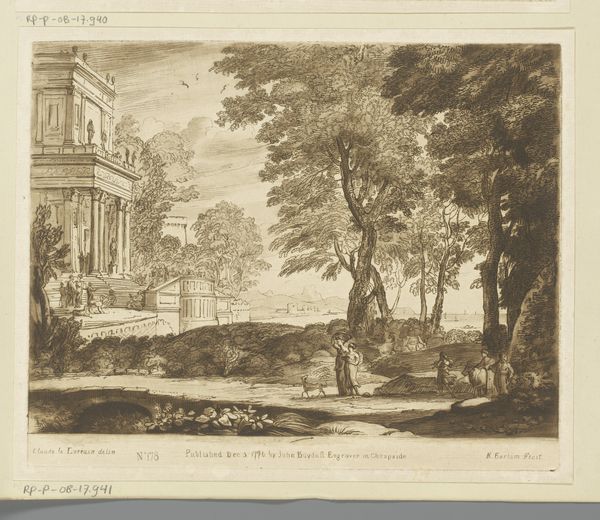
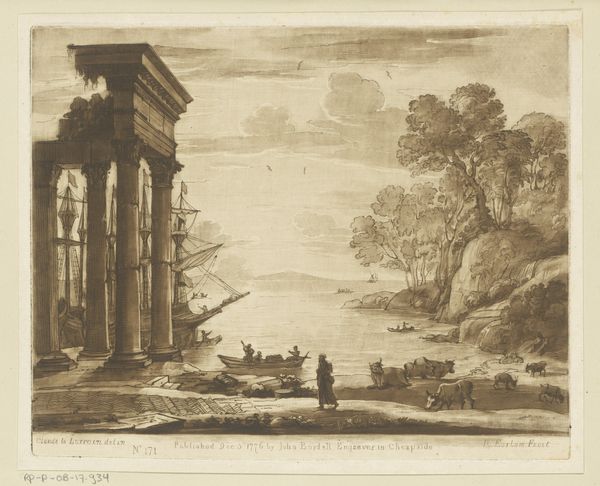
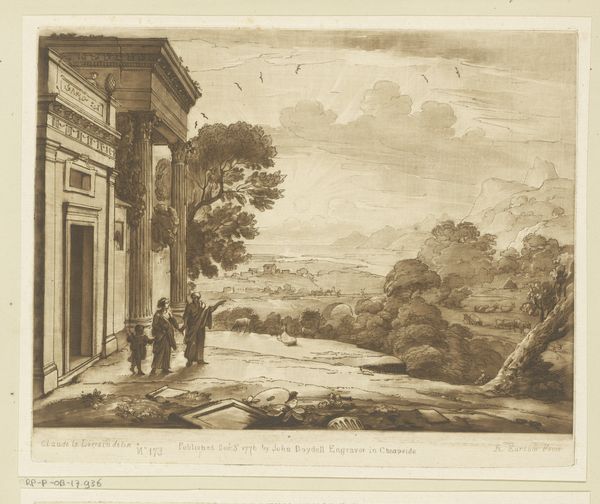
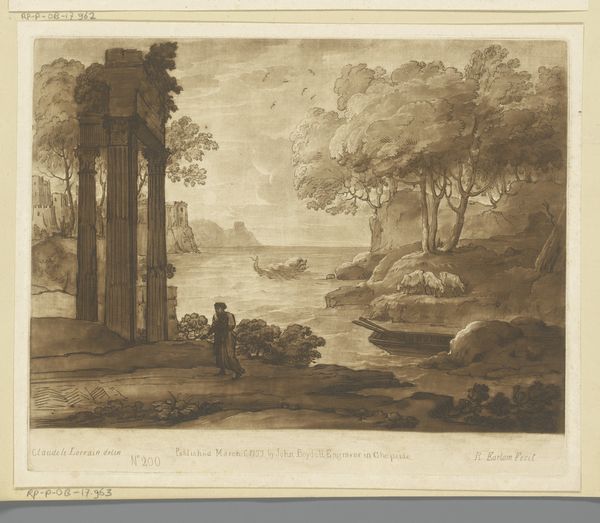
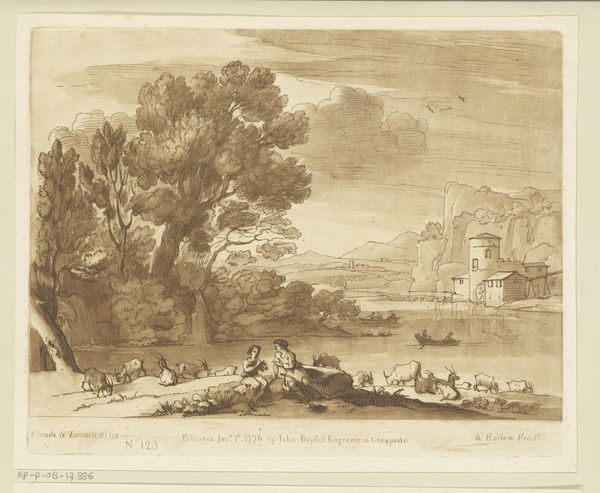
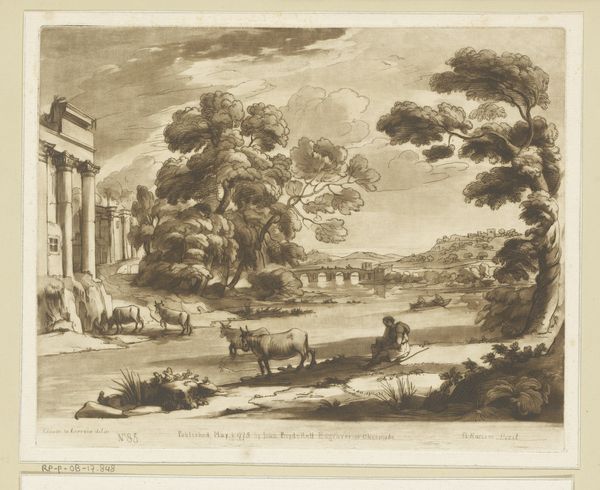
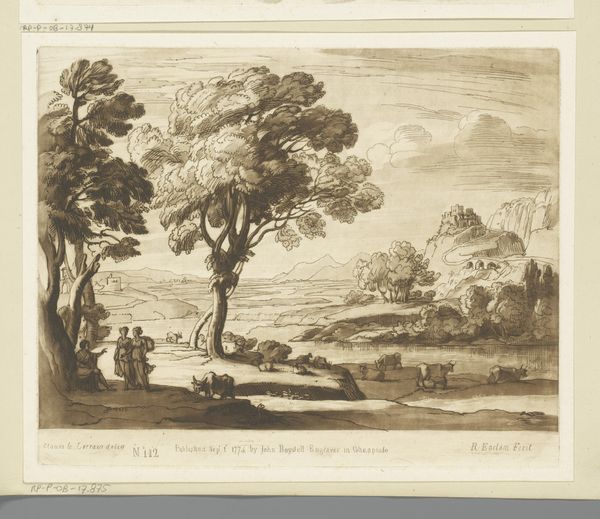
Curator: Let’s consider this print, "Landscape with cattle drivers along a lake and a classic building," possibly from 1774, created by Richard Earlom. It’s a beautiful example of classical realism. Editor: It is beautiful, and quite calming. I'm drawn to the architectural structure on the left – a kind of Roman ruin – alongside what seems to be a group of shepherds guiding their flock. How do you interpret this work? Curator: Well, considering its time, it’s hard not to read it as a commentary on power structures and the idealization of the pastoral. Earlom, though replicating a drawing by Claude Lorrain, places this imagined, classical scene within the context of 18th-century England. Who is afforded the luxury of appreciating 'classical beauty', and at whose expense is this idealized vision sustained? Consider the socio-economic realities for many rural labourers at that time. Does the print become then an ironic commentary on their hardships? Editor: That’s a really interesting perspective. So, it’s not just a pretty landscape, but potentially a commentary on the social divisions of the time? The figures seem quite small in relation to the architecture. Curator: Precisely. Their smallness highlights the power of the imagined classical past and also the real power dynamics of the present. What’s missing is an overt acknowledgement of their struggles and the inherent inequalities. Editor: So, viewing art through the lens of its social context really challenges the initial aesthetic appreciation, revealing potential hidden narratives. Curator: Exactly! Art can be so much more meaningful once we acknowledge its cultural baggage and the questions it raises. Editor: I will definitely keep that in mind! Thank you. Curator: My pleasure. Never stop questioning what you see!