About this artwork
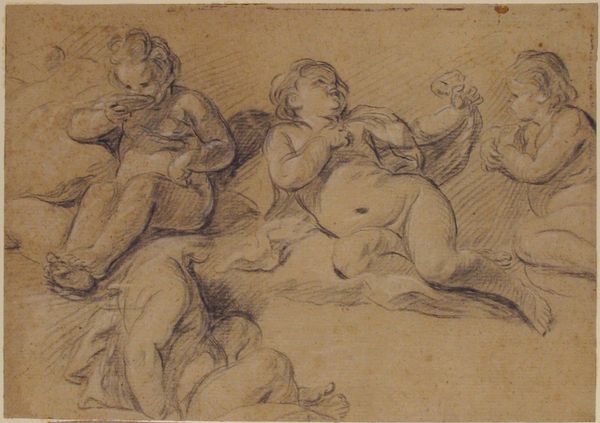
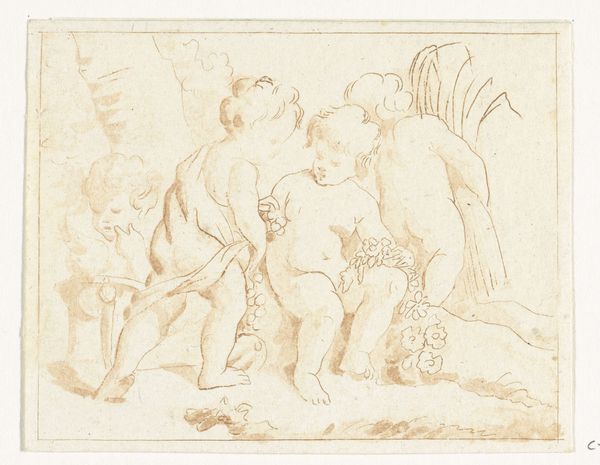
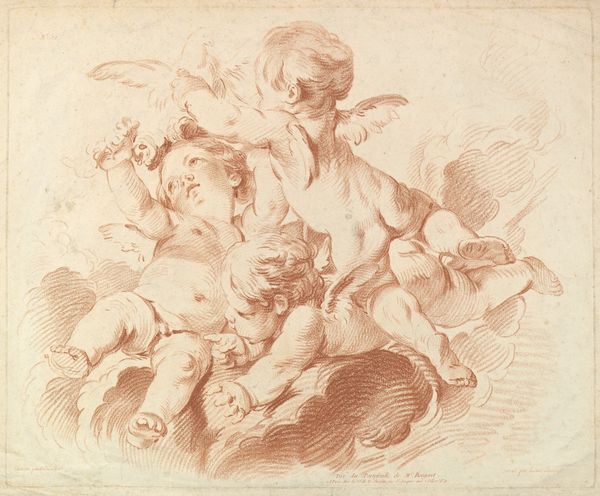
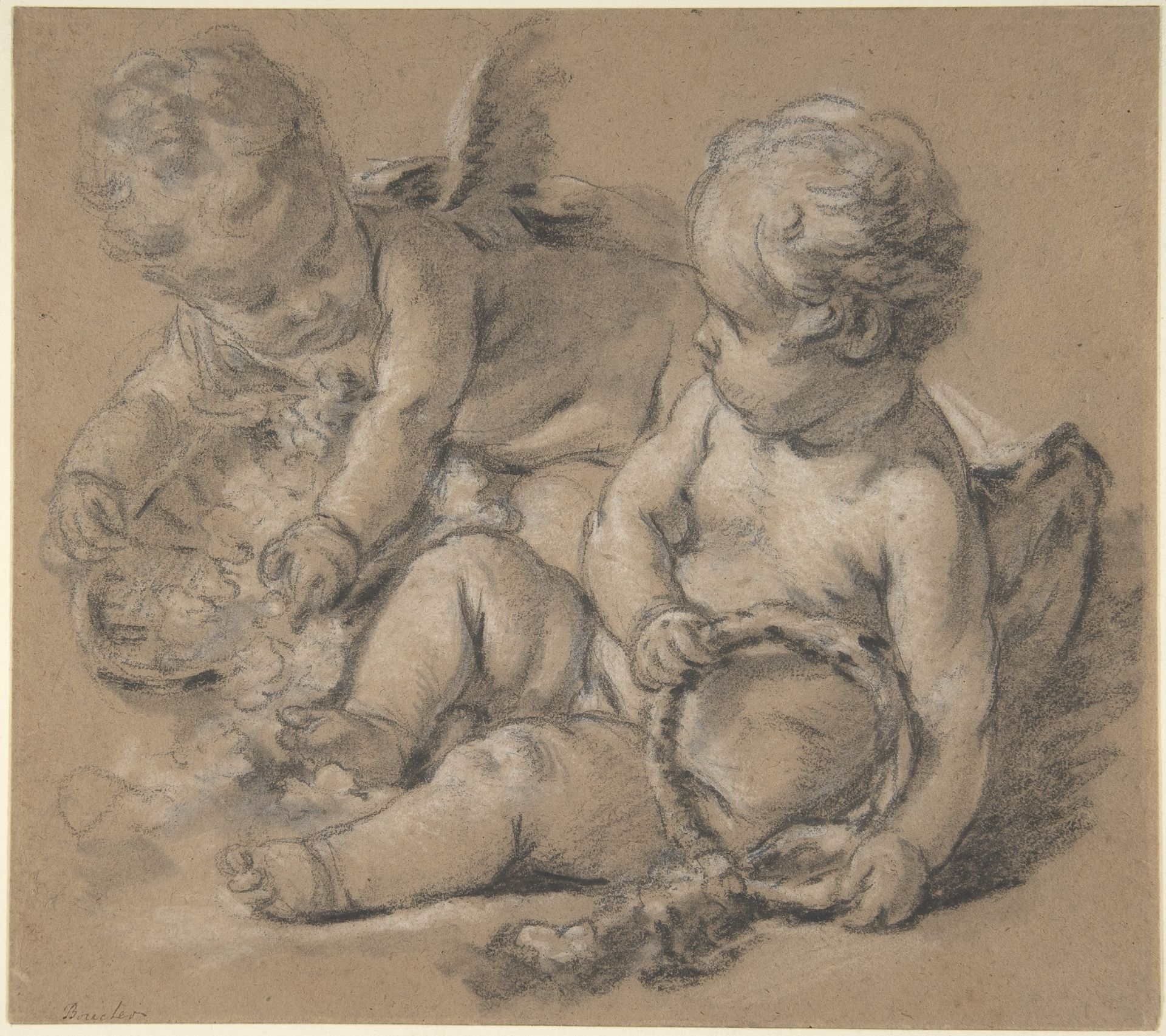
Francois Boucher created this drawing, "Winged Putti with Flowers," using black and white chalk on brown paper. Boucher worked in the Rococo period in France when art was playful, decorative, and light-hearted. The putti, or cherubs, are chubby and infantile, their bodies soft and idealized. The representation of cherubic figures like these reflects the era’s fascination with innocence, beauty, and pleasure, themes that were fashionable amongst the French aristocracy. But this idealization often came at a cost. The aristocracy often ignored the growing inequalities within French society, leading to the French Revolution later in the century. The putti float amongst the flowers, evoking a sense of carefree joy and lightness. The image is charming, but perhaps also prompts us to reflect on the social and political issues beneath the pretty surface.
Winged Putti with Flowers
1745 - 1755


Artwork details
- Medium
- drawing, print, charcoal
- Dimensions
- 8 5/16 x 9 1/4 in. (21.1 x 23.5 cm)
- Location
- Metropolitan Museum of Art, New York, NY
- Copyright
- Public Domain
Tags
Comments
Share your thoughts
About this artwork
Francois Boucher created this drawing, "Winged Putti with Flowers," using black and white chalk on brown paper. Boucher worked in the Rococo period in France when art was playful, decorative, and light-hearted. The putti, or cherubs, are chubby and infantile, their bodies soft and idealized. The representation of cherubic figures like these reflects the era’s fascination with innocence, beauty, and pleasure, themes that were fashionable amongst the French aristocracy. But this idealization often came at a cost. The aristocracy often ignored the growing inequalities within French society, leading to the French Revolution later in the century. The putti float amongst the flowers, evoking a sense of carefree joy and lightness. The image is charming, but perhaps also prompts us to reflect on the social and political issues beneath the pretty surface.
Comments
Share your thoughts