About this artwork
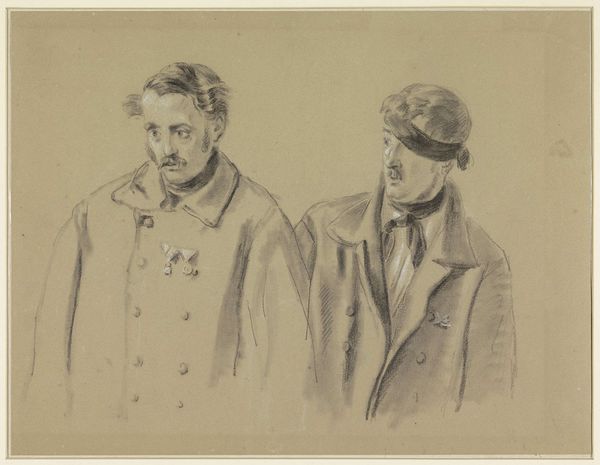
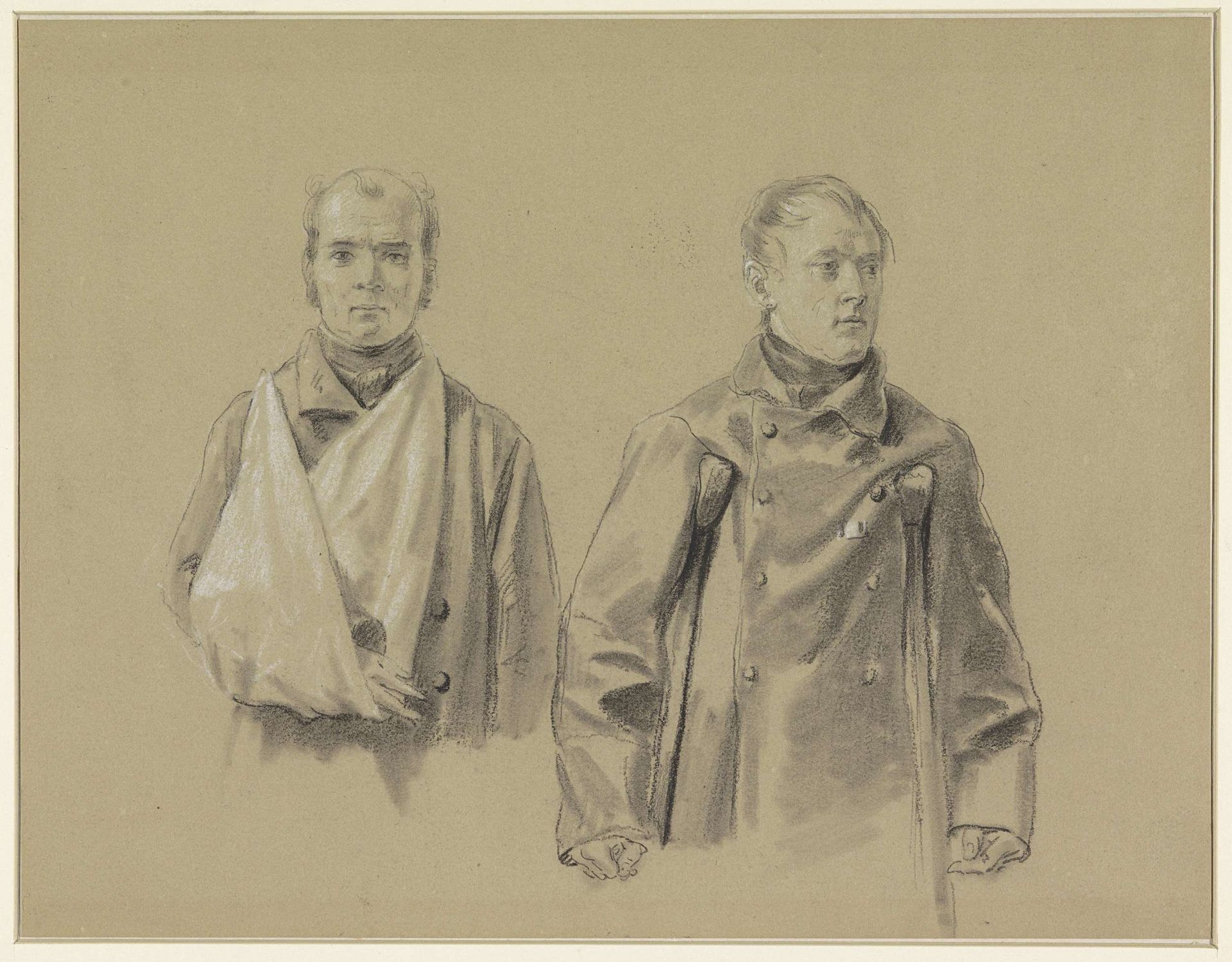
Jacob Joseph Eeckhout created this drawing of two wounded soldiers using graphite and charcoal. Eeckhout was active during a period of significant political and social upheaval in Europe, marked by the Napoleonic Wars and subsequent efforts to establish new social orders. Looking at these figures, we can consider the human cost of war. The artist draws our attention to the realities faced by ordinary soldiers, emphasizing their vulnerability. One soldier has his arm in a sling, while the other relies on crutches. These details evoke a sense of empathy and concern. The artist captures a specific moment in time, inviting reflection on broader themes of conflict, sacrifice, and recovery. While the drawing speaks to a particular historical context, it also resonates with contemporary discussions about the impact of war. It is a reminder of the enduring consequences of military conflict on individuals and communities.
Twee gewonde soldaten, de linker met zijn arm in een mitella, de rechter op krukken
1803 - 1861

Jacob Joseph Eeckhout
1793 - 1861Location
RijksmuseumArtwork details
- Medium
- drawing, pencil, charcoal
- Dimensions
- height 221 mm, width 286 mm
- Location
- Rijksmuseum
- Copyright
- Rijks Museum: Open Domain
Tags
Comments
Share your thoughts
About this artwork
Jacob Joseph Eeckhout created this drawing of two wounded soldiers using graphite and charcoal. Eeckhout was active during a period of significant political and social upheaval in Europe, marked by the Napoleonic Wars and subsequent efforts to establish new social orders. Looking at these figures, we can consider the human cost of war. The artist draws our attention to the realities faced by ordinary soldiers, emphasizing their vulnerability. One soldier has his arm in a sling, while the other relies on crutches. These details evoke a sense of empathy and concern. The artist captures a specific moment in time, inviting reflection on broader themes of conflict, sacrifice, and recovery. While the drawing speaks to a particular historical context, it also resonates with contemporary discussions about the impact of war. It is a reminder of the enduring consequences of military conflict on individuals and communities.
Comments
Share your thoughts