About this artwork
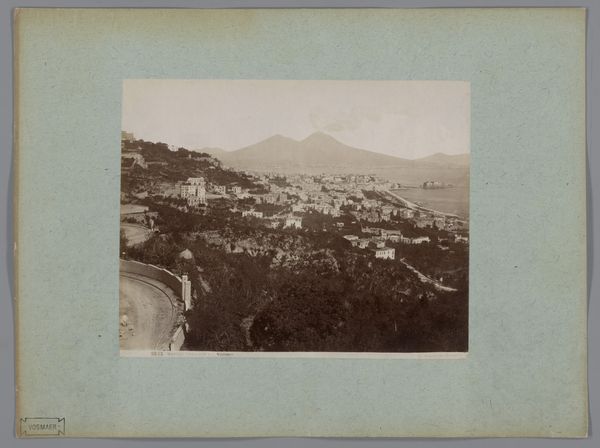
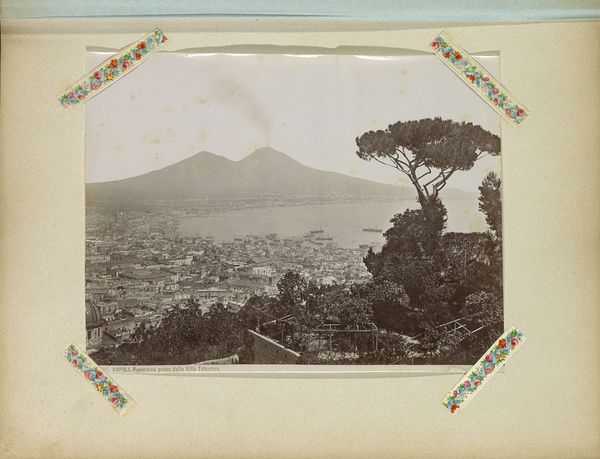
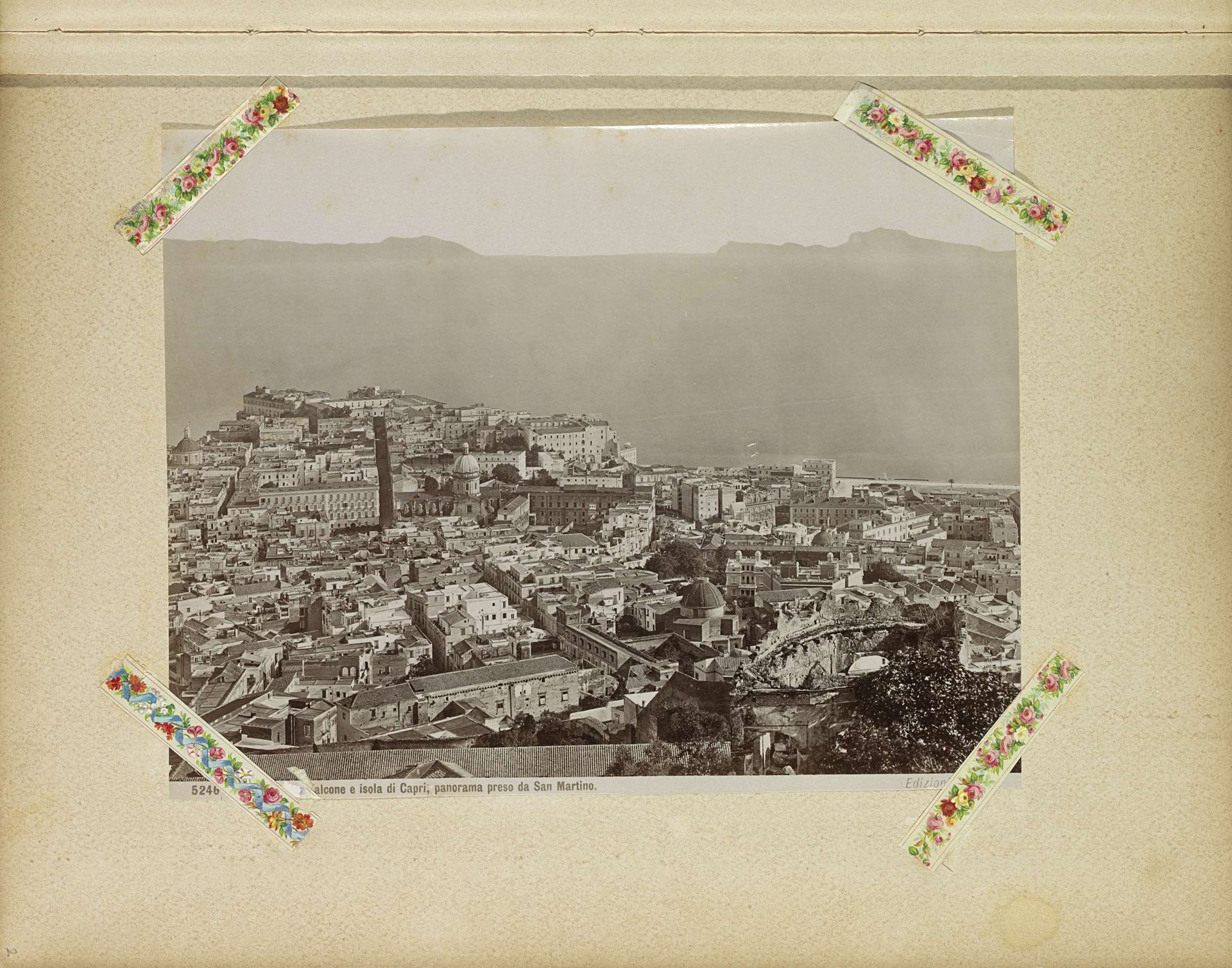
Edizione Brogi's photograph captures the vista of Pizzofalcone and Capri from San Martino. Though undated, its aesthetic sensibility places it within the visual culture of late 19th-century Italy, a period marked by significant social and political upheaval. During this era, photography played a crucial role in shaping perceptions of Italian identity. Brogi’s gaze emphasizes the picturesque qualities of the landscape. This romanticized view of Naples, however, often obscured the complex realities of urban life, including issues of poverty, class division, and social unrest. While seemingly a neutral recording, the image participates in a broader narrative of national identity formation. The photograph invites viewers to imagine themselves as part of a unified Italian landscape. This imagined community, however, often excluded the experiences of marginalized groups. The emotional resonance of this image lies in its ability to evoke a sense of belonging, while simultaneously obscuring the social and economic inequalities. It is a powerful reminder of how images can shape our understanding of history, culture, and identity.
Gezicht op Pizzofalcone en het eiland Capri vanaf San Martino
c. 1870 - 1900

Artwork details
- Medium
- print, photography, albumen-print
- Dimensions
- height 193 mm, width 246 mm
- Copyright
- Rijks Museum: Open Domain
Tags
pictorialism
landscape
photography
cityscape
genre-painting
albumen-print
Comments
Be the first to share your thoughts about this work.
About this artwork
Edizione Brogi's photograph captures the vista of Pizzofalcone and Capri from San Martino. Though undated, its aesthetic sensibility places it within the visual culture of late 19th-century Italy, a period marked by significant social and political upheaval. During this era, photography played a crucial role in shaping perceptions of Italian identity. Brogi’s gaze emphasizes the picturesque qualities of the landscape. This romanticized view of Naples, however, often obscured the complex realities of urban life, including issues of poverty, class division, and social unrest. While seemingly a neutral recording, the image participates in a broader narrative of national identity formation. The photograph invites viewers to imagine themselves as part of a unified Italian landscape. This imagined community, however, often excluded the experiences of marginalized groups. The emotional resonance of this image lies in its ability to evoke a sense of belonging, while simultaneously obscuring the social and economic inequalities. It is a powerful reminder of how images can shape our understanding of history, culture, and identity.
Comments
Be the first to share your thoughts about this work.