1576 - 1580
Gehoor

Hendrick Goltzius
1558 - 1617Location
RijksmuseumListen to curator's interpretation
Curatorial notes
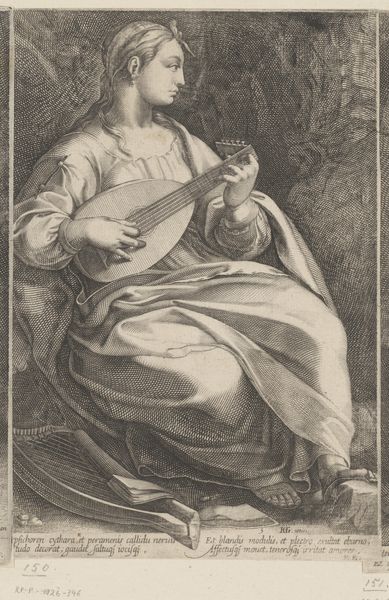
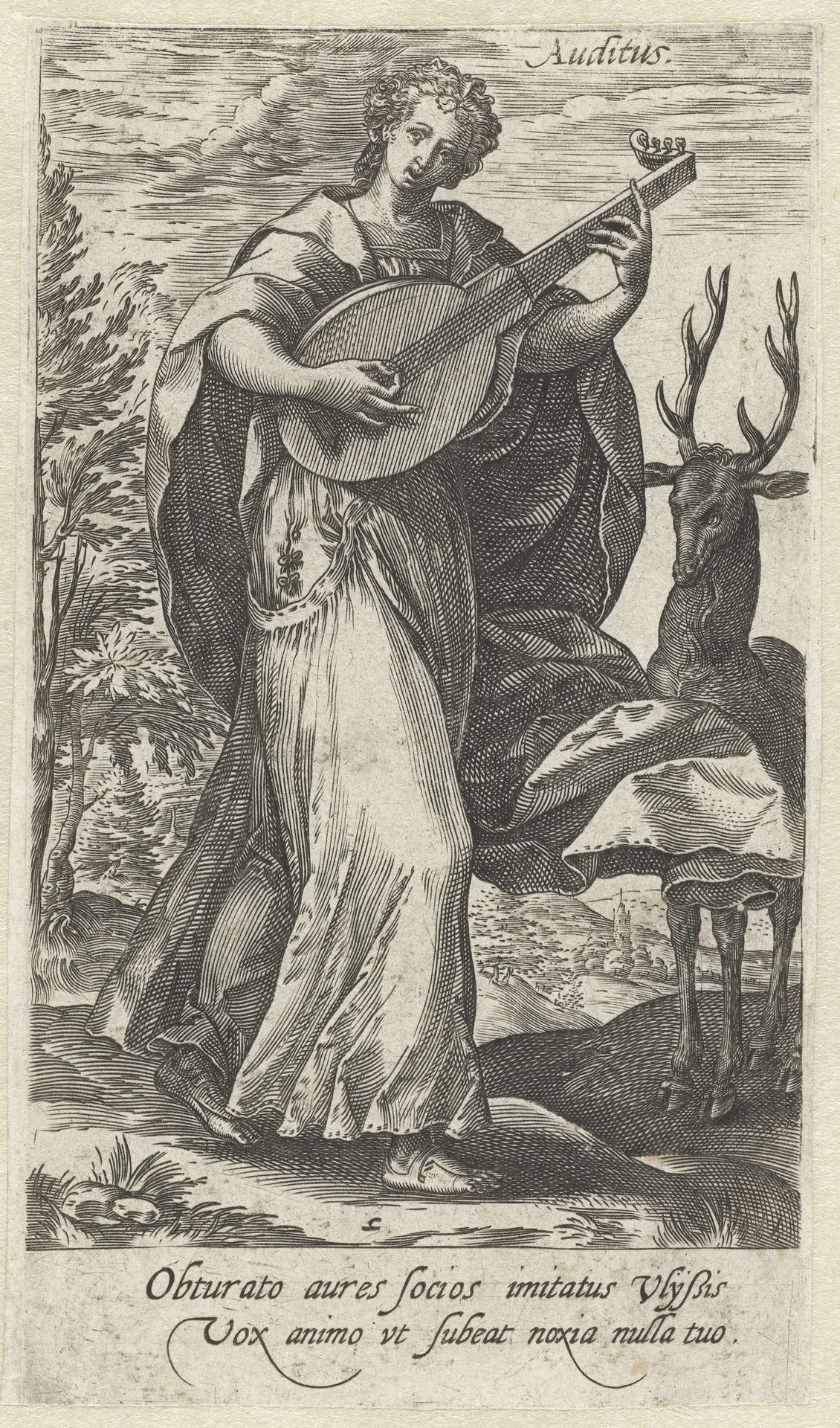
Hendrick Goltzius created this print, “Gehoor,” meaning hearing, in the late 16th or early 17th century. It is part of a series depicting the five senses. The Dutch Republic was a burgeoning center for art and culture, and Goltzius was one of its leading printmakers. Here, we see a woman playing a lute, robed in classical garb, accompanied by a deer. The deer is an emblem of acute hearing and is therefore used as a symbol of the sense of hearing, but the woman is the main symbol. She has an androgynous appearance, and the ambiguity of the figure suggests the complex ways gender roles were being negotiated at the time. The series was designed to appeal to the educated elite, evidenced by the Latin inscription which references Ulysses, who blocked his ears to avoid being lured by the Sirens. The inscription implies that the pleasure of music is dangerous and shouldn't be sought in groups. The image functions as a reminder of the power and potential pitfalls of sensory experience. It is an introspective reflection on the human condition.