About this artwork
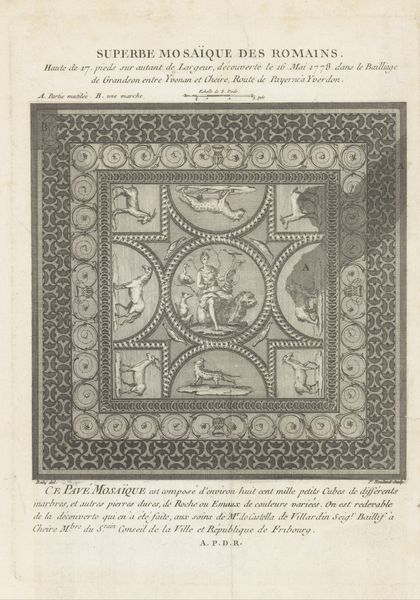
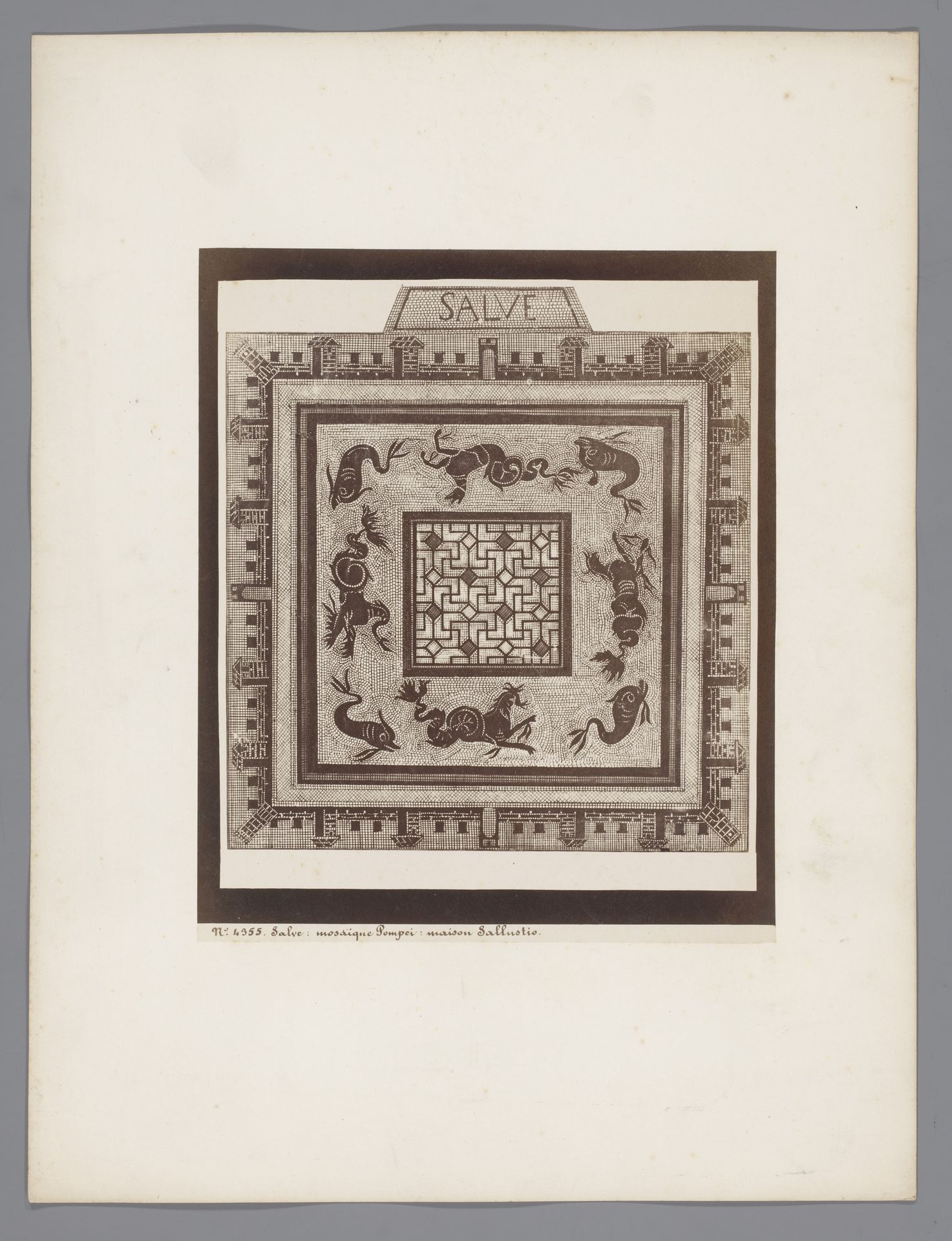
This is a photograph by Giorgio Sommer of a mosaic in the House of Sallust in Pompeii. Sommer, who was active in Italy, made many images of the ancient world for tourists and scholars alike. The House of Sallust, named for a Roman historian, provides insight into the lives of the wealthy during the Roman Empire. Mosaics like this one were not just decorative, they were status symbols, reflecting the owner's wealth and taste. The image includes the word "SALVE," a common Roman greeting, inviting visitors into the home. Consider the absence of enslaved people, whose labor would have been essential for the creation of the mosaic and the maintenance of the House. While the mosaic celebrates the owner's world, the enslaved are unseen. Sommer's photograph documents not just a historical artifact but also prompts reflection on power, privilege, and the complexities of history.
Fotoreproductie van een mozaïek in het huis van Sallustio te Pompeï, Italië
1857 - 1875

Giorgio Sommer
1834 - 1914Location
RijksmuseumArtwork details
- Medium
- mosaic, print, daguerreotype, photography
- Dimensions
- height 404 mm, width 307 mm
- Location
- Rijksmuseum
- Copyright
- Rijks Museum: Open Domain
Tags
Comments
Share your thoughts
About this artwork
This is a photograph by Giorgio Sommer of a mosaic in the House of Sallust in Pompeii. Sommer, who was active in Italy, made many images of the ancient world for tourists and scholars alike. The House of Sallust, named for a Roman historian, provides insight into the lives of the wealthy during the Roman Empire. Mosaics like this one were not just decorative, they were status symbols, reflecting the owner's wealth and taste. The image includes the word "SALVE," a common Roman greeting, inviting visitors into the home. Consider the absence of enslaved people, whose labor would have been essential for the creation of the mosaic and the maintenance of the House. While the mosaic celebrates the owner's world, the enslaved are unseen. Sommer's photograph documents not just a historical artifact but also prompts reflection on power, privilege, and the complexities of history.
Comments
Share your thoughts