About this artwork
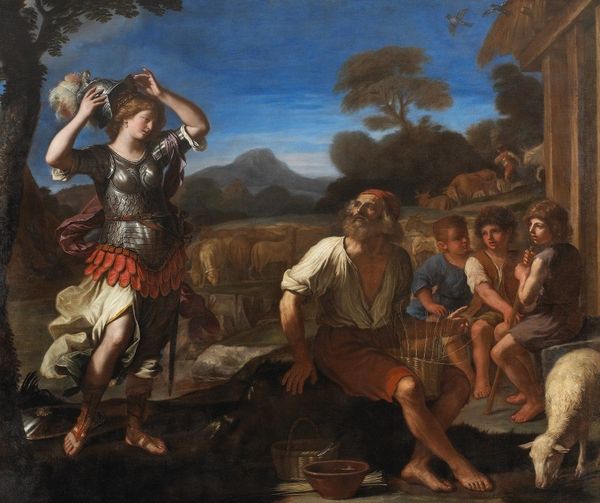
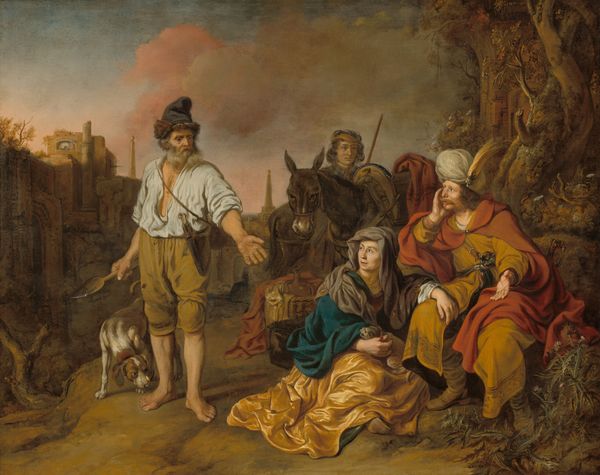
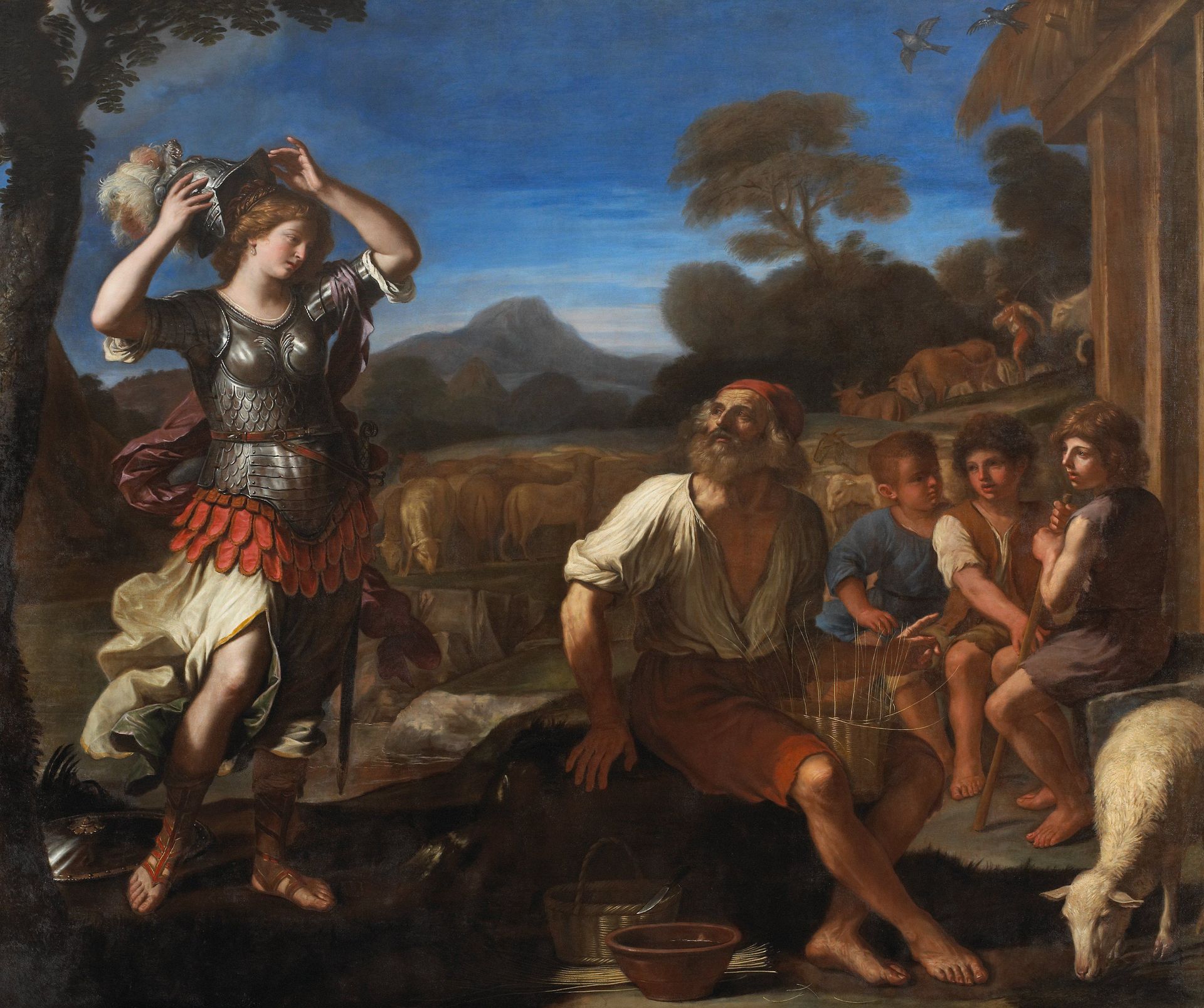
Guercino painted *Erminia and the Shepherds* in the 17th century. The work depicts a scene from Torquato Tasso's epic poem, *Jerusalem Delivered*, which was written during the counter-reformation. In this scene, Erminia, a princess and warrior, encounters a group of shepherds while fleeing a battle. Note how the artist juxtaposes Erminia, dressed in armor and a red skirt, with the simple pastoral scene. Her attire speaks of war and courtly life, while the shepherds represent a life of peace and simplicity. Guercino invites us to consider how identity is shaped by circumstance. Erminia's regal bearing contrasts with her vulnerable state as a refugee. The shepherds, on the other hand, represent a community rooted in place and tradition. As we consider their interaction, we're left to ponder the complexities of human experience and the search for refuge amidst conflict.
Erminia and the Shepherds 1648 - 1649


Artwork details
- Medium
- oil-paint, oil-on-canvas
- Dimensions
- 93 1/2 x 112 in. (237.5 x 284.5 cm)
- Location
- Minneapolis Institute of Art
- Copyright
- Public Domain
Tags
baroque
oil-paint
landscape
figuration
oil painting
genre-painting
history-painting
oil-on-canvas
portrait art
Comments

Guercino excelled at monumental, lushly colored Italian Baroque paintings. An entry in the artist’s account book on January 14, 1649, records a handsome payment from an important Sicilian collector, Antonio Ruffo, for this one. The scene is from Torquato Tasso’s popular epic poem "Jerusalem Delivered" (1581). The story is set during the First Crusade (1096–99), when Christian warriors laid siege to Jerusalem, then under Muslim rule. Here, the Muslim princess Erminia, disguised in armor, has fled Jerusalem. Escaping to the forest, she comes upon a shepherd and his sons making baskets. They are startled, but she removes her helmet to calm their fears, and they give her shelter.
About this artwork
Guercino painted *Erminia and the Shepherds* in the 17th century. The work depicts a scene from Torquato Tasso's epic poem, *Jerusalem Delivered*, which was written during the counter-reformation. In this scene, Erminia, a princess and warrior, encounters a group of shepherds while fleeing a battle. Note how the artist juxtaposes Erminia, dressed in armor and a red skirt, with the simple pastoral scene. Her attire speaks of war and courtly life, while the shepherds represent a life of peace and simplicity. Guercino invites us to consider how identity is shaped by circumstance. Erminia's regal bearing contrasts with her vulnerable state as a refugee. The shepherds, on the other hand, represent a community rooted in place and tradition. As we consider their interaction, we're left to ponder the complexities of human experience and the search for refuge amidst conflict.
Comments
Guercino excelled at monumental, lushly colored Italian Baroque paintings. An entry in the artist’s account book on January 14, 1649, records a handsome payment from an important Sicilian collector, Antonio Ruffo, for this one. The scene is from Torquato Tasso’s popular epic poem "Jerusalem Delivered" (1581). The story is set during the First Crusade (1096–99), when Christian warriors laid siege to Jerusalem, then under Muslim rule. Here, the Muslim princess Erminia, disguised in armor, has fled Jerusalem. Escaping to the forest, she comes upon a shepherd and his sons making baskets. They are startled, but she removes her helmet to calm their fears, and they give her shelter.