1637
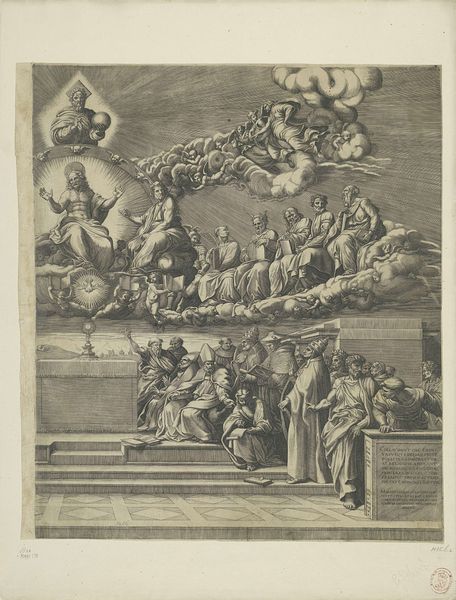
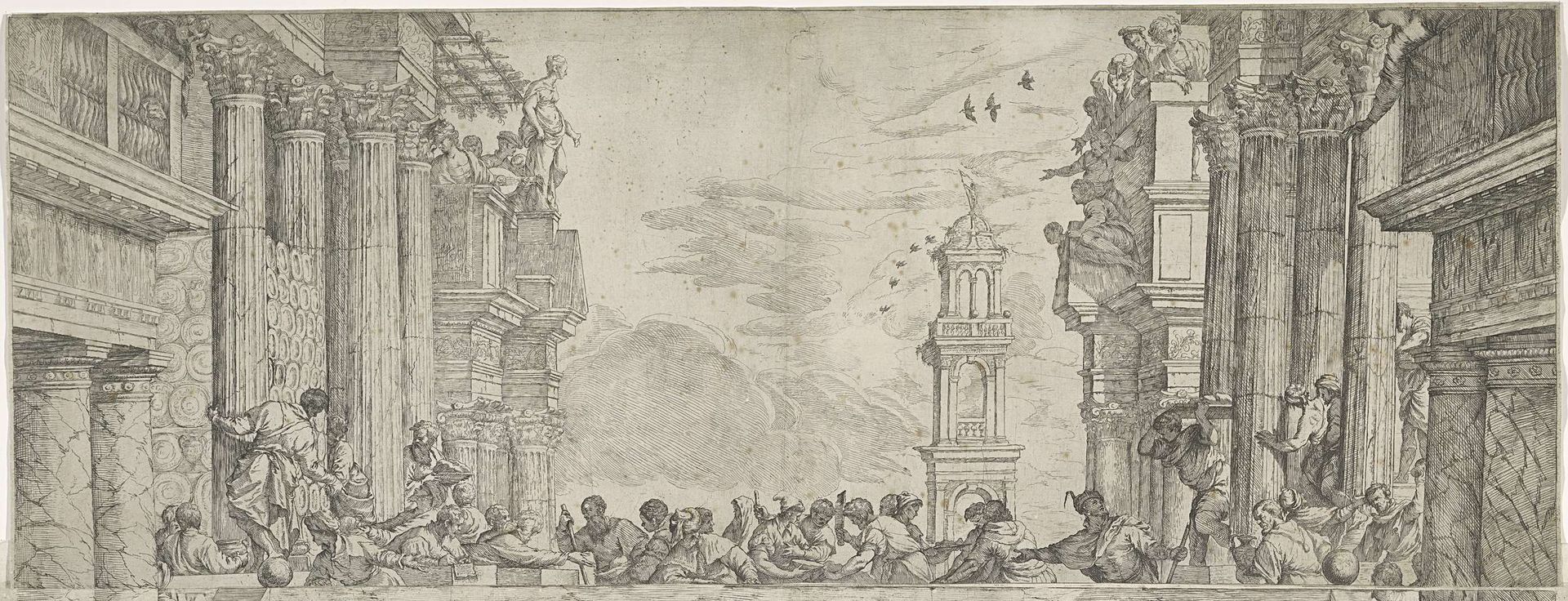
Christus op de bruiloft te Kana (bovenste deel)

Listen to curator's interpretation
Curatorial notes
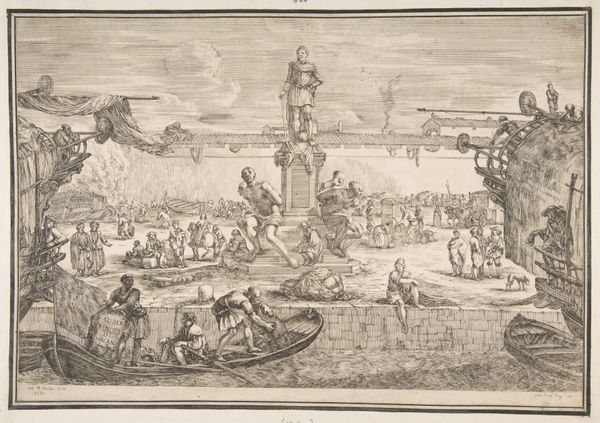
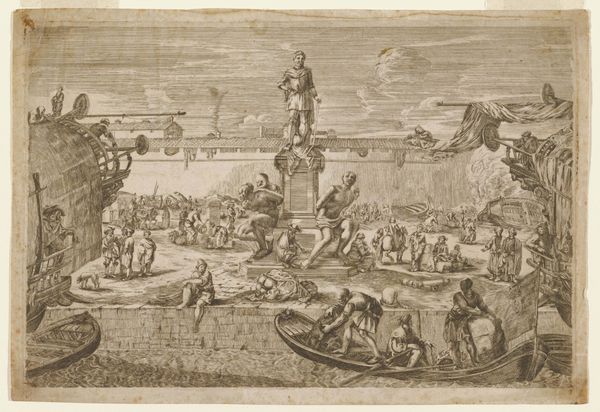
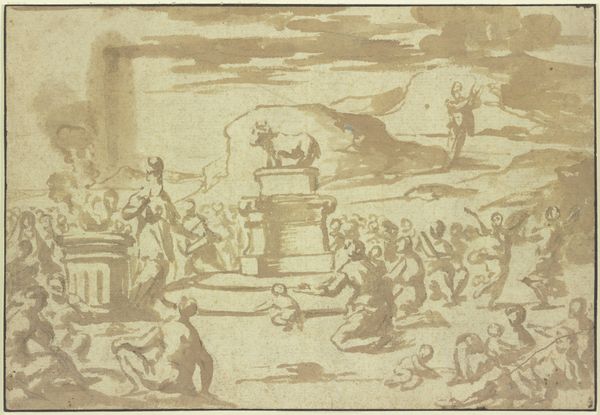
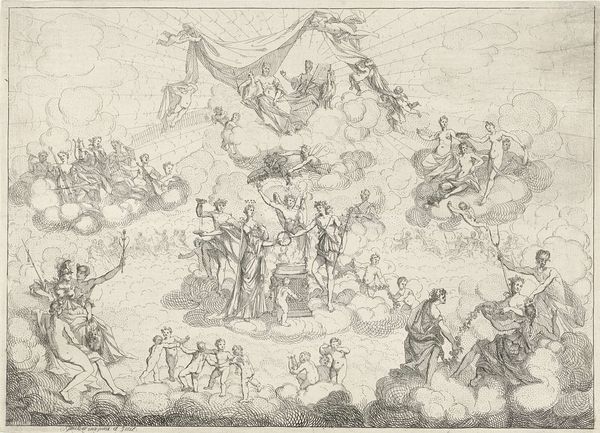
This is the upper portion of Giovanni Battista Vanni’s depiction of Christ at the Wedding Feast at Cana, made using etching. Etching is a printmaking technique that relies on the corrosive power of acid to create lines in a metal plate. The plate is first coated with a waxy, acid-resistant substance called a ground. The artist then scratches an image into the ground with a needle, exposing the metal beneath. When the plate is immersed in acid, the exposed metal is eaten away, creating incised lines. The depth of the lines, and the way the ink sits in them, is what gives the print its character. Note how Vanni has exploited this process to create a bustling scene, full of incident. Though the wedding party occupies the foreground, the eye is drawn upward toward the more lightly articulated architectural elements, and then to the sky beyond. Through the craft of etching, Vanni guides our eye towards the heavens, a testament to the printmaker’s skill, and the expressive potential of this intaglio process.