About this artwork
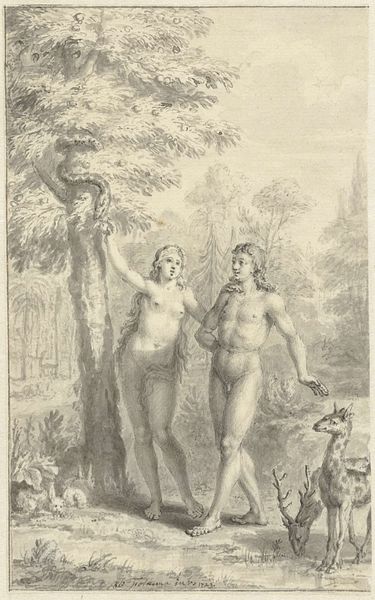
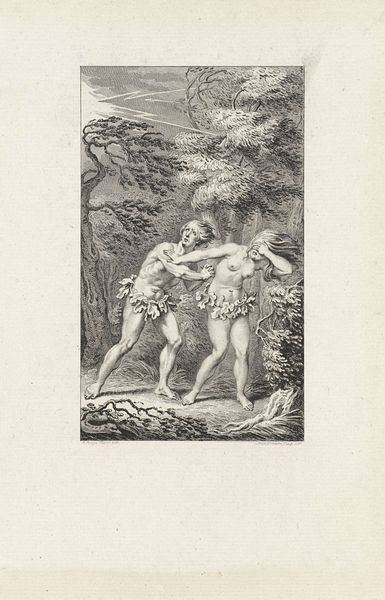
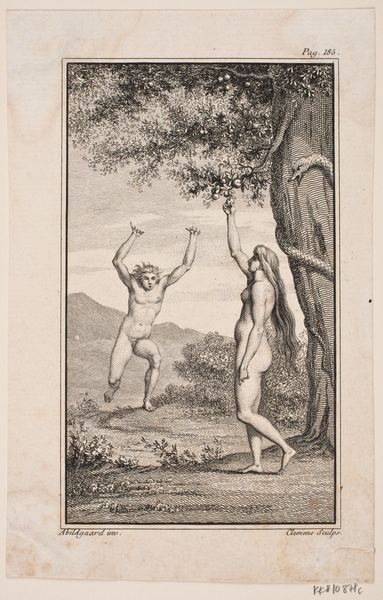
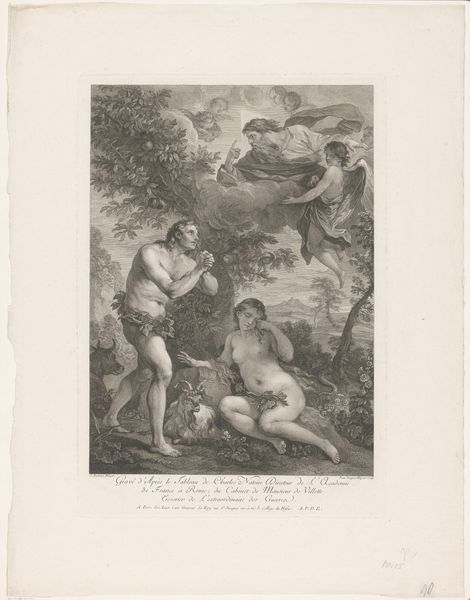
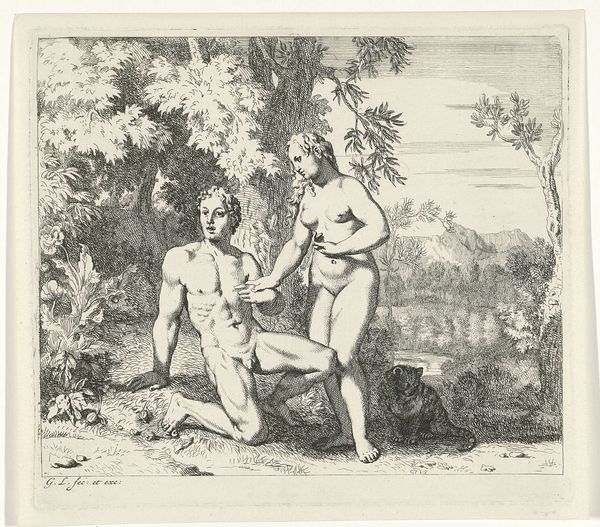
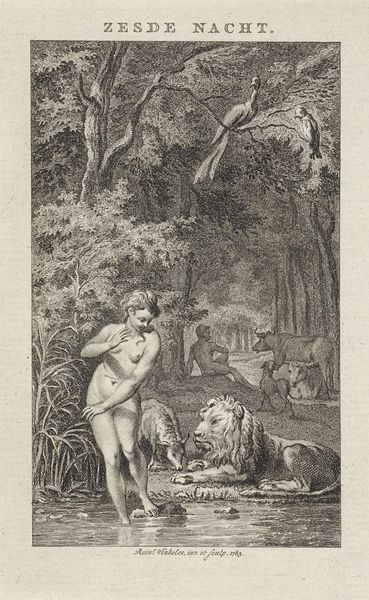
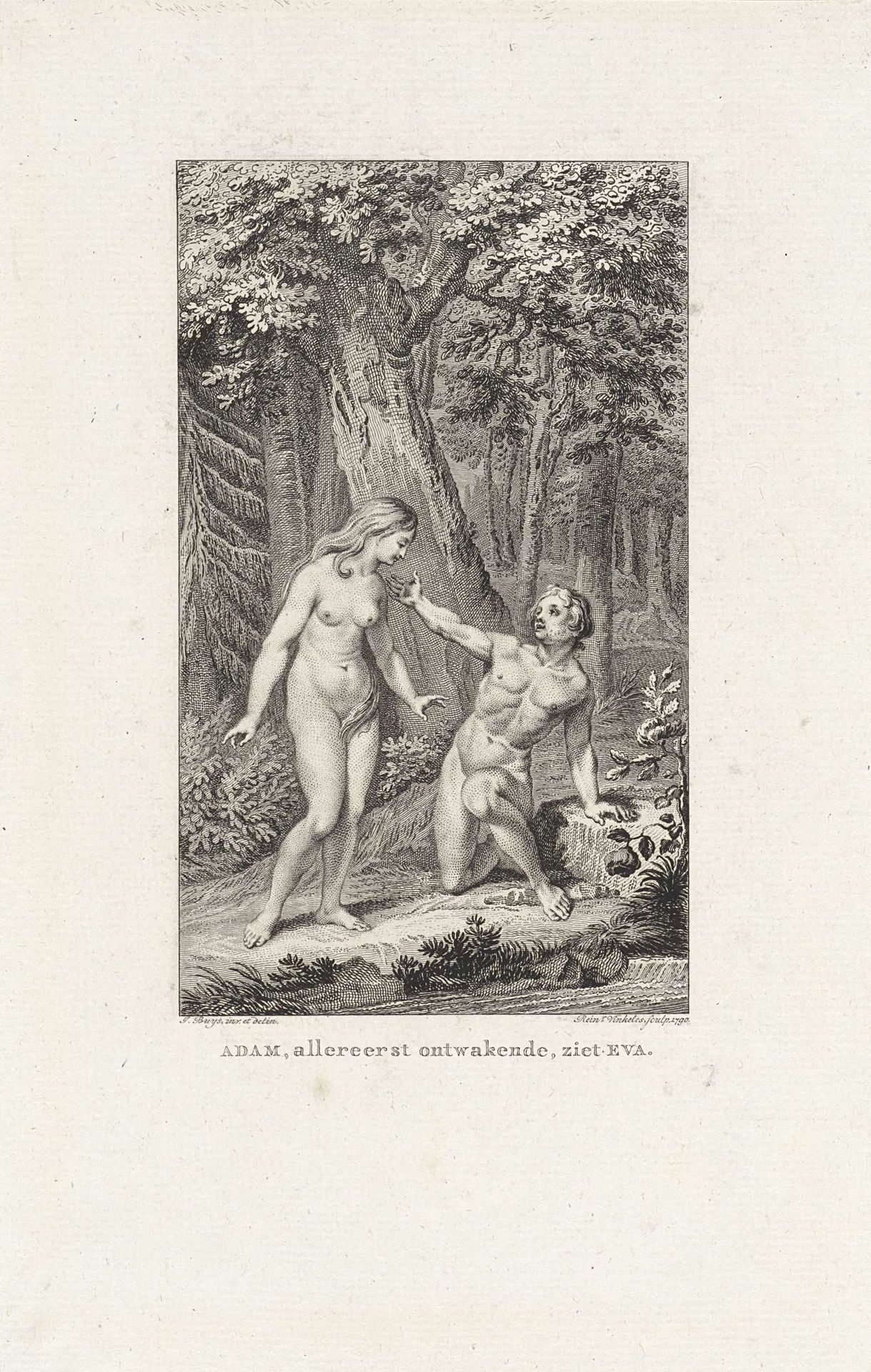
Reinier Vinkeles created this print, *Schepping van Eva*, using engraving, a process that demands precision and control. The image is formed by cutting lines into a metal plate, which then holds ink to transfer the design onto paper. Look closely, and you’ll notice the stark contrast between light and shadow, achieved through carefully hatched lines. It is painstaking work that requires both technical skill and artistic vision. The lines create the illusion of depth and form, bringing the biblical scene to life. Engraving, as a medium, was critical to the circulation of ideas and images, allowing for mass production and dissemination of artwork. Consider the labor involved; each line meticulously carved by hand. This reflects a pre-industrial mode of production, where craftsmanship and skill were paramount. It’s a reminder of the human effort embedded in every print, a contrast to our current digital age where images are easily produced and distributed. By understanding the materials and processes, we appreciate not only the aesthetic qualities, but the cultural and social context of the artwork.

Artwork details
- Medium
- print, engraving
- Dimensions
- height 234 mm, width 151 mm
- Location
- Rijksmuseum
- Copyright
- Rijks Museum: Open Domain
Tags
Comments
Share your thoughts
About this artwork
Reinier Vinkeles created this print, *Schepping van Eva*, using engraving, a process that demands precision and control. The image is formed by cutting lines into a metal plate, which then holds ink to transfer the design onto paper. Look closely, and you’ll notice the stark contrast between light and shadow, achieved through carefully hatched lines. It is painstaking work that requires both technical skill and artistic vision. The lines create the illusion of depth and form, bringing the biblical scene to life. Engraving, as a medium, was critical to the circulation of ideas and images, allowing for mass production and dissemination of artwork. Consider the labor involved; each line meticulously carved by hand. This reflects a pre-industrial mode of production, where craftsmanship and skill were paramount. It’s a reminder of the human effort embedded in every print, a contrast to our current digital age where images are easily produced and distributed. By understanding the materials and processes, we appreciate not only the aesthetic qualities, but the cultural and social context of the artwork.
Comments
Share your thoughts