About this artwork
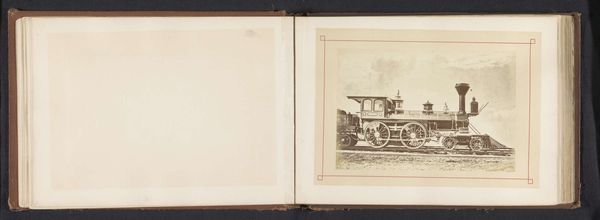
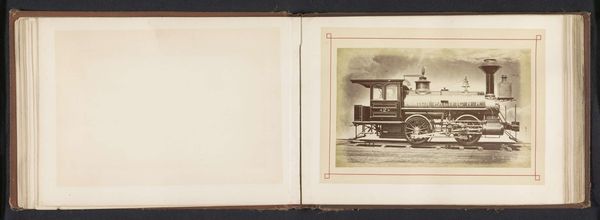
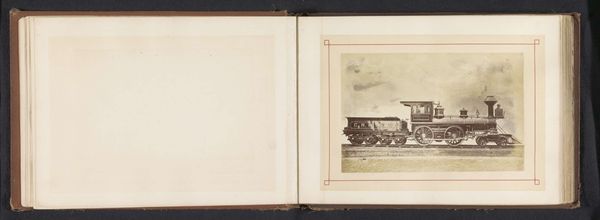
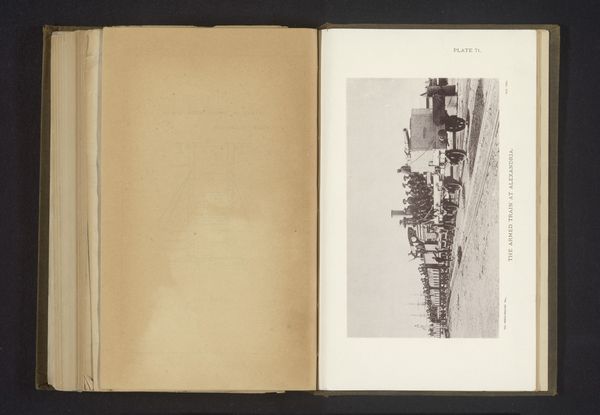
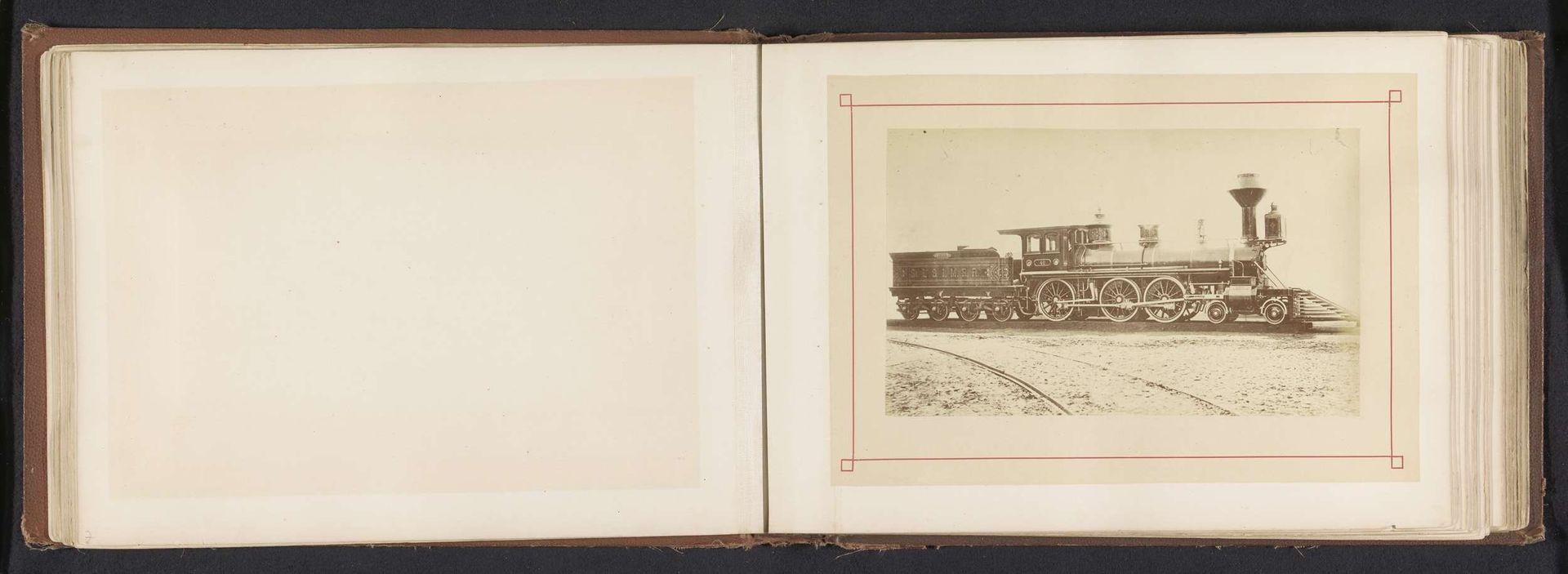
Editor: Here we have "Stoomlocomotief," a photograph taken by George Gardner Rockwood before 1871. It's presented like a page from an old sketchbook, with a toned quality. What do you make of this choice of subject, a steam engine? Curator: Well, steam engines were more than just machines. They were symbols of progress, the industrial revolution, and a new era. The artist places it reverently, as an icon of modernity. Think about how cultures memorialize key symbols. Editor: An icon... That's interesting. The train *does* seem staged, almost reverential. How would the public at the time have perceived this? Curator: For many, it was an optimistic signifier, but for others, maybe it was ominous – a harbinger of displacement, environmental impact, the death of old ways. Note the single track—almost like a predetermined path. Does that provoke any thoughts for you? Editor: I see what you mean. A path laid out... perhaps toward a destination, either utopian or dystopian depending on your point of view. The artist captured it so early in its history that we lack perspective to judge that for ourselves. Curator: Precisely. We bring our baggage to this symbol, much like any other. Consider the dragon in European iconography versus the same beast in the East – both fantastical, yet charged with such divergent significance. How do symbols affect memory? Editor: This photograph really highlights the idea of visual symbols holding multiple meanings. It's both celebratory and a bit unsettling at the same time. Curator: Indeed. Recognizing the many possible readings helps us understand the image and the cultural landscape that created it.

Artwork details
- Medium
- photography
- Dimensions
- height 127 mm, width 212 mm
- Copyright
- Rijks Museum: Open Domain
Tags
Comments
Share your thoughts
About this artwork
Editor: Here we have "Stoomlocomotief," a photograph taken by George Gardner Rockwood before 1871. It's presented like a page from an old sketchbook, with a toned quality. What do you make of this choice of subject, a steam engine? Curator: Well, steam engines were more than just machines. They were symbols of progress, the industrial revolution, and a new era. The artist places it reverently, as an icon of modernity. Think about how cultures memorialize key symbols. Editor: An icon... That's interesting. The train *does* seem staged, almost reverential. How would the public at the time have perceived this? Curator: For many, it was an optimistic signifier, but for others, maybe it was ominous – a harbinger of displacement, environmental impact, the death of old ways. Note the single track—almost like a predetermined path. Does that provoke any thoughts for you? Editor: I see what you mean. A path laid out... perhaps toward a destination, either utopian or dystopian depending on your point of view. The artist captured it so early in its history that we lack perspective to judge that for ourselves. Curator: Precisely. We bring our baggage to this symbol, much like any other. Consider the dragon in European iconography versus the same beast in the East – both fantastical, yet charged with such divergent significance. How do symbols affect memory? Editor: This photograph really highlights the idea of visual symbols holding multiple meanings. It's both celebratory and a bit unsettling at the same time. Curator: Indeed. Recognizing the many possible readings helps us understand the image and the cultural landscape that created it.
Comments
Share your thoughts