About this artwork
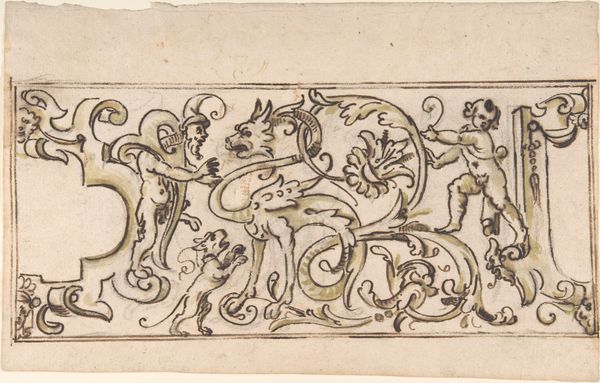
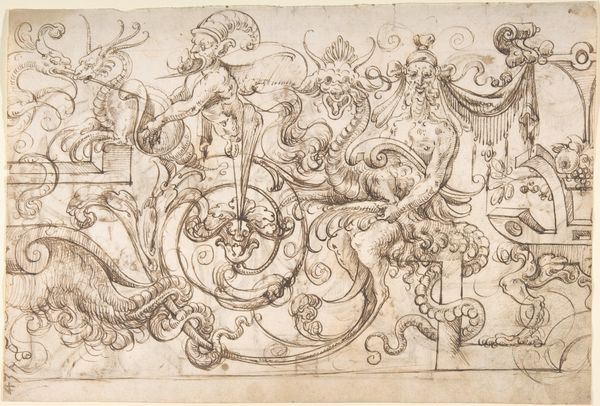
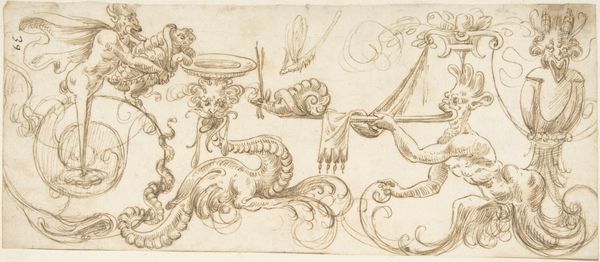
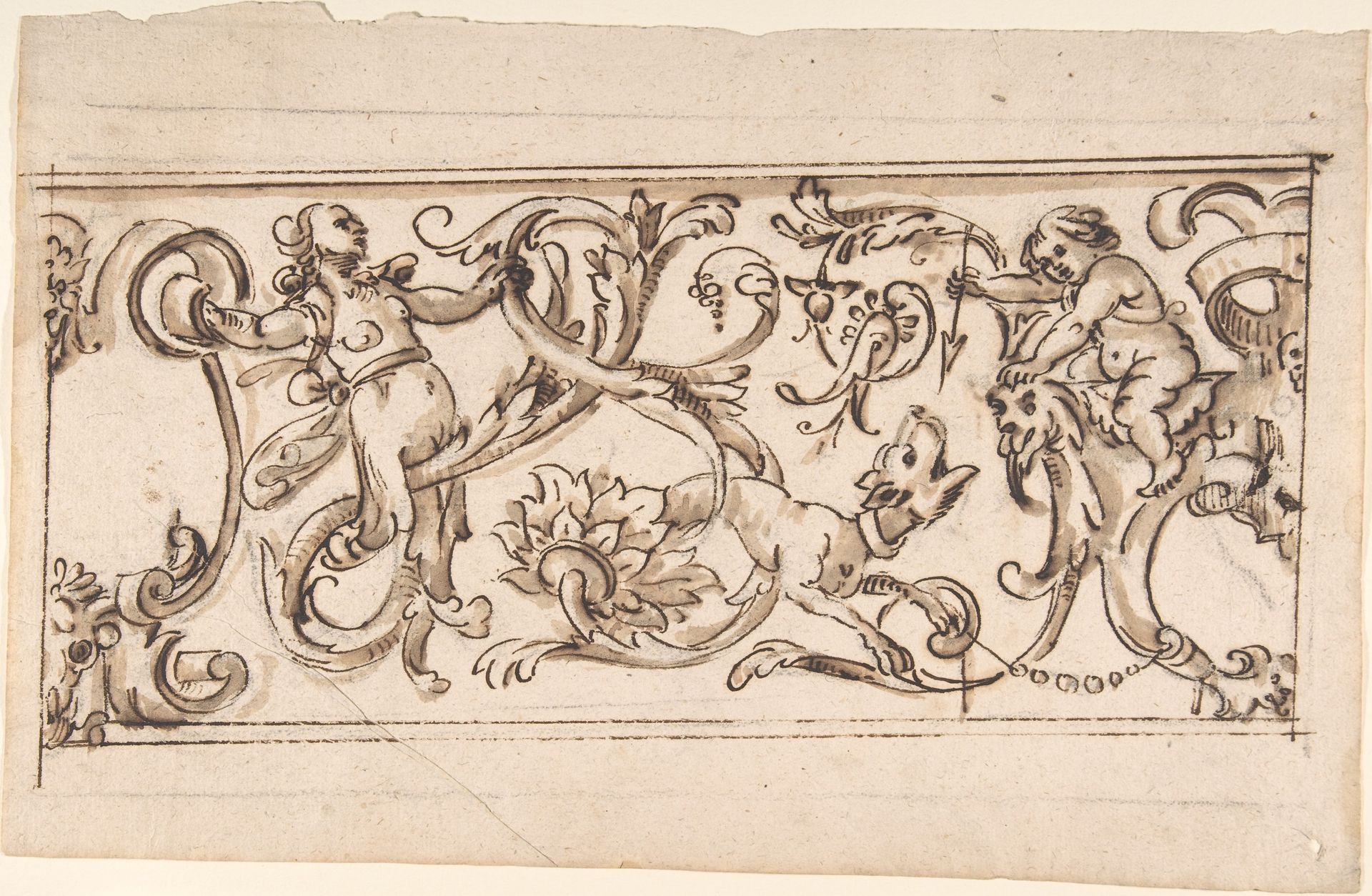
This drawing for a frieze, made by an anonymous artist, presents a rhythmic interplay of rinceau and grotesque motifs in ink on paper. The composition unfurls horizontally, contained within parallel lines that emphasize its function as a decorative band. The artist employs a limited palette to delineate the intricate patterns of scrolling acanthus leaves, human figures, and fantastical creatures. The repetition of forms creates a visual cadence, yet each element maintains its distinct character, contributing to a dynamic tension between unity and diversity. Observe how the grotesque figures—part human, part animal, part plant—destabilize conventional categories, embodying a fluidity that challenges fixed meanings. The drawing functions as a semiotic system where classical forms are reconfigured into something new, reflecting a broader cultural interest in transformation and hybridity. The linear precision of the drawing and the considered placement of each motif suggest an exploration of visual language. It invites us to consider how art can dismantle established orders and propose alternative ways of seeing the world.
Drawing for a Frieze with Rinceau and Grotteschi 17th century


Artwork details
- Medium
- drawing, ink, pen
- Dimensions
- sheet: 10 1/4 x 16 1/16 in. (26 x 40.8 cm)
- Location
- Metropolitan Museum of Art, New York, NY
- Copyright
- Public Domain
Tags
drawing
ink drawing
baroque
pen drawing
pen sketch
figuration
ink
pen
decorative-art
Comments
No comments
About this artwork
This drawing for a frieze, made by an anonymous artist, presents a rhythmic interplay of rinceau and grotesque motifs in ink on paper. The composition unfurls horizontally, contained within parallel lines that emphasize its function as a decorative band. The artist employs a limited palette to delineate the intricate patterns of scrolling acanthus leaves, human figures, and fantastical creatures. The repetition of forms creates a visual cadence, yet each element maintains its distinct character, contributing to a dynamic tension between unity and diversity. Observe how the grotesque figures—part human, part animal, part plant—destabilize conventional categories, embodying a fluidity that challenges fixed meanings. The drawing functions as a semiotic system where classical forms are reconfigured into something new, reflecting a broader cultural interest in transformation and hybridity. The linear precision of the drawing and the considered placement of each motif suggest an exploration of visual language. It invites us to consider how art can dismantle established orders and propose alternative ways of seeing the world.
Comments
No comments