1489 - 2006
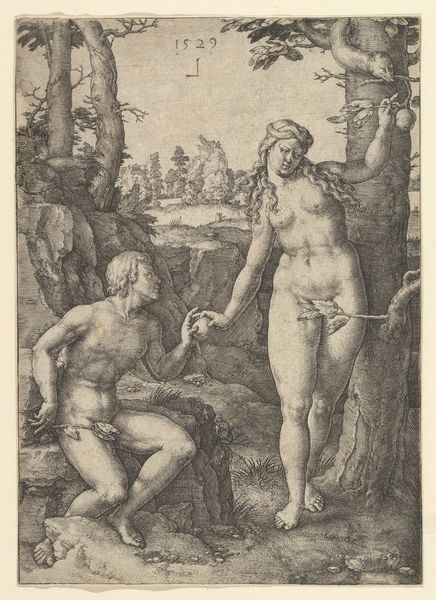
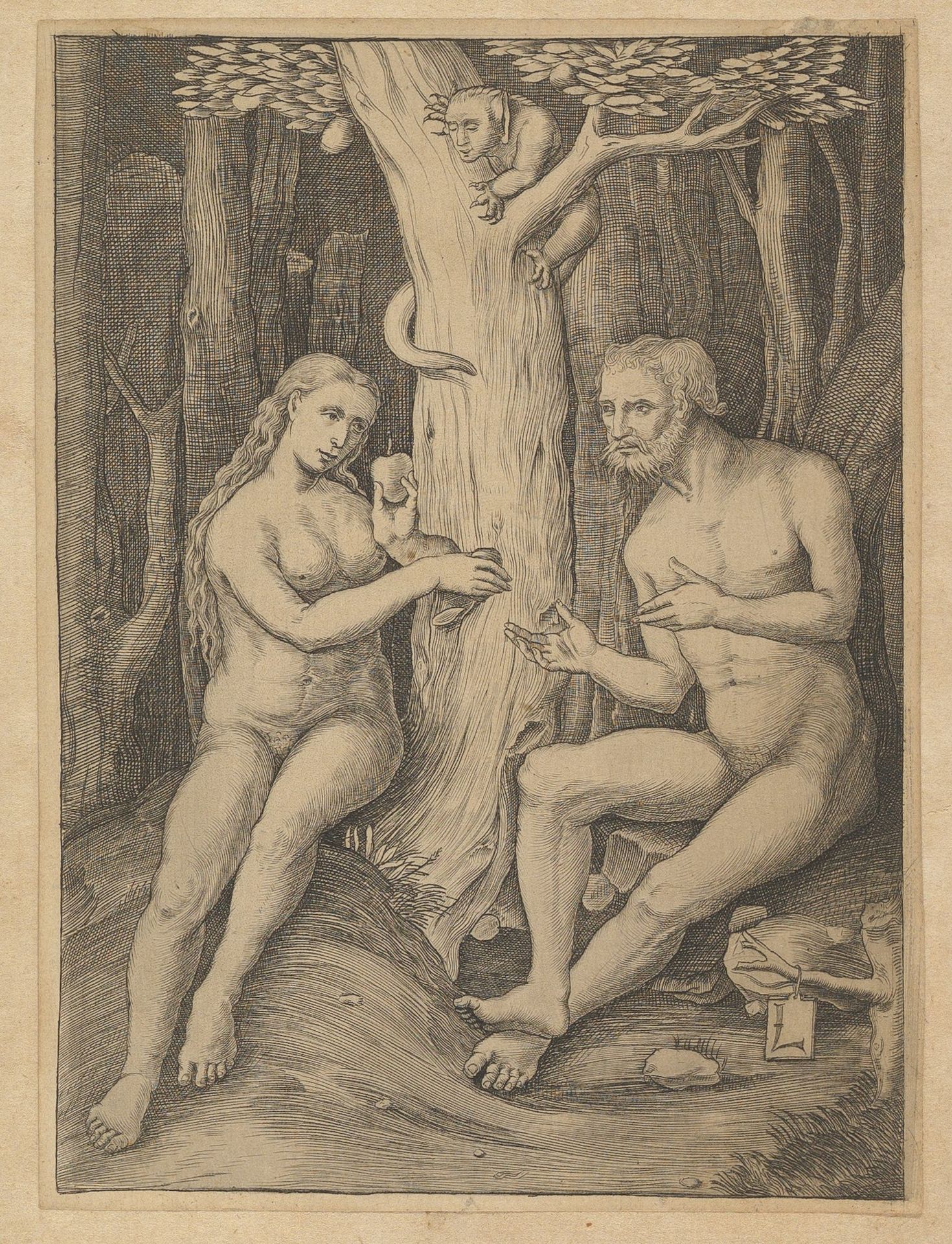
Adam and Eve

Lucas van Leyden
@lucasvanleyden
The Metropolitan Museum of Art
Metropolitan Museum of Art, New York, NYListen to curator's interpretation
Curatorial notes
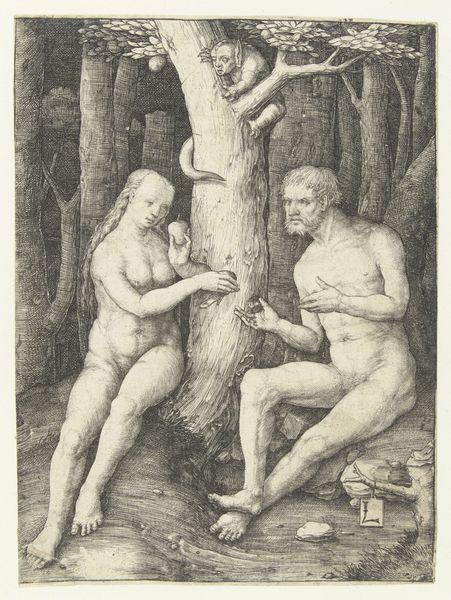
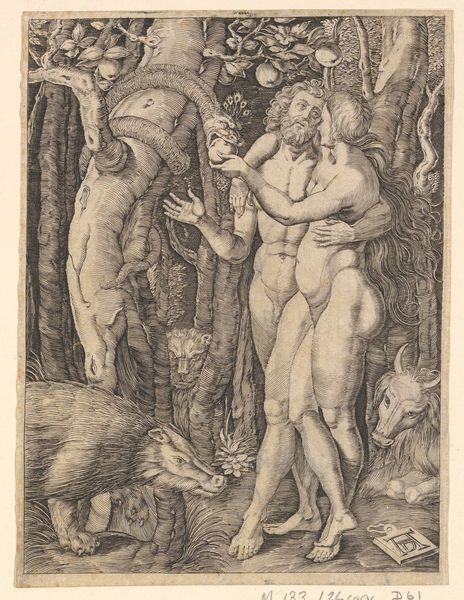
Lucas van Leyden made this engraving of ‘Adam and Eve’ sometime in the first decades of the 16th century. Van Leyden lived during a period of religious and social upheaval that would later be known as the Reformation. Here, van Leyden reimagines the Genesis story, a narrative deeply embedded in the cultural and religious consciousness of the time. We see Adam and Eve not as archetypes of sin, but as figures caught in a moment of contemplation. Eve holds the apple, a symbol of knowledge and transgression, while both figures seem to be in thoughtful dialogue. Above them, a monkey is perched in the tree, traditionally a symbol of baser instincts. Consider what it meant to depict such foundational stories during a period questioning religious authority, and in what ways van Leyden uses the traditional narrative to explore human psychology. Does the print confirm established ideas about morality, or does it invite a reconsideration of choice, knowledge, and the human condition?