About this artwork
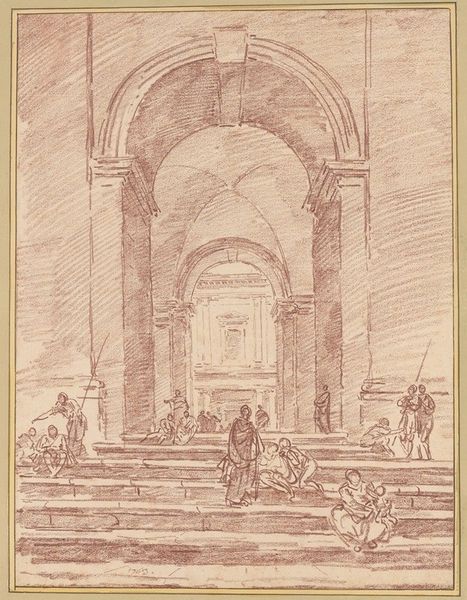
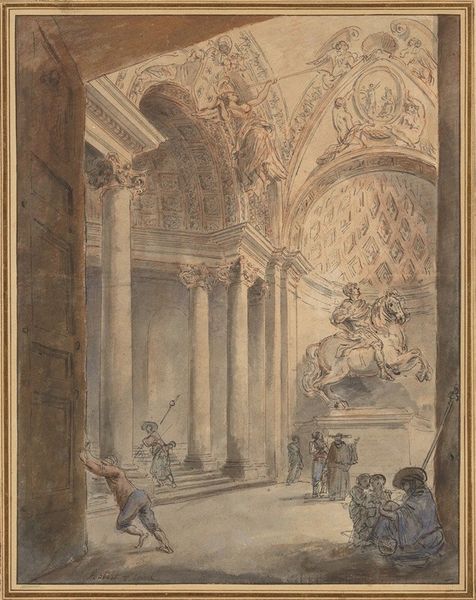
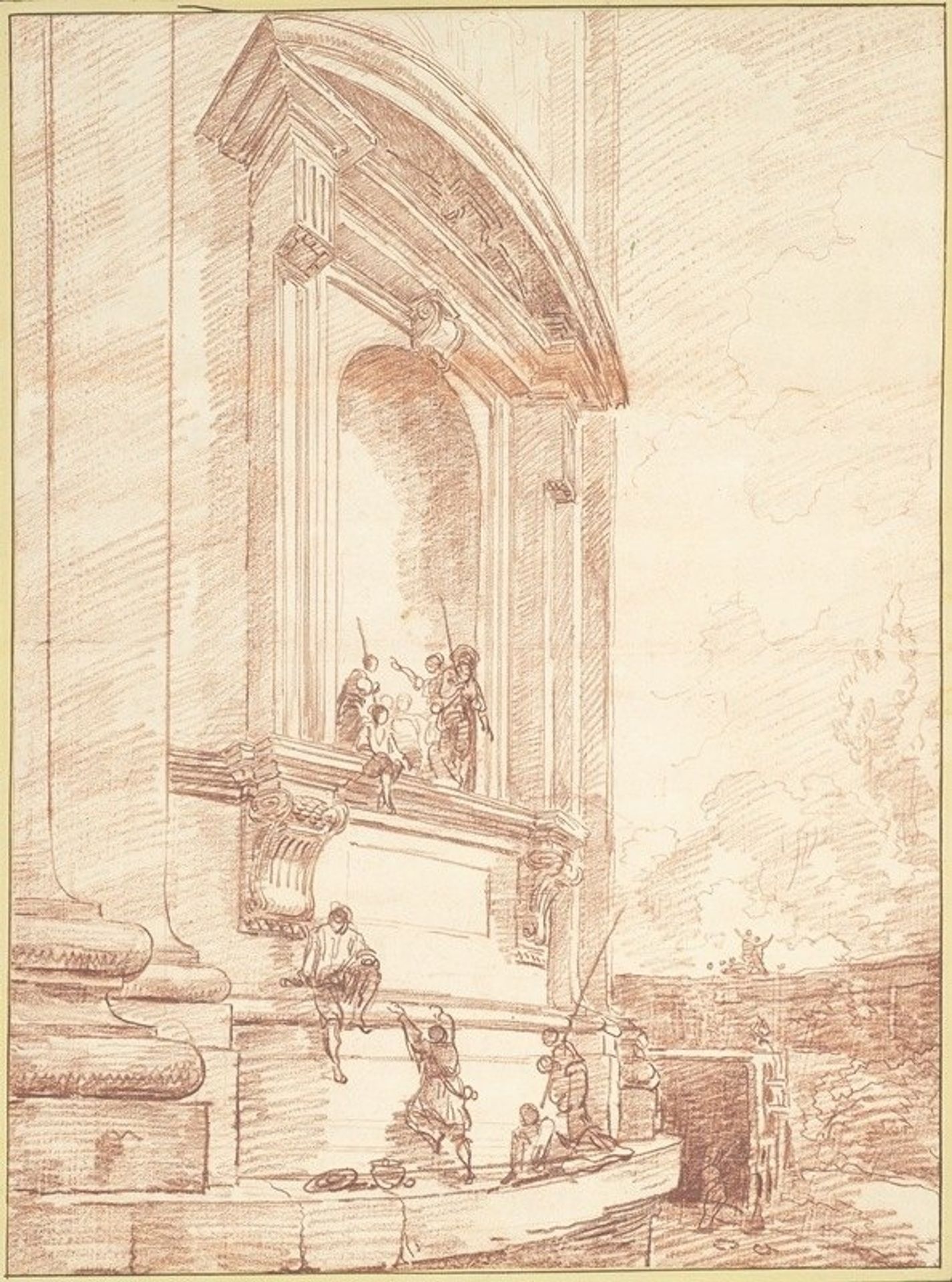
Hubert Robert made this drawing of figures within one of Michelangelo’s niches on the apse of St. Peter’s in Rome. The drawing depicts the grandeur of St Peter’s Basilica in Rome, but what might first appear to be a simple architectural study soon reveals Robert’s interest in the social dynamics of art. Drawn in the late 18th century, Robert, a French artist, captures not just the physical structure but also the human interaction with this imposing space. The figures, seemingly ordinary people, animate the scene, their presence suggesting a playful, perhaps even irreverent, dialogue with the high architecture of the church. Robert subtly questions the conventions of art, contrasting the monumentality of classical architecture with the casual behavior of everyday life. We, as art historians, look to archival sources such as letters and exhibition catalogs to understand more fully the artist's intentions and the artwork's reception. This allows us to appreciate how art reflects and shapes the evolving dynamics of society.
Figures in One of Michelangelo’s Niches on the Apse of St. Peter’s, Rome c. 1763

Artwork details
- Medium
- drawing, ink
- Copyright
- Public Domain: Artvee
Tags
drawing
landscape
figuration
11_renaissance
ink
cityscape
history-painting
Comments
No comments
About this artwork
Hubert Robert made this drawing of figures within one of Michelangelo’s niches on the apse of St. Peter’s in Rome. The drawing depicts the grandeur of St Peter’s Basilica in Rome, but what might first appear to be a simple architectural study soon reveals Robert’s interest in the social dynamics of art. Drawn in the late 18th century, Robert, a French artist, captures not just the physical structure but also the human interaction with this imposing space. The figures, seemingly ordinary people, animate the scene, their presence suggesting a playful, perhaps even irreverent, dialogue with the high architecture of the church. Robert subtly questions the conventions of art, contrasting the monumentality of classical architecture with the casual behavior of everyday life. We, as art historians, look to archival sources such as letters and exhibition catalogs to understand more fully the artist's intentions and the artwork's reception. This allows us to appreciate how art reflects and shapes the evolving dynamics of society.
Comments
No comments