About this artwork
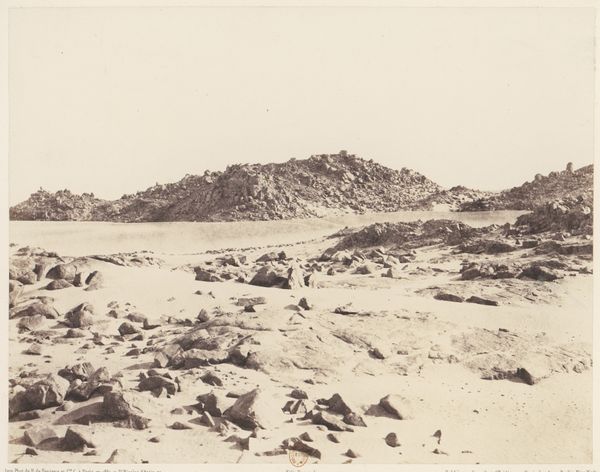
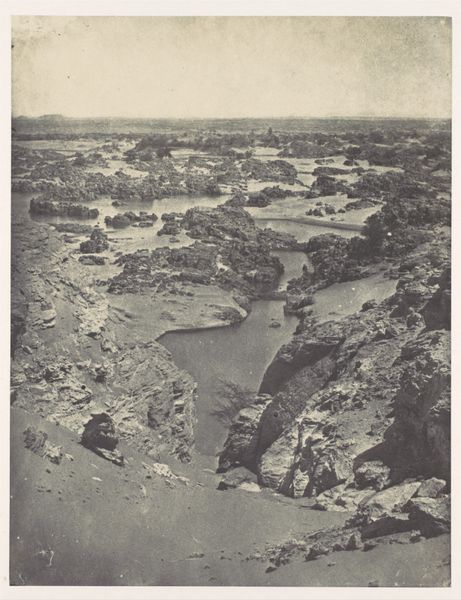
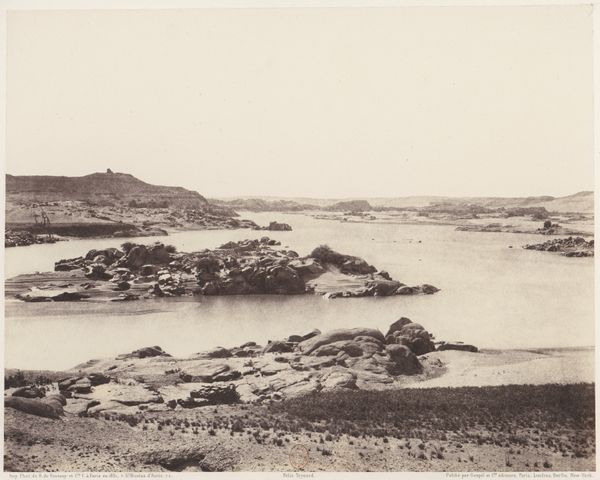
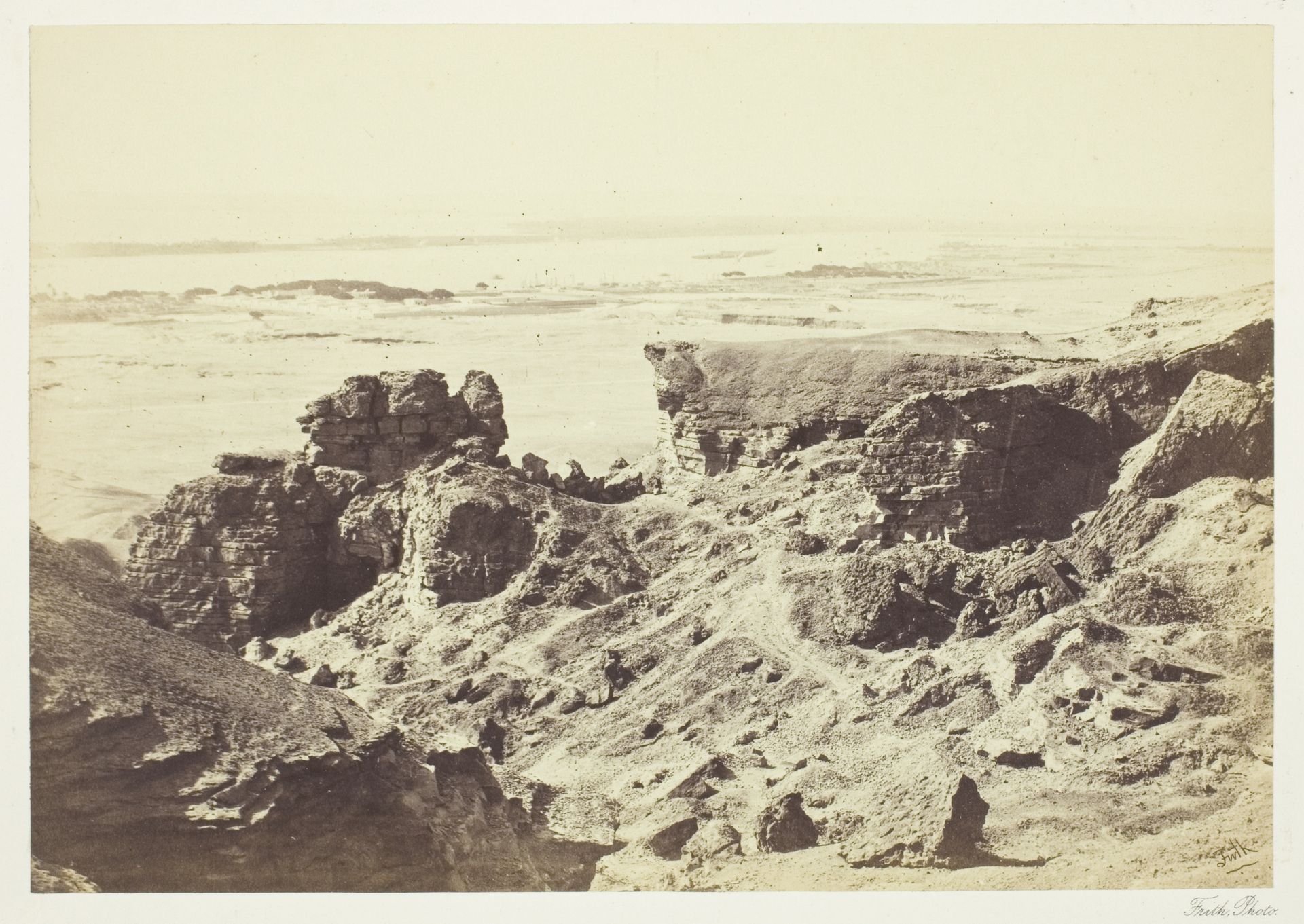
Francis Frith made "The Nile from the Quarries of Joura" using a process called albumen silver printing. This involved coating paper with egg whites and silver nitrate, then exposing it to light through a negative. Frith was one of the first photographers to document Egypt on a large scale. What strikes me about this image is how it captures not only the natural landscape, but also the marks of human intervention. The quarries themselves, carved into the earth, represent an intense extraction of material. Stone was essential to pharaonic culture, and the labor involved was surely backbreaking. Frith’s photograph is more than just a pretty picture. It is a document of the industrial revolution that was about to take place. By examining Frith’s focus on industry, labor, and the transformation of the earth, we gain a deeper insight into the cultural and social forces that shaped this historical moment. This reminds us that even a photograph can invite consideration of materiality, making, and social context.
The Nile from the Quarries of Joura 1858 - 1862


Artwork details
- Medium
- silver, print, photography, gelatin-silver-print
- Dimensions
- 15.7 × 22.4 cm (image/paper); 30.3 × 43.3 cm (mount)
- Location
- The Art Institute of Chicago
- Copyright
- Public Domain
Tags
silver
nature photography
landscape
ancient-egyptian-art
nature
photography
ancient-mediterranean
gelatin-silver-print
realism
Comments
No comments
About this artwork
Francis Frith made "The Nile from the Quarries of Joura" using a process called albumen silver printing. This involved coating paper with egg whites and silver nitrate, then exposing it to light through a negative. Frith was one of the first photographers to document Egypt on a large scale. What strikes me about this image is how it captures not only the natural landscape, but also the marks of human intervention. The quarries themselves, carved into the earth, represent an intense extraction of material. Stone was essential to pharaonic culture, and the labor involved was surely backbreaking. Frith’s photograph is more than just a pretty picture. It is a document of the industrial revolution that was about to take place. By examining Frith’s focus on industry, labor, and the transformation of the earth, we gain a deeper insight into the cultural and social forces that shaped this historical moment. This reminds us that even a photograph can invite consideration of materiality, making, and social context.
Comments
No comments