About this artwork
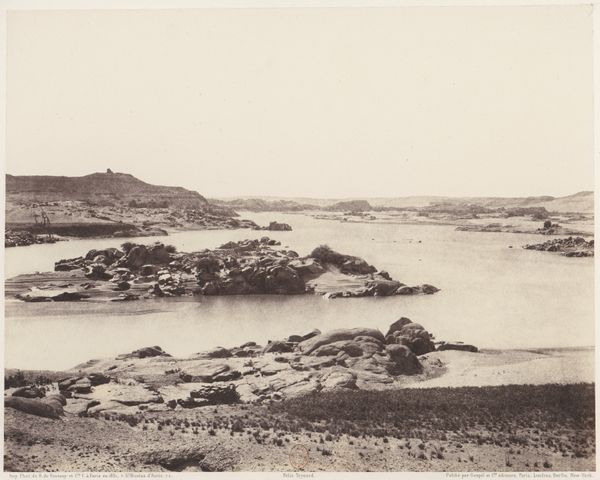
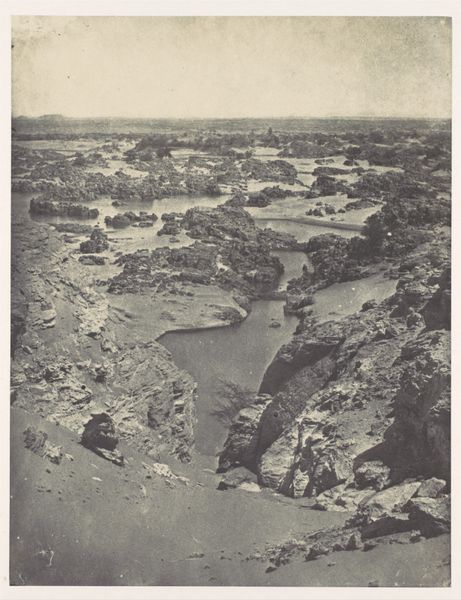
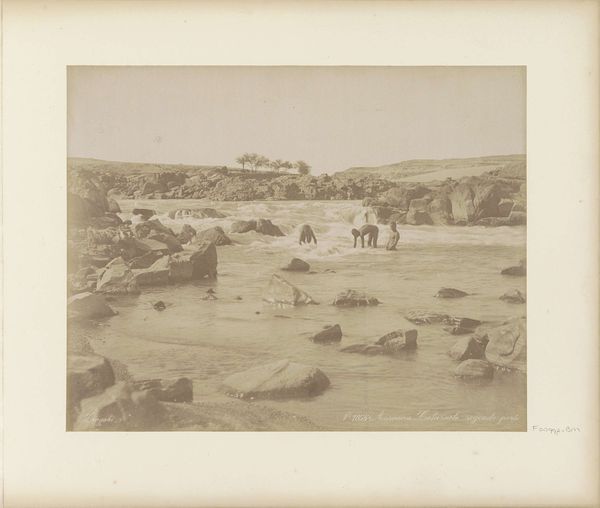
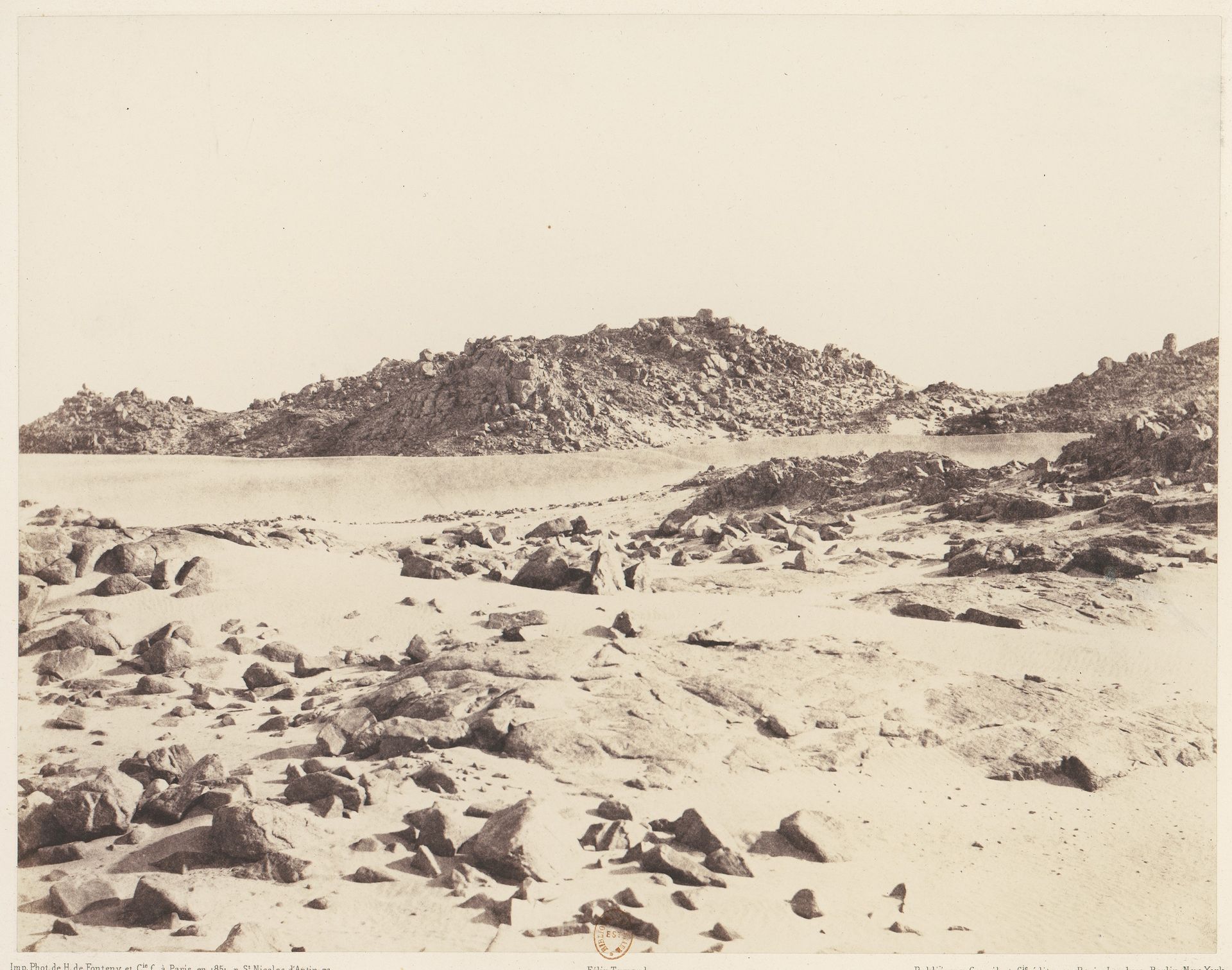
Félix Teynard captured "Première Cataracte, Montagnes Granitiques Couvertes de Sables" using photography. The composition is structured by a strong horizontal division, separating the granular foreground from the distant rocky formations, their forms softened by light. The photograph explores contrasts: the rough texture of the rocks versus the smooth expanse of water, and the solid, grounded foreground against the airy lightness of the sky. This is more than a mere landscape; it’s a study in semiotics. The varying textures and forms act as signs, inviting us to interpret their relationship. This interplay highlights photography's unique capability to capture surface textures and spatial depth. Teynard challenges our perception by flattening the scene, reducing depth through even lighting. This reduction prompts us to reconsider photography's role: is it a tool for objective documentation, or a medium capable of reinterpreting reality?
Première Cataracte, Montagnes Granitiques Couvertes de Sables 1851 - 1852


Artwork details
- Dimensions
- 23.6 x 30.3 cm. (9 5/16 x 11 15/16 in.)
- Location
- Metropolitan Museum of Art, New York, NY
- Copyright
- Public Domain
Comments
No comments
About this artwork
Félix Teynard captured "Première Cataracte, Montagnes Granitiques Couvertes de Sables" using photography. The composition is structured by a strong horizontal division, separating the granular foreground from the distant rocky formations, their forms softened by light. The photograph explores contrasts: the rough texture of the rocks versus the smooth expanse of water, and the solid, grounded foreground against the airy lightness of the sky. This is more than a mere landscape; it’s a study in semiotics. The varying textures and forms act as signs, inviting us to interpret their relationship. This interplay highlights photography's unique capability to capture surface textures and spatial depth. Teynard challenges our perception by flattening the scene, reducing depth through even lighting. This reduction prompts us to reconsider photography's role: is it a tool for objective documentation, or a medium capable of reinterpreting reality?
Comments
No comments