About this artwork
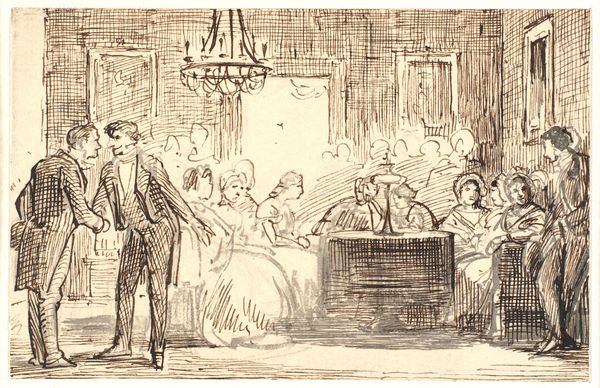
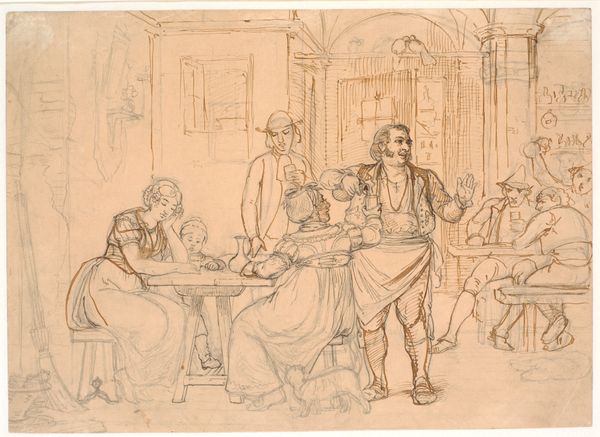
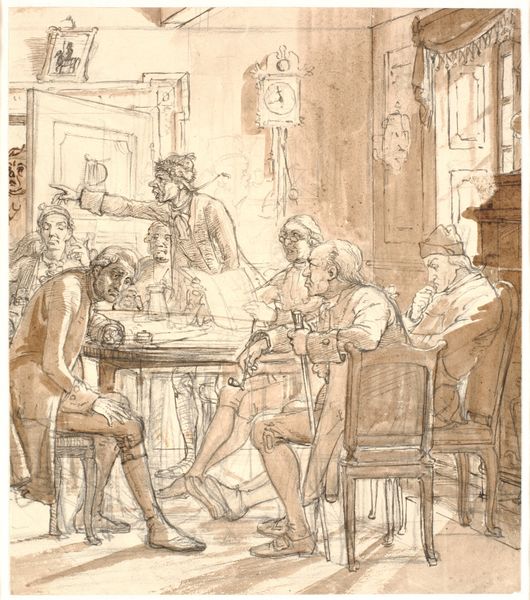
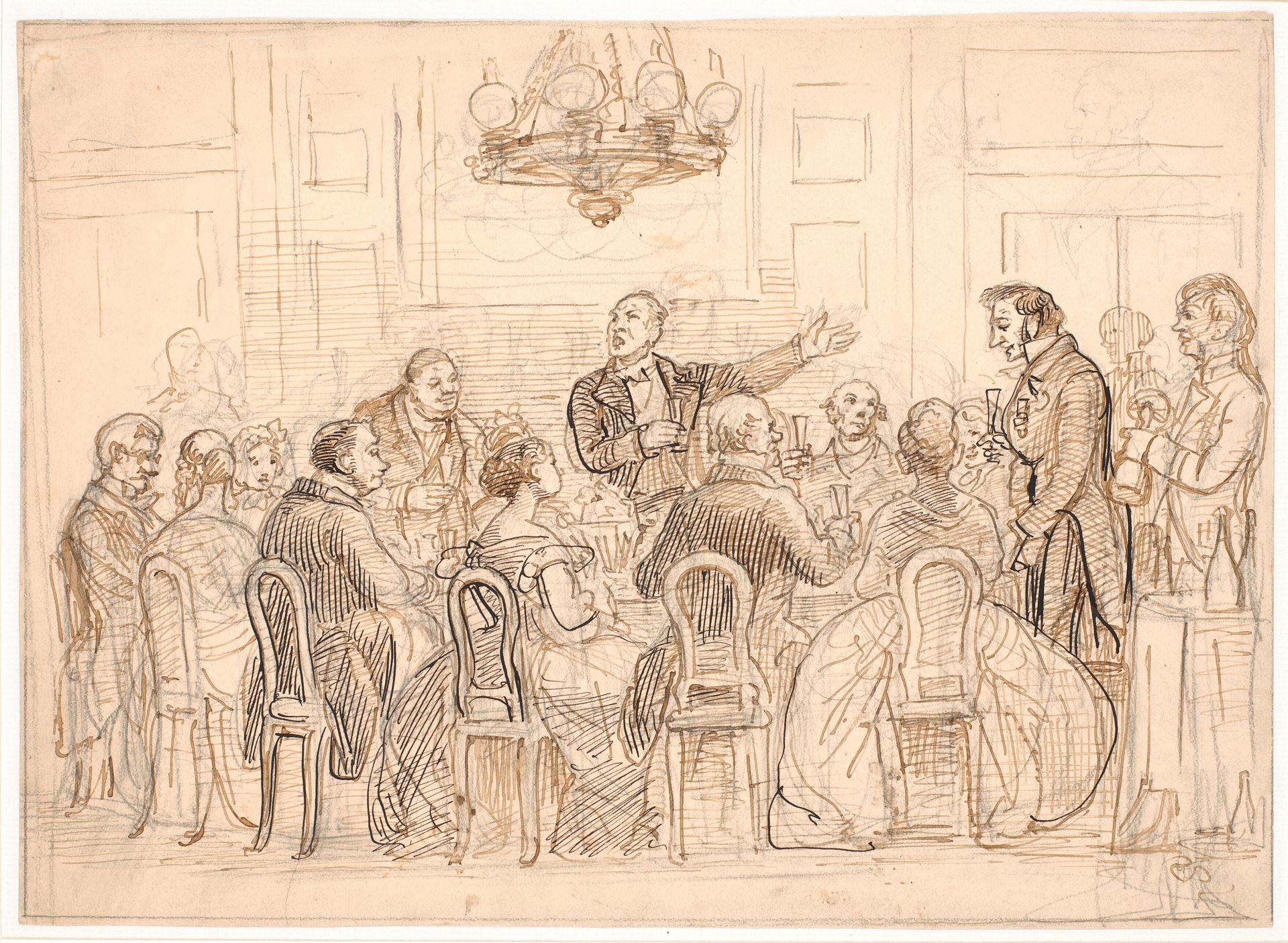
Wilhelm Marstrand made this drawing, ‘Den ny ridders skål’, using pen and brown ink. The composition centres around a lively banquet scene, dominated by the figures seated at a long table. Marstrand's use of line is particularly striking. Notice the delicate, almost scribbled lines that define form and texture, giving the scene a sense of movement and immediacy. The characters and environment are rendered through a network of hatching and cross-hatching, a technique which adds depth and volume. This creates a textured surface that enlivens the scene, suggesting not just form but also the play of light and shadow. The rapid lines and unfinished quality destabilise the formal tradition of academic art. The artist invites us to consider the dynamic process of creation rather than a static representation, echoing broader concerns in the 19th century regarding the nature of perception and representation.
Den ny ridders skål
1851


Artwork details
- Medium
- drawing, paper, ink, pencil
- Dimensions
- 233 mm (height) x 324 mm (width) (bladmaal)
- Location
- SMK - Statens Museum for Kunst
Tags
Comments
Share your thoughts
About this artwork
Wilhelm Marstrand made this drawing, ‘Den ny ridders skål’, using pen and brown ink. The composition centres around a lively banquet scene, dominated by the figures seated at a long table. Marstrand's use of line is particularly striking. Notice the delicate, almost scribbled lines that define form and texture, giving the scene a sense of movement and immediacy. The characters and environment are rendered through a network of hatching and cross-hatching, a technique which adds depth and volume. This creates a textured surface that enlivens the scene, suggesting not just form but also the play of light and shadow. The rapid lines and unfinished quality destabilise the formal tradition of academic art. The artist invites us to consider the dynamic process of creation rather than a static representation, echoing broader concerns in the 19th century regarding the nature of perception and representation.
Comments
Share your thoughts