About this artwork
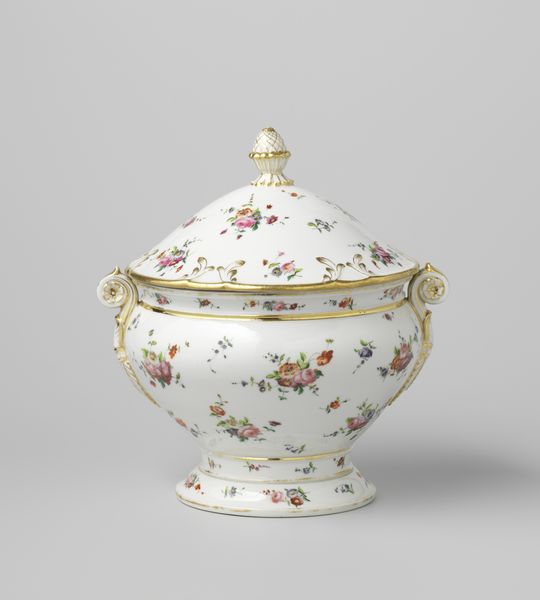
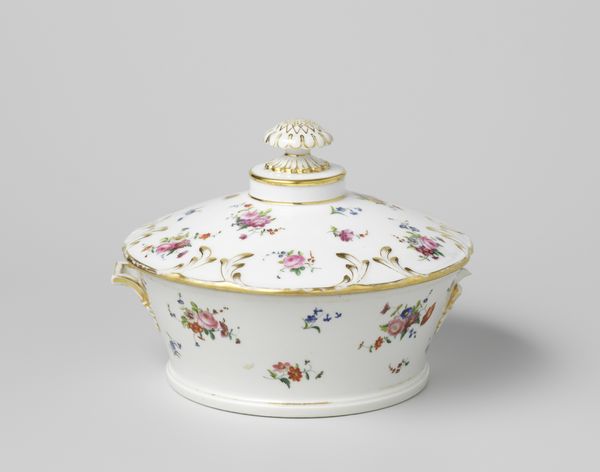
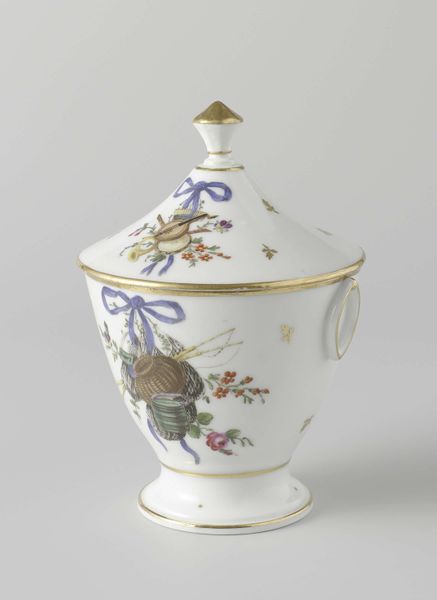
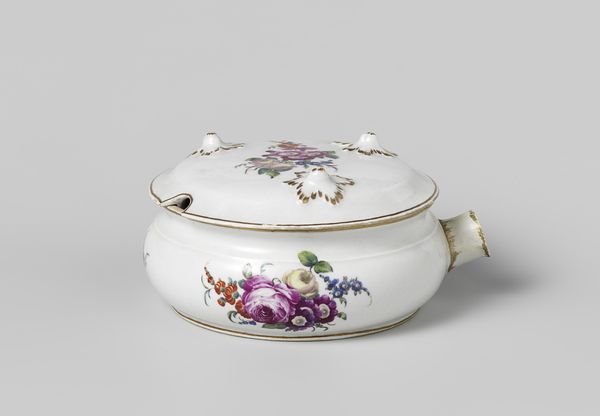
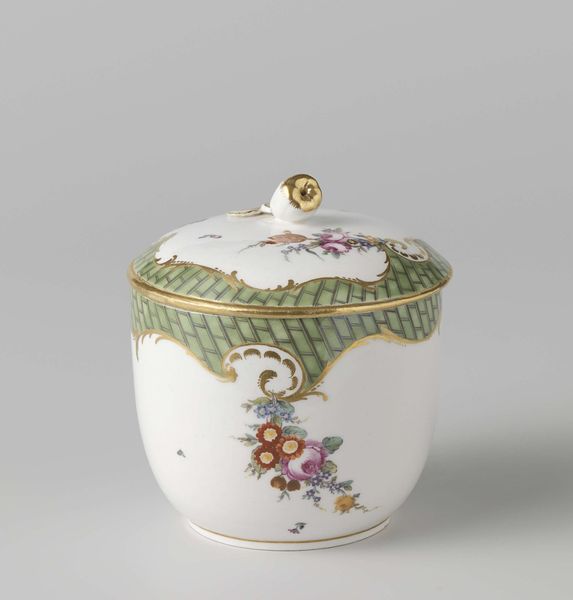
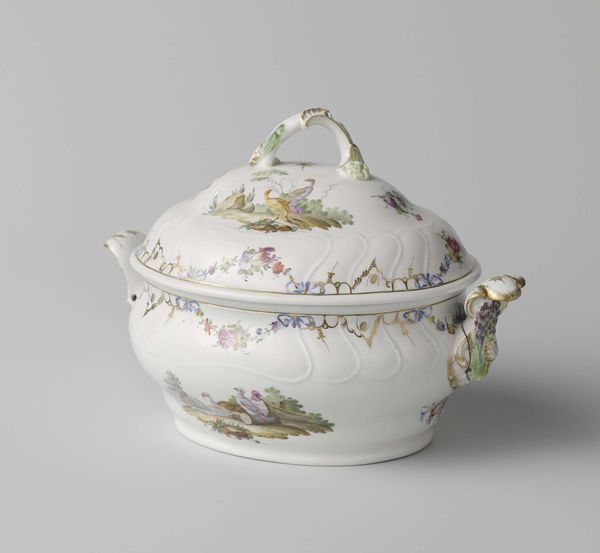
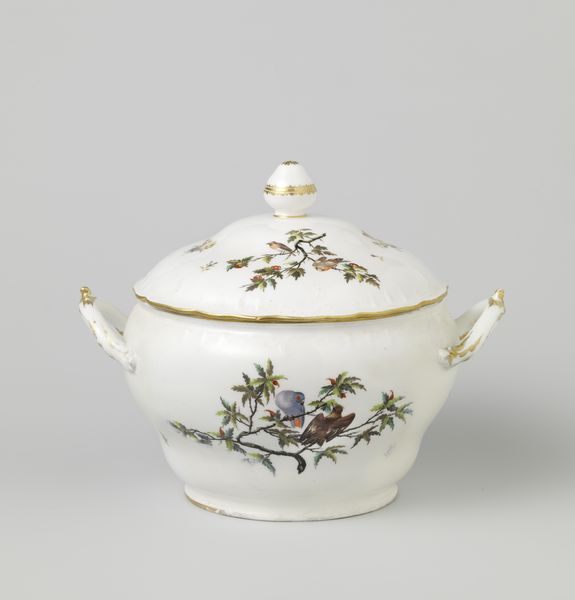
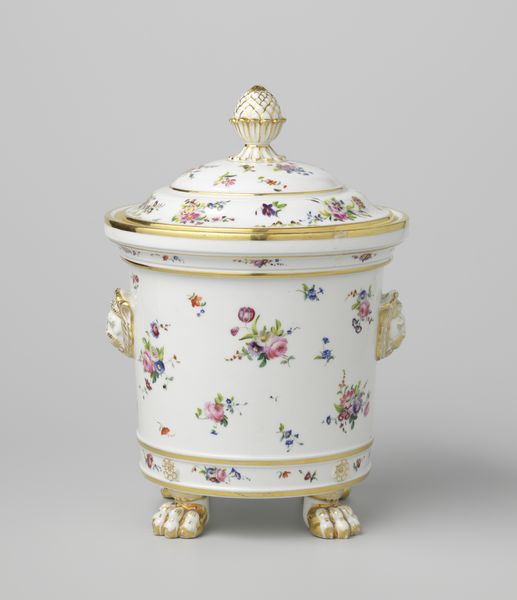
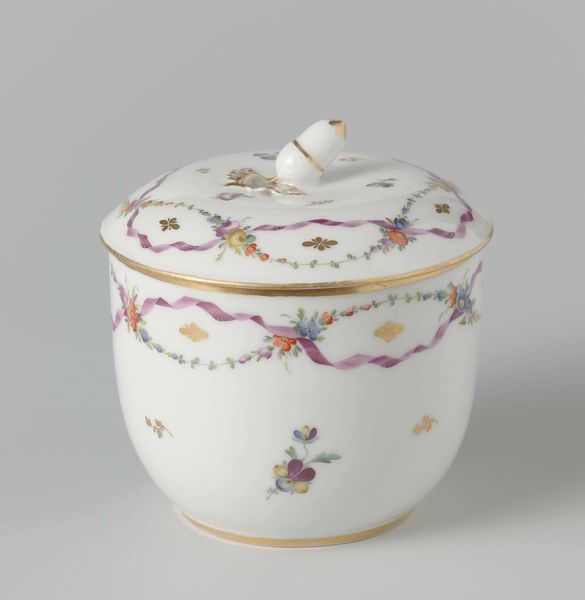
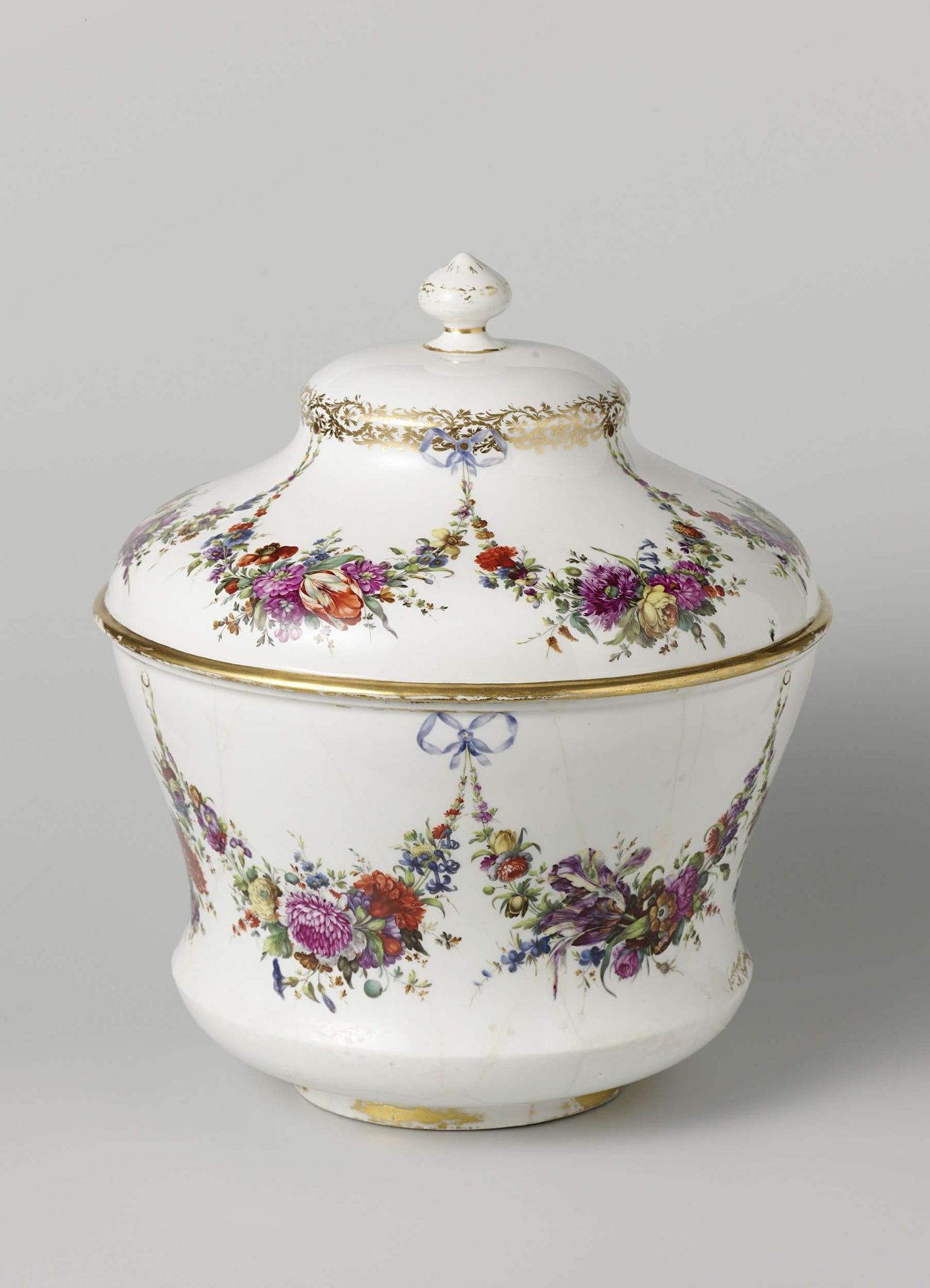
This is a porcelain lid, decorated with floral garlands, made in Loosdrecht, likely in the late 18th century. The factory at Loosdrecht, near Amsterdam, was the first to produce high-quality porcelain in the Netherlands. Note the delicate, asymmetrical arrangement of flowers and ribbons. These garlands are visual cues characteristic of Rococo, a style popular among Europe's elite, and these porcelains were luxury goods. The creation of this kind of industry in the Netherlands speaks to a broader culture of economic growth and international trade. The floral motifs themselves reflect the contemporary enthusiasm for botany and the expansion of the Dutch colonial empire, which facilitated the circulation of new botanical knowledge. To properly understand such an artwork, we might consult historical records of the Loosdrecht factory, studies of Dutch trade in the 1700s, and analyses of Rococo aesthetics. Together, these resources can help us appreciate how this lid connects to the social, economic, and cultural life of its time.
Deksel, beschilderd met bloemguirlandes
c. 1778 - 1782

Loosdrecht
@loosdrechtLocation
RijksmuseumArtwork details
- Dimensions
- height 16.5 cm, diameter 33 cm
- Location
- Rijksmuseum
- Copyright
- Rijks Museum: Open Domain
Comments
Share your thoughts
About this artwork
This is a porcelain lid, decorated with floral garlands, made in Loosdrecht, likely in the late 18th century. The factory at Loosdrecht, near Amsterdam, was the first to produce high-quality porcelain in the Netherlands. Note the delicate, asymmetrical arrangement of flowers and ribbons. These garlands are visual cues characteristic of Rococo, a style popular among Europe's elite, and these porcelains were luxury goods. The creation of this kind of industry in the Netherlands speaks to a broader culture of economic growth and international trade. The floral motifs themselves reflect the contemporary enthusiasm for botany and the expansion of the Dutch colonial empire, which facilitated the circulation of new botanical knowledge. To properly understand such an artwork, we might consult historical records of the Loosdrecht factory, studies of Dutch trade in the 1700s, and analyses of Rococo aesthetics. Together, these resources can help us appreciate how this lid connects to the social, economic, and cultural life of its time.
Comments
Share your thoughts