About this artwork
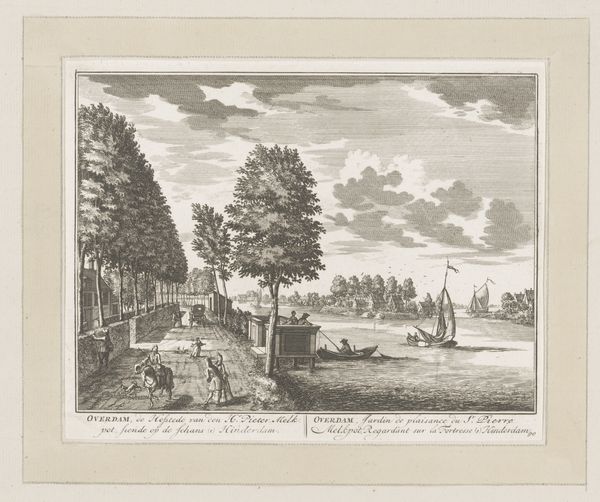
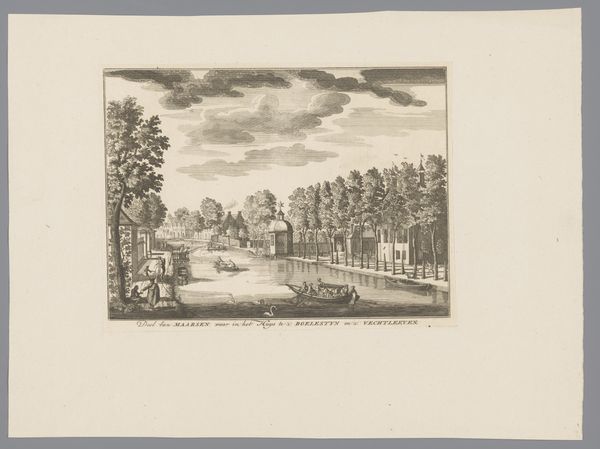
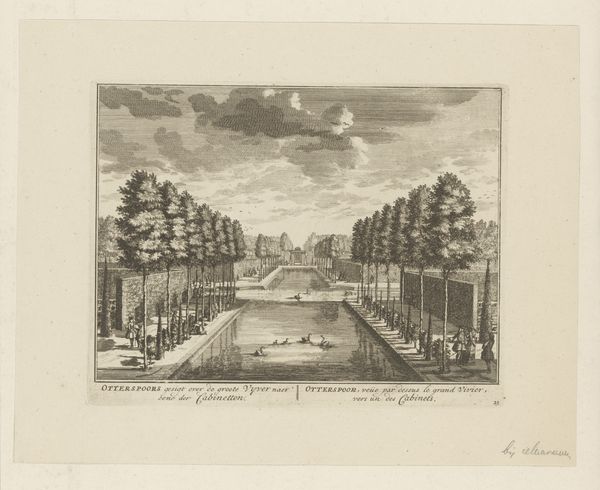
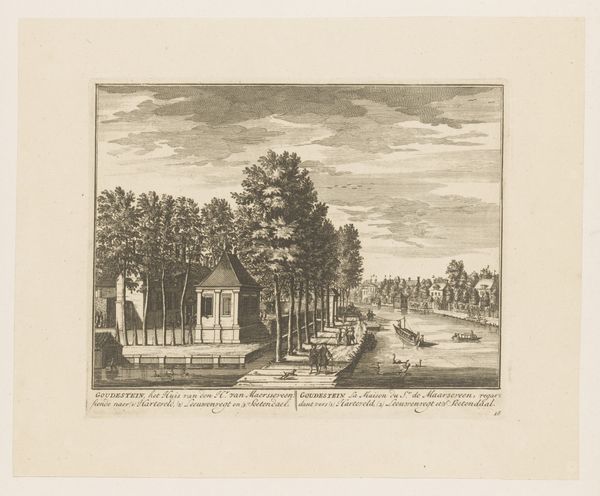
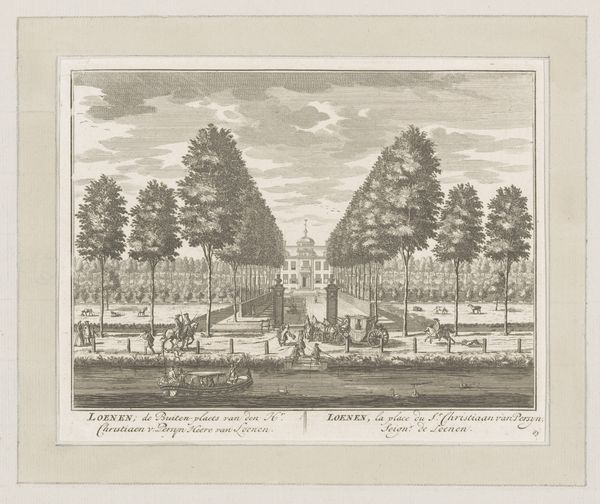
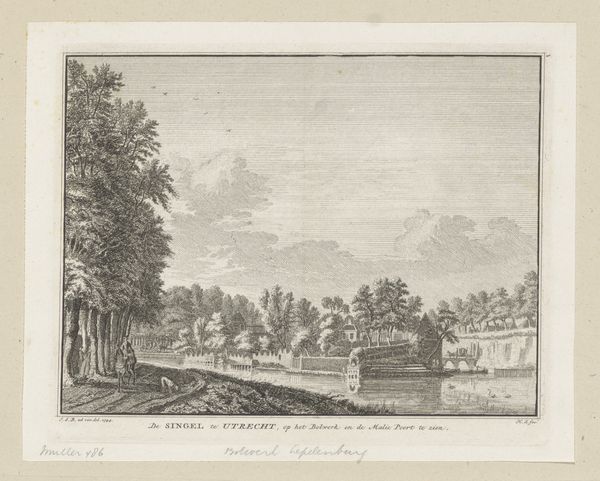
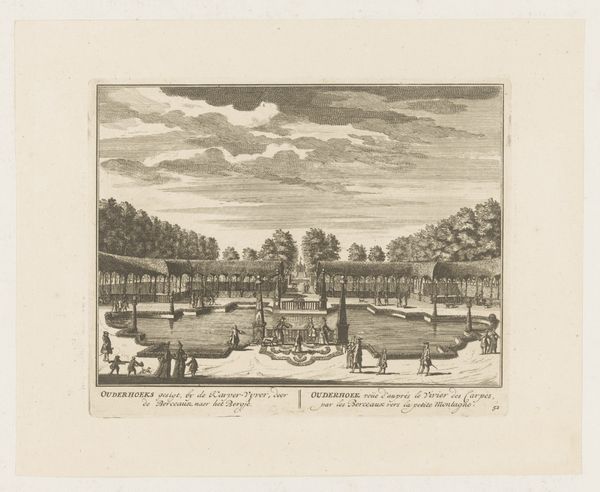
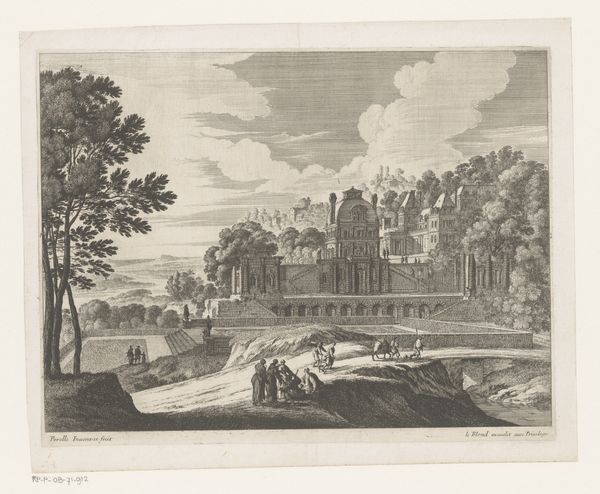
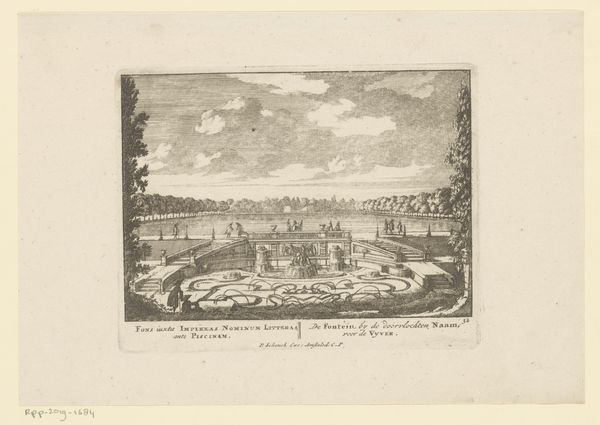
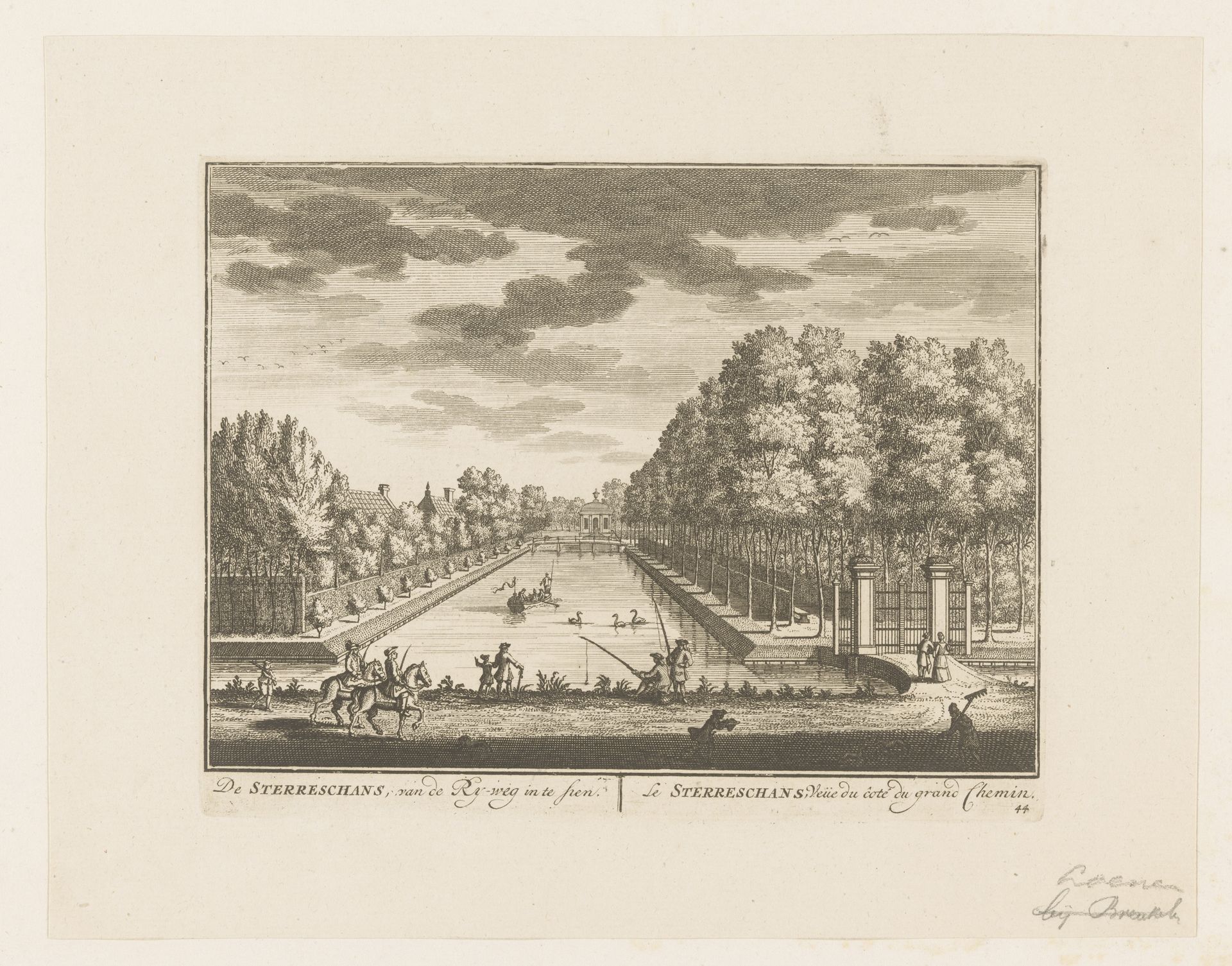
Daniël Stopendaal created this print, "Buitenplaats de Sterreschans vanaf de weg gezien," using etching. The composition is dominated by a strong central perspective, drawing the eye along the canal towards the distant building. Trees and architectural elements are used to divide the image into defined geometric zones. This is an example of how nature becomes formalized through artistic representation. Stopendaal's employment of line and form structures the landscape into ordered components. The symmetrical arrangement of the trees along the canal is not merely decorative; it is a structural signifier that speaks to the period's desire to impose order on the natural world. Here, the landscape is presented as a construct of human design. The delicate balance between naturalism and formal abstraction suggests a deeper commentary on the relationship between humanity and nature. This interplay is typical of the period, where artistic representation often served to negotiate and challenge established perceptions of space and form.
Buitenplaats de Sterreschans vanaf de weg gezien
1719

Daniël Stopendaal
1672 - 1726Location
RijksmuseumArtwork details
- Medium
- print, etching
- Dimensions
- height 158 mm, width 203 mm
- Location
- Rijksmuseum
- Copyright
- Rijks Museum: Open Domain
Tags
Comments
Share your thoughts
About this artwork
Daniël Stopendaal created this print, "Buitenplaats de Sterreschans vanaf de weg gezien," using etching. The composition is dominated by a strong central perspective, drawing the eye along the canal towards the distant building. Trees and architectural elements are used to divide the image into defined geometric zones. This is an example of how nature becomes formalized through artistic representation. Stopendaal's employment of line and form structures the landscape into ordered components. The symmetrical arrangement of the trees along the canal is not merely decorative; it is a structural signifier that speaks to the period's desire to impose order on the natural world. Here, the landscape is presented as a construct of human design. The delicate balance between naturalism and formal abstraction suggests a deeper commentary on the relationship between humanity and nature. This interplay is typical of the period, where artistic representation often served to negotiate and challenge established perceptions of space and form.
Comments
Share your thoughts