About this artwork
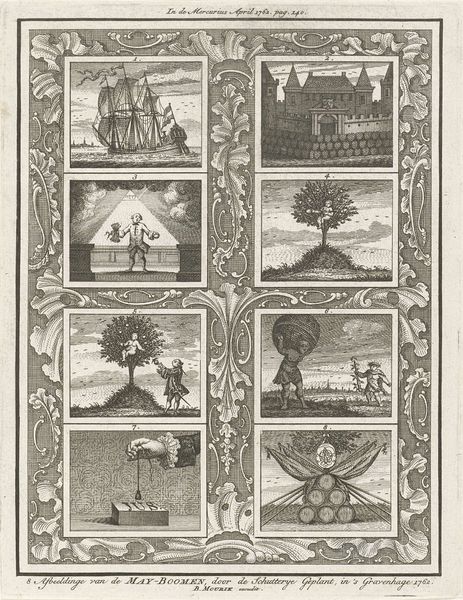
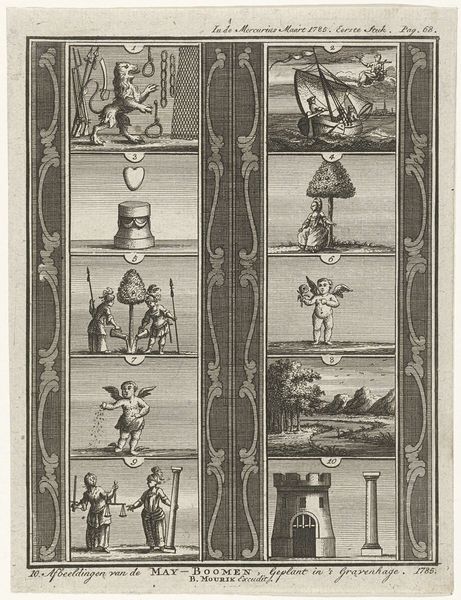
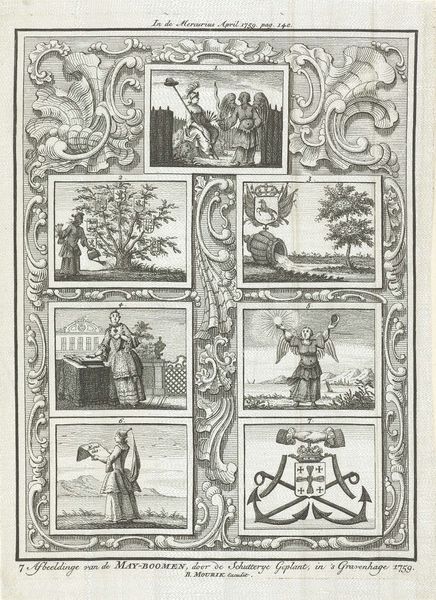
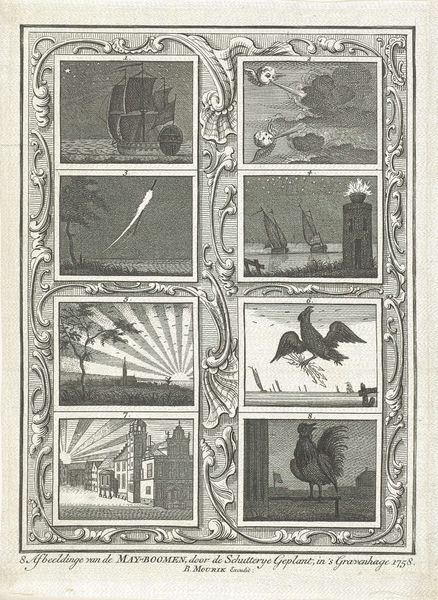
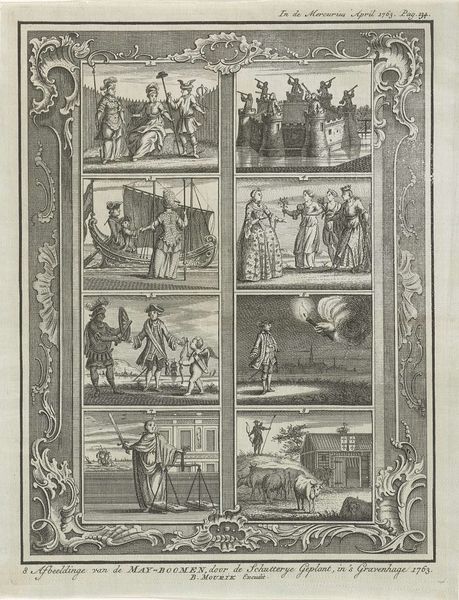
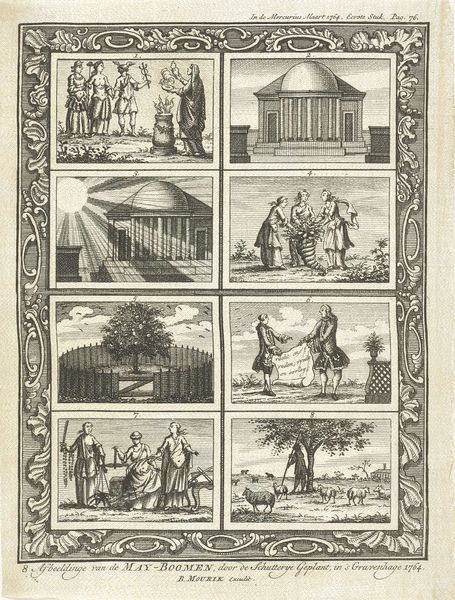
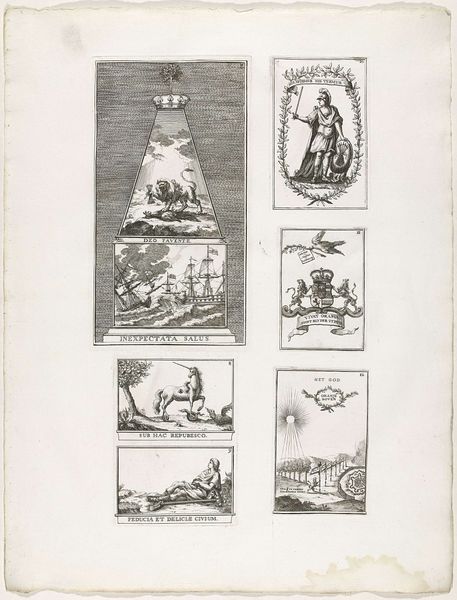
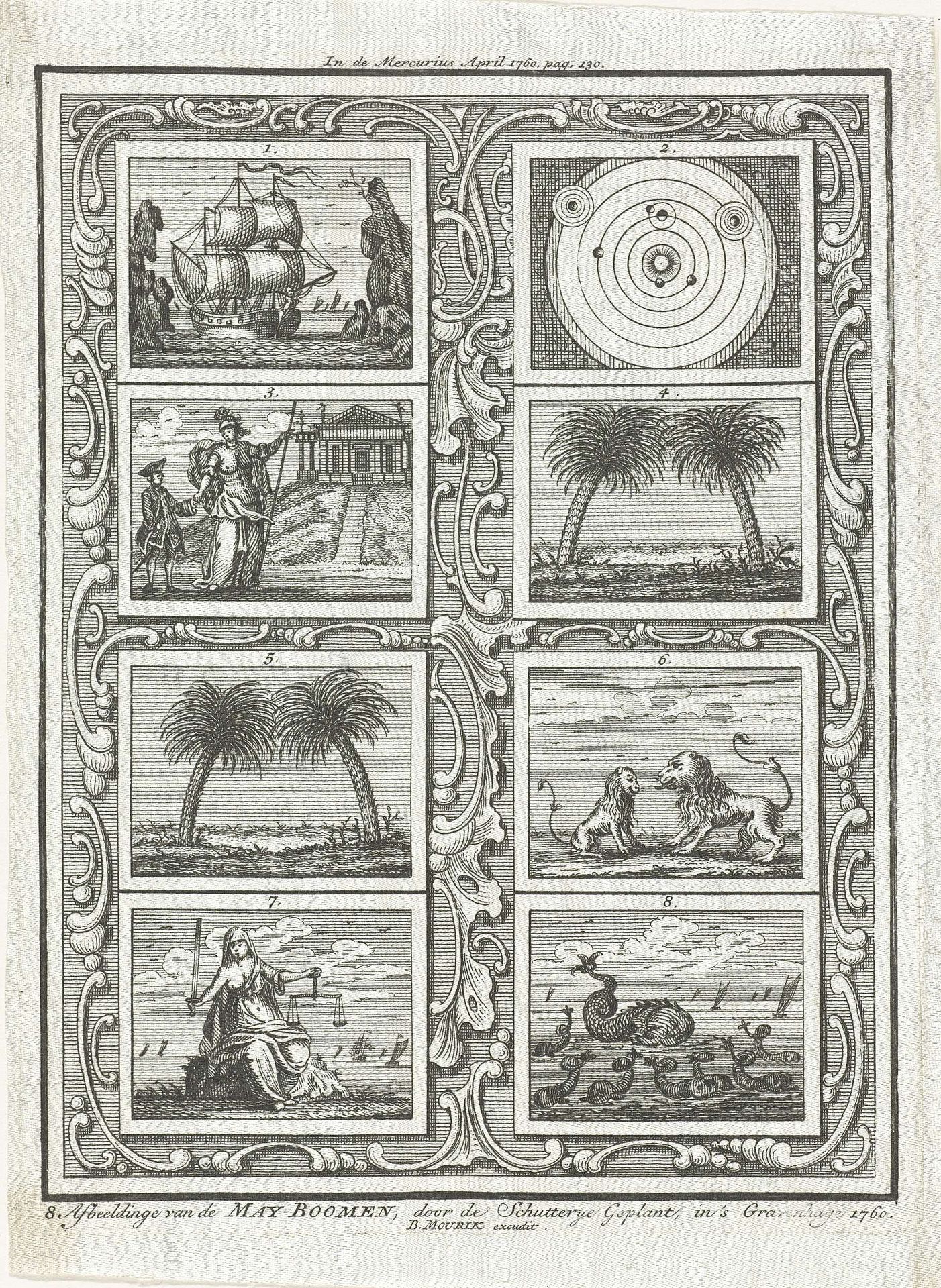
Caspar Jacobsz. Philips created this print, “Meiboom geplant door de Haagse Schutterij,” around 1760. As the title suggests, the print commemorates the maypole planting by the civic guard of The Hague, in the Netherlands. The piece is a visual document of Dutch civic life during the 18th century, a period marked by economic shifts and evolving social structures. The series of images show the Dutch Republic’s global reach through maritime power, astronomical knowledge, a colonial presence in tropical landscapes, justice, and even mythological narratives. Each scene tells a different story, mirroring the diverse roles and responsibilities held by the civic guard within the community. Justice is depicted as a female figure, a common representation that reinforces the role of civic duty and virtue. The print invites us to reflect on the complexities of Dutch identity during this time. What did it mean to be a citizen, and how did visual culture reinforce these meanings? It also emphasizes the shared rituals and civic participation that helped to define collective identity.
Meiboom geplant door de Haagse Schutterij, 1760
1760

Caspar Jacobsz. Philips
1732 - 1789Location
RijksmuseumArtwork details
- Medium
- graphic-art, print, engraving
- Dimensions
- height 181 mm, width 136 mm
- Location
- Rijksmuseum
- Copyright
- Rijks Museum: Open Domain
Tags
Comments
Share your thoughts
About this artwork
Caspar Jacobsz. Philips created this print, “Meiboom geplant door de Haagse Schutterij,” around 1760. As the title suggests, the print commemorates the maypole planting by the civic guard of The Hague, in the Netherlands. The piece is a visual document of Dutch civic life during the 18th century, a period marked by economic shifts and evolving social structures. The series of images show the Dutch Republic’s global reach through maritime power, astronomical knowledge, a colonial presence in tropical landscapes, justice, and even mythological narratives. Each scene tells a different story, mirroring the diverse roles and responsibilities held by the civic guard within the community. Justice is depicted as a female figure, a common representation that reinforces the role of civic duty and virtue. The print invites us to reflect on the complexities of Dutch identity during this time. What did it mean to be a citizen, and how did visual culture reinforce these meanings? It also emphasizes the shared rituals and civic participation that helped to define collective identity.
Comments
Share your thoughts