About this artwork
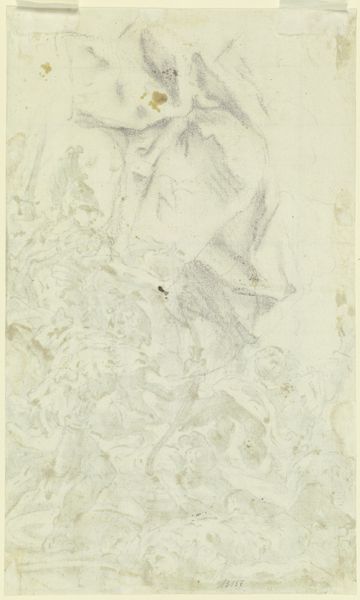
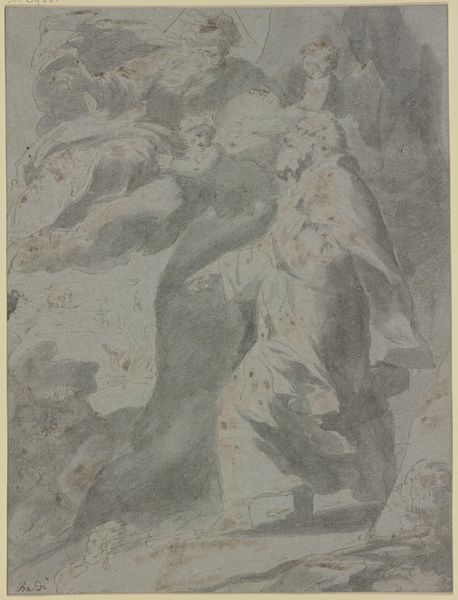
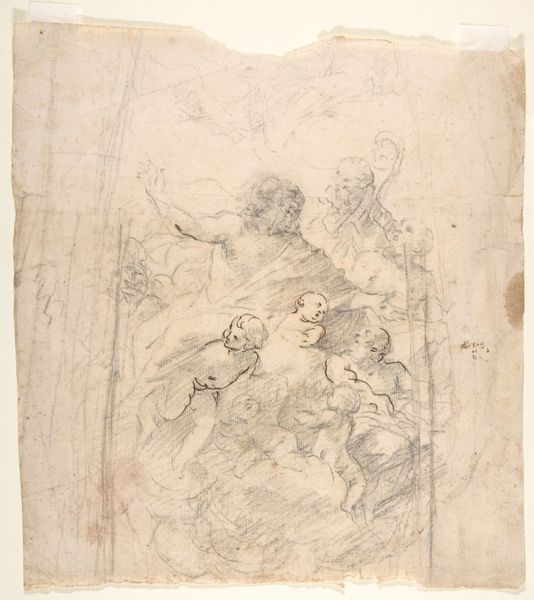
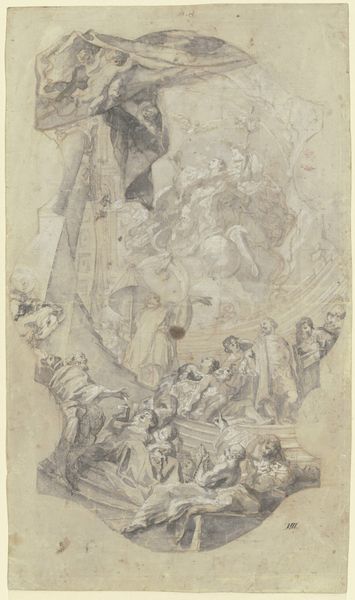
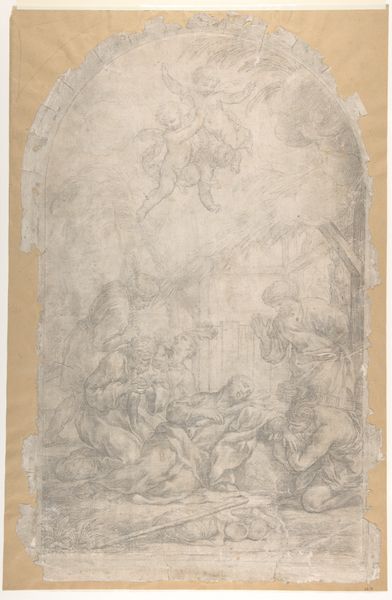
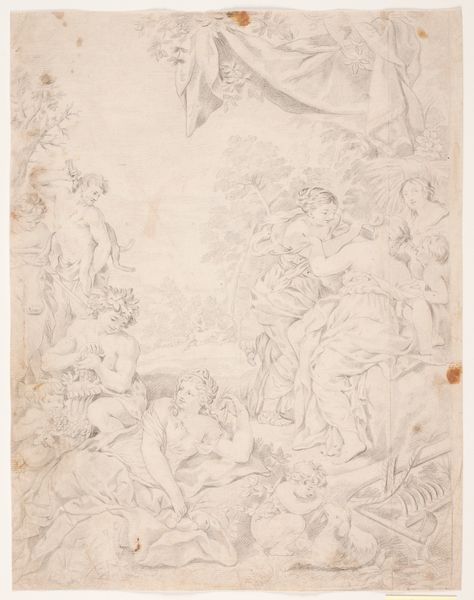
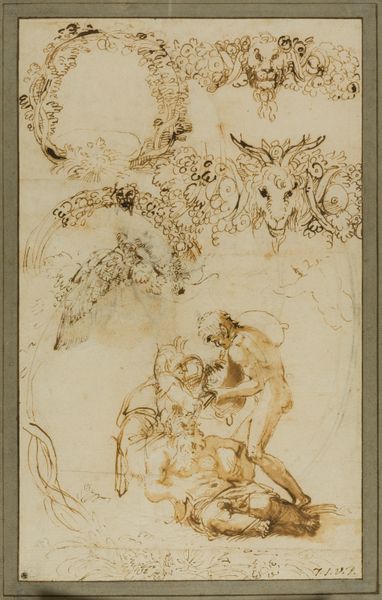
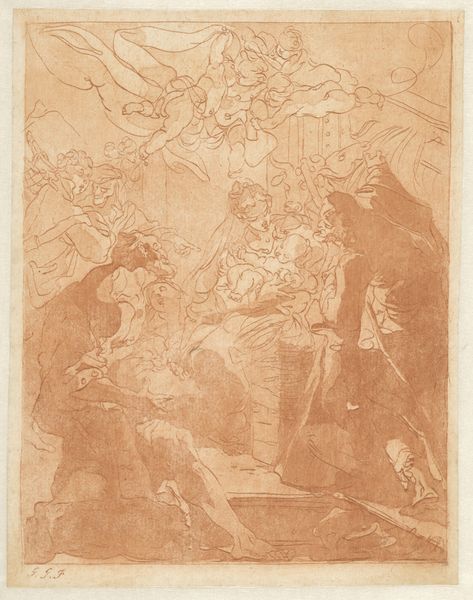
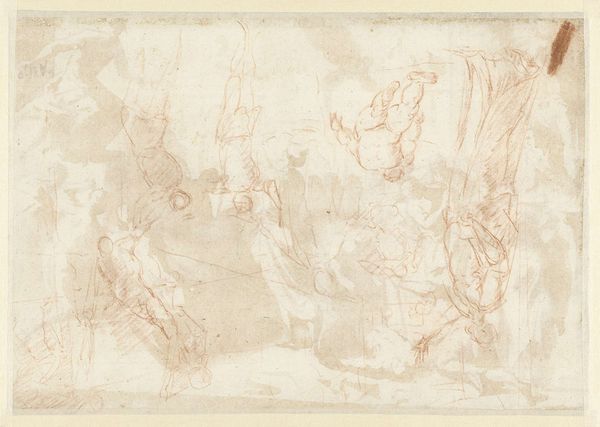
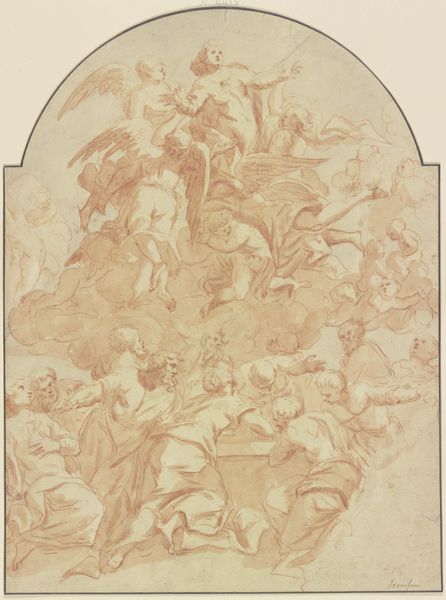
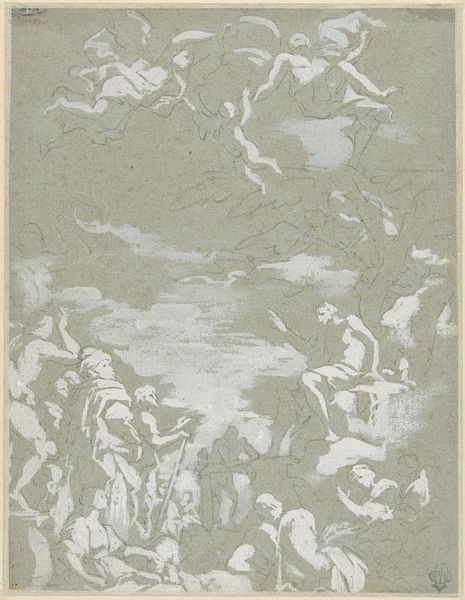
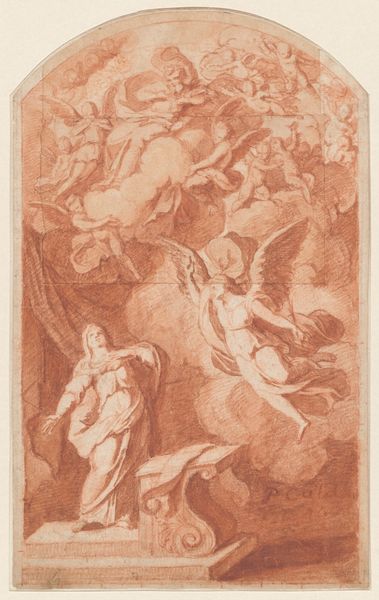
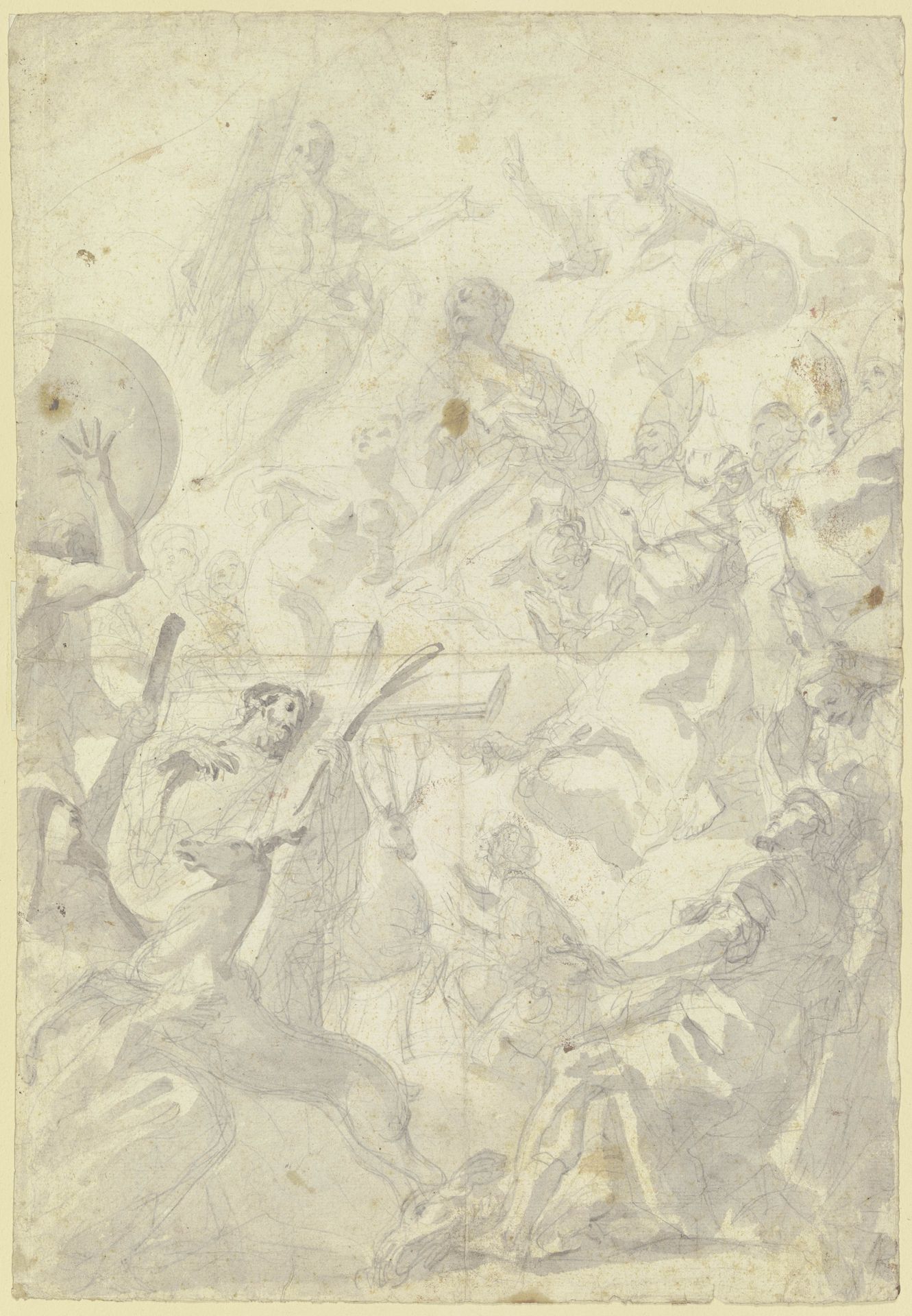
Cosmas Damian Asam created this ‘Entwurf zu einem Hubertusaltar’ in the eighteenth century as a preparatory drawing. The composition immediately draws our eye to the swirling, dynamic arrangement of figures, a hallmark of Baroque art. Executed with delicate lines and subtle shading, the monochromatic palette enhances the ethereal quality of the scene. Asam masterfully employs the formal elements to convey both religious narrative and heightened drama. The upward-spiraling composition directs our gaze towards the heavens, where angelic figures and divine light converge. This technique is a classic example of the Baroque period’s emphasis on evoking emotion and spiritual transcendence through visual means. Consider how Asam uses the formal device of dynamic asymmetry to create a sense of movement and divine intervention. This piece is not merely representational; its formal qualities actively engage with and shape our understanding of its religious content. The drawing provides a glimpse into Asam's creative process, and embodies the artistic and philosophical context of its time.


Artwork details
- Medium
- drawing, ink, chalk, graphite
- Location
- Städel Museum
- Copyright
- Public Domain
Tags
drawing
allegory
baroque
etching
ink
chalk
graphite
history-painting
Comments
No comments
About this artwork
Cosmas Damian Asam created this ‘Entwurf zu einem Hubertusaltar’ in the eighteenth century as a preparatory drawing. The composition immediately draws our eye to the swirling, dynamic arrangement of figures, a hallmark of Baroque art. Executed with delicate lines and subtle shading, the monochromatic palette enhances the ethereal quality of the scene. Asam masterfully employs the formal elements to convey both religious narrative and heightened drama. The upward-spiraling composition directs our gaze towards the heavens, where angelic figures and divine light converge. This technique is a classic example of the Baroque period’s emphasis on evoking emotion and spiritual transcendence through visual means. Consider how Asam uses the formal device of dynamic asymmetry to create a sense of movement and divine intervention. This piece is not merely representational; its formal qualities actively engage with and shape our understanding of its religious content. The drawing provides a glimpse into Asam's creative process, and embodies the artistic and philosophical context of its time.
Comments
No comments