About this artwork
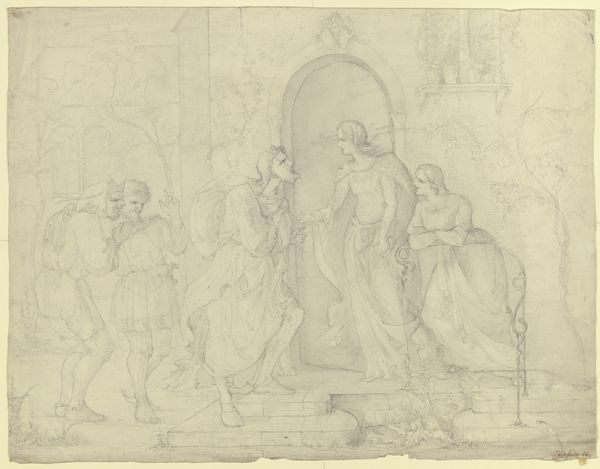
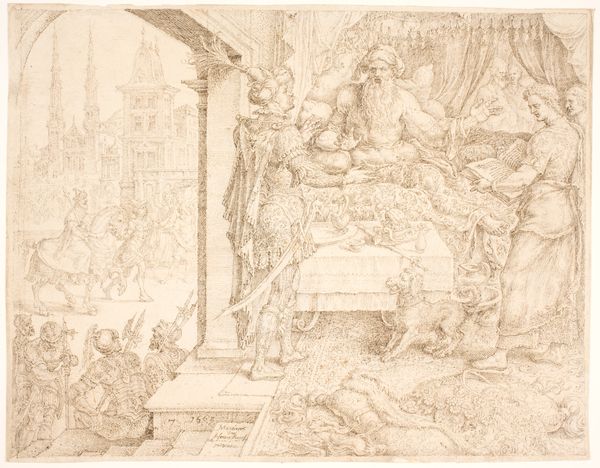
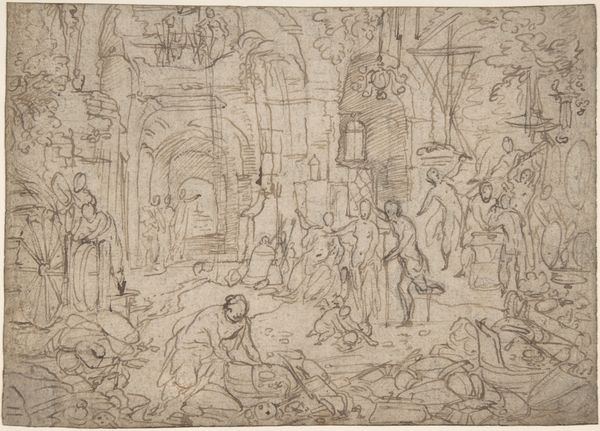
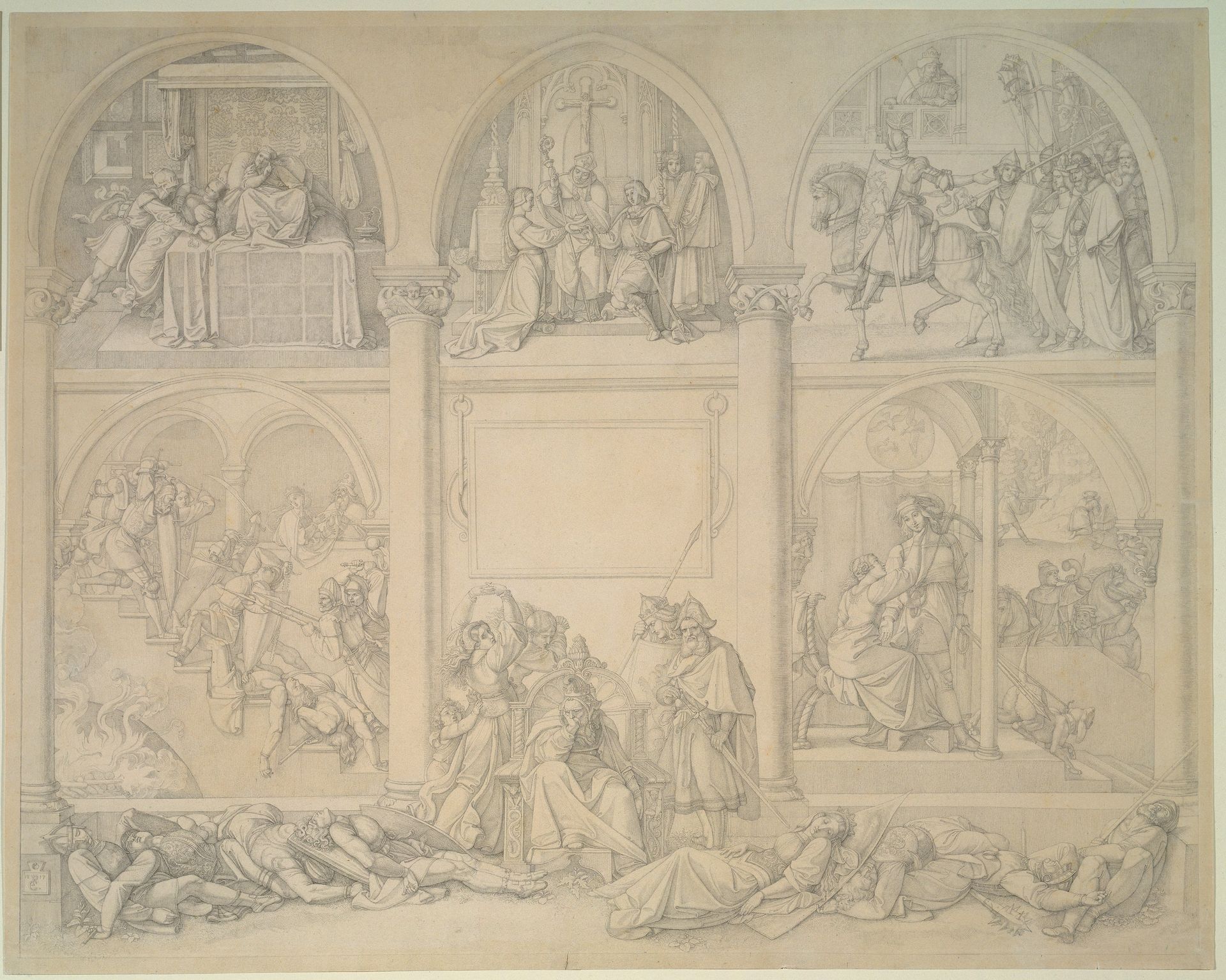
Peter Cornelius created this drawing, Titelblatt zu den Nibelungen, to illustrate the epic German poem, the Nibelungenlied. The composition is dominated by scenes depicting betrayal, conflict, and death, capturing the tragic core of the saga. Here, the recurrent motif of fallen bodies at the bottom strikes a chord with similar imagery found throughout art history, from ancient battle scenes to Renaissance depictions of the Passion. Observe how the act of kneeling in submission or supplication, seen in the upper registers, appears universally across cultures, signifying vulnerability or reverence. It’s a gesture laden with psychological weight, echoing in art from Byzantine mosaics to Romantic paintings. These symbols are not static; they evolve. Consider the sword: once a symbol of honor and power, it becomes an instrument of treachery and death here. This transformation reflects our own complex relationship with symbols, how their meanings are shaped by context, and how they continue to engage us on a primal, subconscious level.


Artwork details
- Medium
- drawing, paper, ink, pencil
- Location
- Städel Museum
- Copyright
- Public Domain
Tags
Comments
Share your thoughts
About this artwork
Peter Cornelius created this drawing, Titelblatt zu den Nibelungen, to illustrate the epic German poem, the Nibelungenlied. The composition is dominated by scenes depicting betrayal, conflict, and death, capturing the tragic core of the saga. Here, the recurrent motif of fallen bodies at the bottom strikes a chord with similar imagery found throughout art history, from ancient battle scenes to Renaissance depictions of the Passion. Observe how the act of kneeling in submission or supplication, seen in the upper registers, appears universally across cultures, signifying vulnerability or reverence. It’s a gesture laden with psychological weight, echoing in art from Byzantine mosaics to Romantic paintings. These symbols are not static; they evolve. Consider the sword: once a symbol of honor and power, it becomes an instrument of treachery and death here. This transformation reflects our own complex relationship with symbols, how their meanings are shaped by context, and how they continue to engage us on a primal, subconscious level.
Comments
Share your thoughts