About this artwork
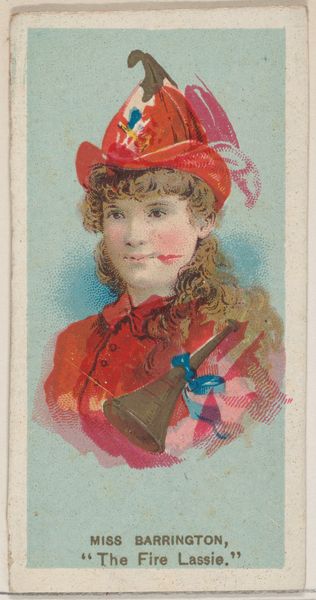
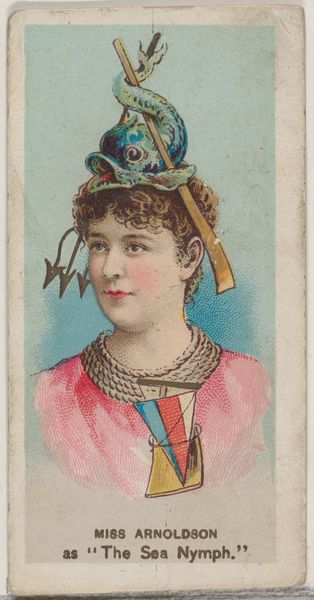
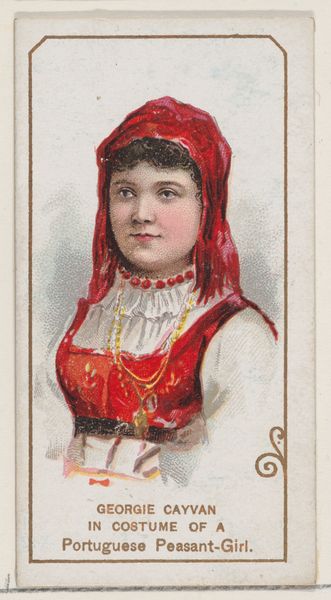
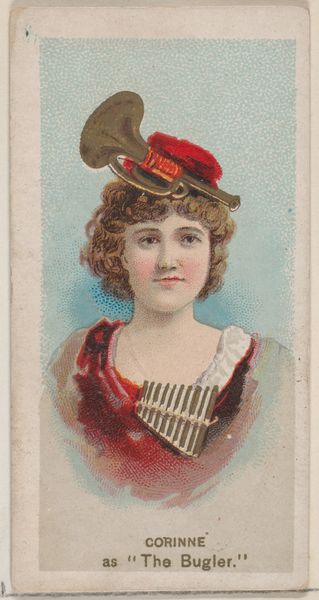
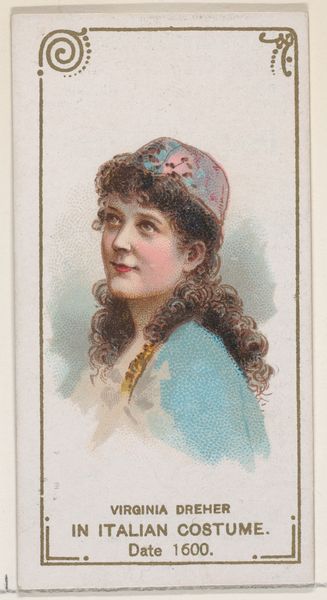
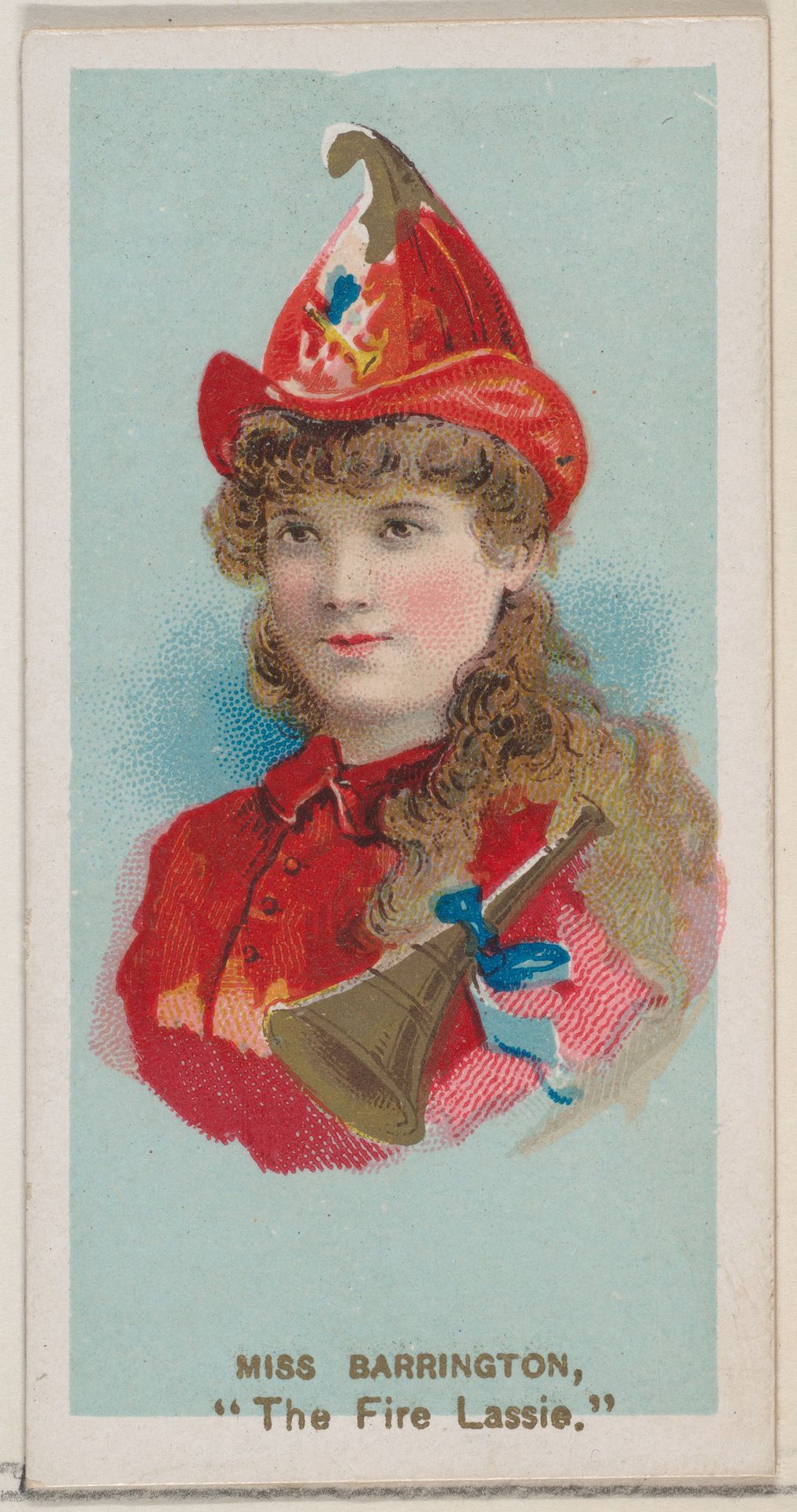
This small chromolithograph from around 1880 by W. Duke, Sons & Co., depicts Miss Barrington in fancy dress. The subject is neatly arranged with her figure set against a pale blue backdrop, creating a striking contrast that immediately draws the eye. The use of color here is intriguing. Note how the fiery reds and oranges of her costume dominate the composition, set against the cool tranquility of the background. This interplay not only highlights her playful attire but also suggests a deeper commentary on societal roles and performance. The image destabilizes traditional representations of women by presenting Miss Barrington in a traditionally male role. The image also relies on the cultural codes of its time, using fashionable dress as a signifier of social status. However, this is subverted by the overt theatricality, as the subject is costumed as a ‘fire lassie’ for a fancy dress ball. It engages with contemporary ideas about identity, representation, and how we perform our social roles.
Miss Barrington as "The Fire Lassie," from the series Fancy Dress Ball Costumes (N73) for Duke brand cigarettes
1889

W. Duke, Sons & Co.
1870 - 1920
The Metropolitan Museum of Art
Metropolitan Museum of Art, New York, NYArtwork details
- Medium
- drawing, coloured-pencil, print
- Dimensions
- Sheet: 2 3/4 x 1 1/2 in. (7 x 3.8 cm)
- Location
- Metropolitan Museum of Art, New York, NY
- Copyright
- Public Domain
Tags
Comments
Share your thoughts
About this artwork
This small chromolithograph from around 1880 by W. Duke, Sons & Co., depicts Miss Barrington in fancy dress. The subject is neatly arranged with her figure set against a pale blue backdrop, creating a striking contrast that immediately draws the eye. The use of color here is intriguing. Note how the fiery reds and oranges of her costume dominate the composition, set against the cool tranquility of the background. This interplay not only highlights her playful attire but also suggests a deeper commentary on societal roles and performance. The image destabilizes traditional representations of women by presenting Miss Barrington in a traditionally male role. The image also relies on the cultural codes of its time, using fashionable dress as a signifier of social status. However, this is subverted by the overt theatricality, as the subject is costumed as a ‘fire lassie’ for a fancy dress ball. It engages with contemporary ideas about identity, representation, and how we perform our social roles.
Comments
Share your thoughts