About this artwork
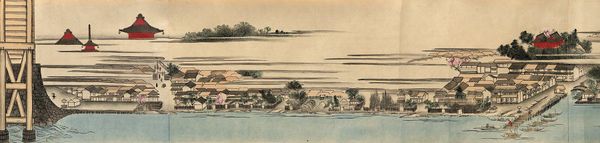
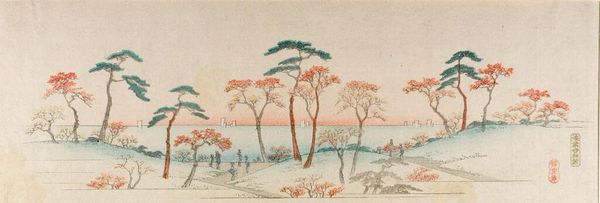
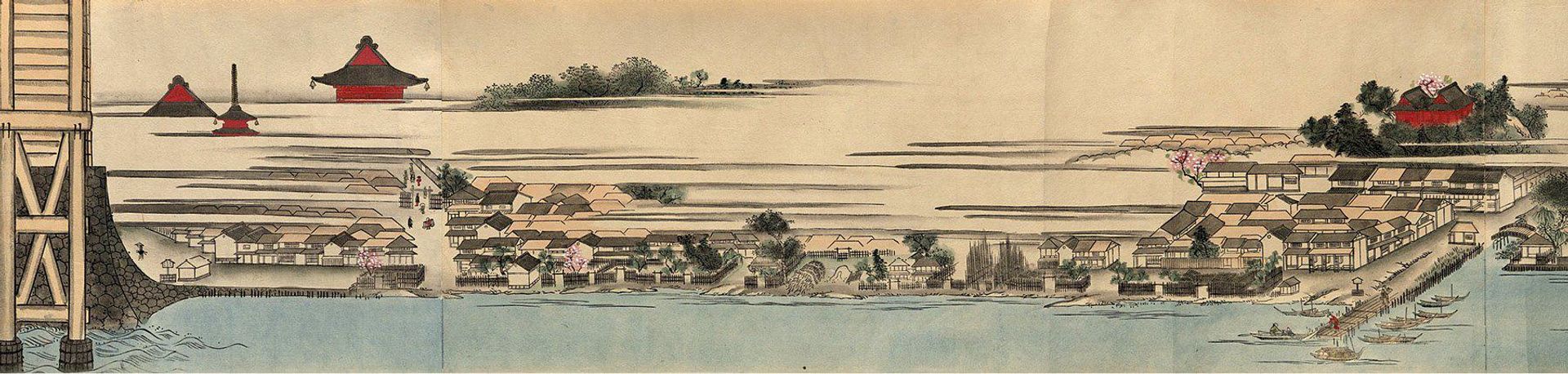
Tsuruoka Rosui painted “Both Banks of the Sumida River” with ink and color on paper, creating a panoramic scene. This work invites reflection on the representation of urban life and natural landscapes in Japanese art and how these depictions reinforce or challenge social structures. The composition of the artwork, its perspective, and its level of detail, create meaning. The inclusion of specific architectural features and their placement within the landscape could reflect the economic structures of the depicted communities. Elements like temples and bridges might emphasize the intersection of spirituality and infrastructure in daily life. By investigating the social and institutional history of Edo-period Japan, we might ask whether this painting serves to reinforce traditional hierarchies, or offer a progressive vision of urban space. Further research might include consulting historical maps, literature, and social commentaries from the period. Through such interdisciplinary inquiry, we can better understand the role of art as a mirror reflecting, and a tool shaping, the social realities of its time.
Both Banks of the Sumida River
1781


Artwork details
- Medium
- print, watercolor
- Dimensions
- 10 1/4 × 330 9/16 in. (26.04 × 839.63 cm) (image)10 1/4 × 339 1/8 in. (26.04 × 861.38 cm) (mount, without roller)
- Location
- Minneapolis Institute of Art
- Copyright
- Public Domain
Tags
Comments
Share your thoughts
About this artwork
Tsuruoka Rosui painted “Both Banks of the Sumida River” with ink and color on paper, creating a panoramic scene. This work invites reflection on the representation of urban life and natural landscapes in Japanese art and how these depictions reinforce or challenge social structures. The composition of the artwork, its perspective, and its level of detail, create meaning. The inclusion of specific architectural features and their placement within the landscape could reflect the economic structures of the depicted communities. Elements like temples and bridges might emphasize the intersection of spirituality and infrastructure in daily life. By investigating the social and institutional history of Edo-period Japan, we might ask whether this painting serves to reinforce traditional hierarchies, or offer a progressive vision of urban space. Further research might include consulting historical maps, literature, and social commentaries from the period. Through such interdisciplinary inquiry, we can better understand the role of art as a mirror reflecting, and a tool shaping, the social realities of its time.
Comments
Share your thoughts