About this artwork
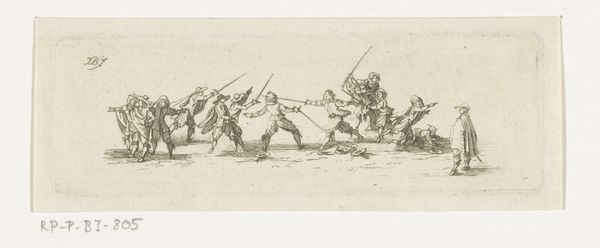
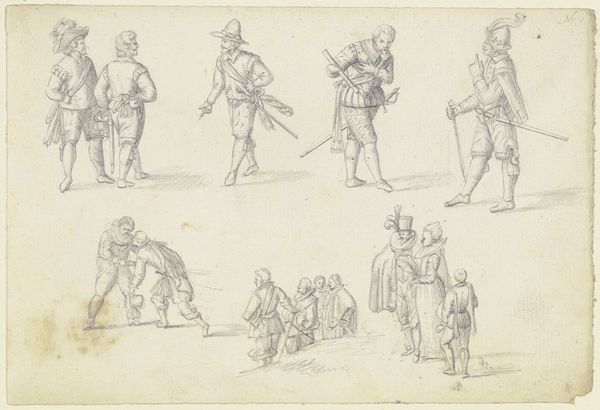
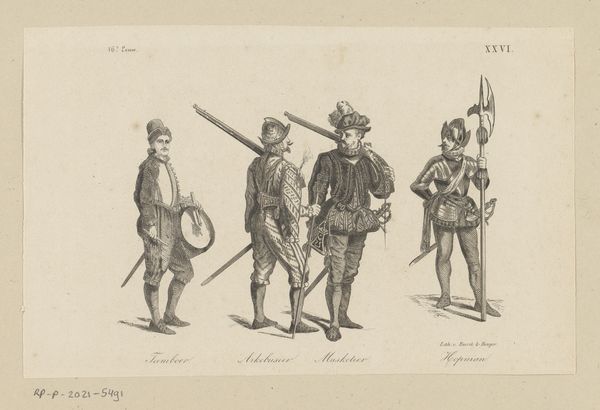
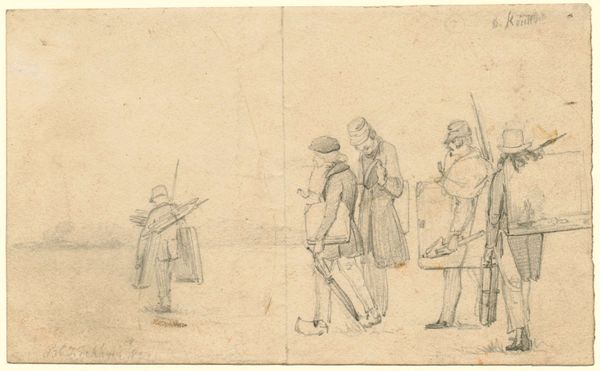
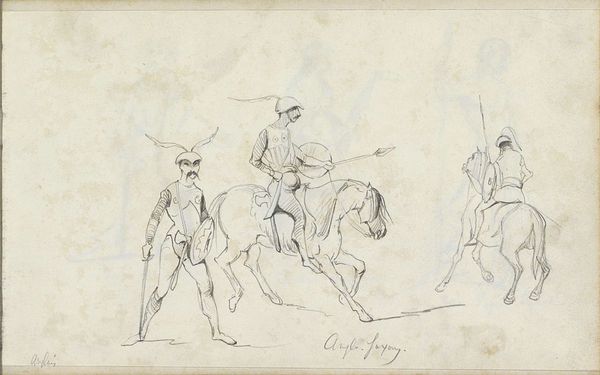
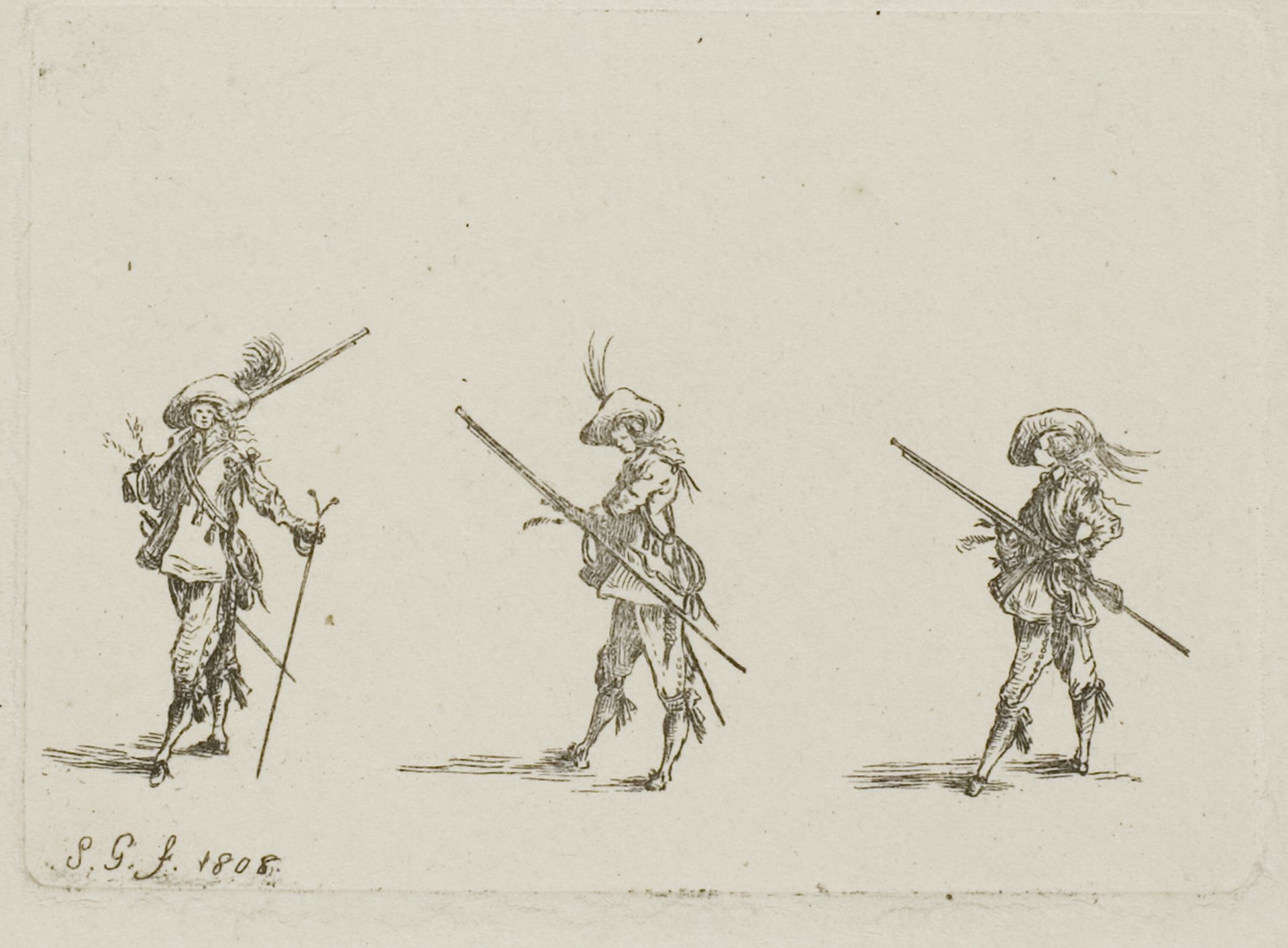
Jean-Baptiste de Grateloup created this tiny etching, Caprice, of three figures with their muskets in 1808. The musket, a symbol of power and readiness, has a long history, evolving from crude firearms to more sophisticated weapons. We see the legacy of martial prowess depicted in the armed strides of these men. Throughout art history, depictions of arms are an echo of cultural memory. Think of classical antiquity's spears and shields, or medieval Europe's swords, each reflecting their era's unique technology and psychology. The men's posturing indicates their awareness of the weapon's capabilities, suggesting both confidence and potential anxiety. The gun may have evolved, but its psychological and cultural weight remains, engaging our subconscious as a potent symbol. As a symbolic form, we have witnessed its non-linear progression throughout art history, adapting and resurfacing with a new significance as societal structures change.
Caprice
n.d.


Artwork details
- Medium
- drawing, print, etching, paper, engraving
- Dimensions
- 45 × 63 mm (image/plate); 235 × 144 mm (sheet)
- Location
- The Art Institute of Chicago
- Copyright
- Public Domain
Tags
Comments
Share your thoughts
About this artwork
Jean-Baptiste de Grateloup created this tiny etching, Caprice, of three figures with their muskets in 1808. The musket, a symbol of power and readiness, has a long history, evolving from crude firearms to more sophisticated weapons. We see the legacy of martial prowess depicted in the armed strides of these men. Throughout art history, depictions of arms are an echo of cultural memory. Think of classical antiquity's spears and shields, or medieval Europe's swords, each reflecting their era's unique technology and psychology. The men's posturing indicates their awareness of the weapon's capabilities, suggesting both confidence and potential anxiety. The gun may have evolved, but its psychological and cultural weight remains, engaging our subconscious as a potent symbol. As a symbolic form, we have witnessed its non-linear progression throughout art history, adapting and resurfacing with a new significance as societal structures change.
Comments
Share your thoughts