About this artwork
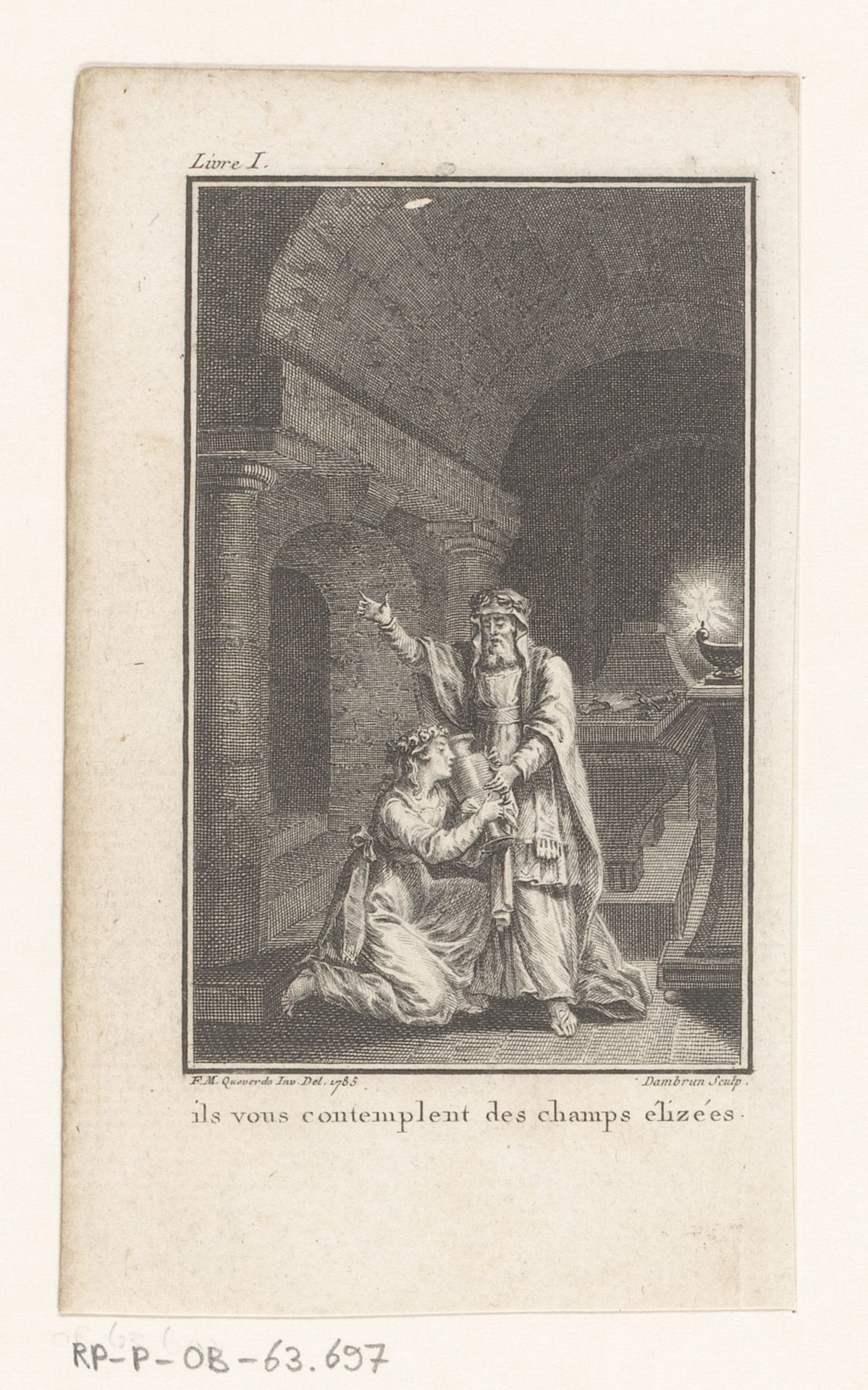
Curator: Welcome. Before us is a print entitled "Tullus vertelt Numa over zijn vader en moeder," or "Tullus Tells Numa About His Father and Mother," created around 1786. The artist is Jean Dambrun, and we can find it here at the Rijksmuseum. It's an engraving, rendered in a very classical style. Editor: The print strikes me as intensely solemn. The stark monochrome, the weighty architectural setting—it all contributes to a sense of high drama and almost… theatrical formality. The two figures seem caught in a very important moment. Curator: Absolutely. It exemplifies the Neoclassical movement’s interest in historical narrative. These engravings often circulated as illustrations in books, disseminating ideas about virtue and citizenship rooted in Roman history. Editor: The composition is quite fascinating. Note how Tullus, clearly the elder with his beard and robes, points upwards—almost a prophetic gesture, directing Numa’s attention towards some higher purpose. The vessel that Numa clasps, its form classical and perhaps containing relics? It adds layers of meaning. I wonder about the personal implication the “father and mother” might represent? Curator: Considering the social context, it’s about constructing and reinforcing specific ideas about the foundations of the Roman state. Dambrun is not just illustrating a scene; he's participating in a discourse about leadership and ancestry, essential for eighteenth-century audiences. What is considered heritage is also very much considered future at that time. Editor: The symbol-laden language certainly appeals to a specific and elite cultural mindset, connecting to virtue. I can imagine an educated patron tracing their lineage back through similar stories—making the scene a personal memento or philosophical reminder of their purpose. Curator: And also participating to the narrative construction for an intended future for the self and the community at large. The political undertones resonate. Editor: Considering it, the simple monochromatic character of this artwork doesn't preclude multiple layers of significance. I find its symbolic construction rich. Curator: It shows the role of narrative and symbols in a time when cultural heritage was very much being constructed through images that would dictate and promote shared value and meaning.

Artwork details
- Medium
- drawing, print, engraving
- Dimensions
- height 117 mm, width 69 mm
- Location
- Rijksmuseum
- Copyright
- Rijks Museum: Open Domain
Tags
Comments
Share your thoughts
About this artwork
Curator: Welcome. Before us is a print entitled "Tullus vertelt Numa over zijn vader en moeder," or "Tullus Tells Numa About His Father and Mother," created around 1786. The artist is Jean Dambrun, and we can find it here at the Rijksmuseum. It's an engraving, rendered in a very classical style. Editor: The print strikes me as intensely solemn. The stark monochrome, the weighty architectural setting—it all contributes to a sense of high drama and almost… theatrical formality. The two figures seem caught in a very important moment. Curator: Absolutely. It exemplifies the Neoclassical movement’s interest in historical narrative. These engravings often circulated as illustrations in books, disseminating ideas about virtue and citizenship rooted in Roman history. Editor: The composition is quite fascinating. Note how Tullus, clearly the elder with his beard and robes, points upwards—almost a prophetic gesture, directing Numa’s attention towards some higher purpose. The vessel that Numa clasps, its form classical and perhaps containing relics? It adds layers of meaning. I wonder about the personal implication the “father and mother” might represent? Curator: Considering the social context, it’s about constructing and reinforcing specific ideas about the foundations of the Roman state. Dambrun is not just illustrating a scene; he's participating in a discourse about leadership and ancestry, essential for eighteenth-century audiences. What is considered heritage is also very much considered future at that time. Editor: The symbol-laden language certainly appeals to a specific and elite cultural mindset, connecting to virtue. I can imagine an educated patron tracing their lineage back through similar stories—making the scene a personal memento or philosophical reminder of their purpose. Curator: And also participating to the narrative construction for an intended future for the self and the community at large. The political undertones resonate. Editor: Considering it, the simple monochromatic character of this artwork doesn't preclude multiple layers of significance. I find its symbolic construction rich. Curator: It shows the role of narrative and symbols in a time when cultural heritage was very much being constructed through images that would dictate and promote shared value and meaning.
Comments
Share your thoughts