About this artwork
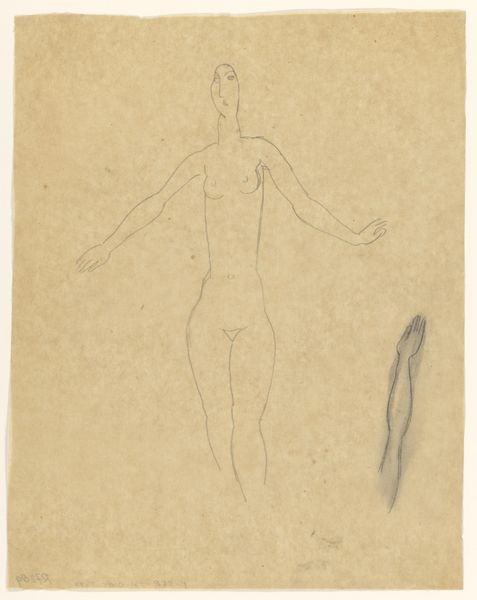
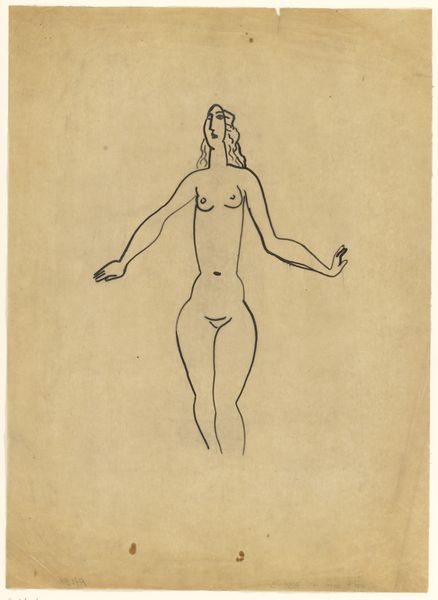
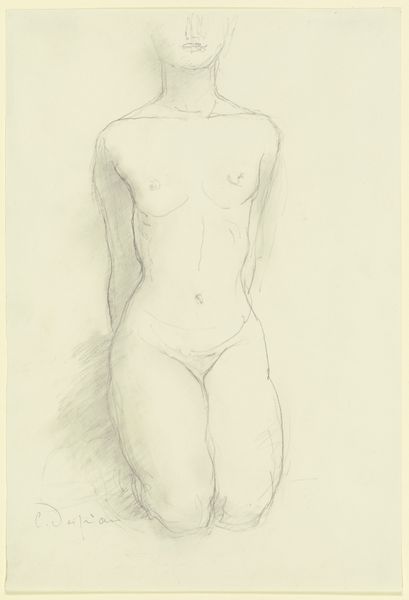
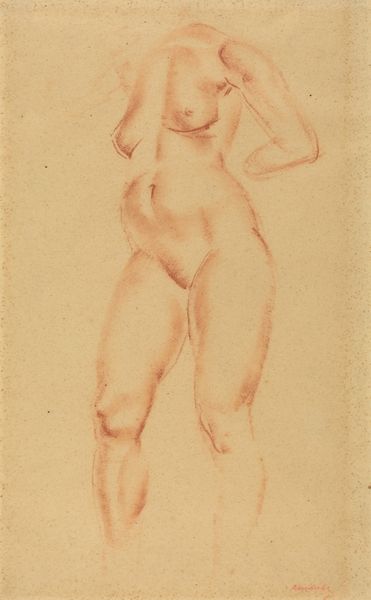
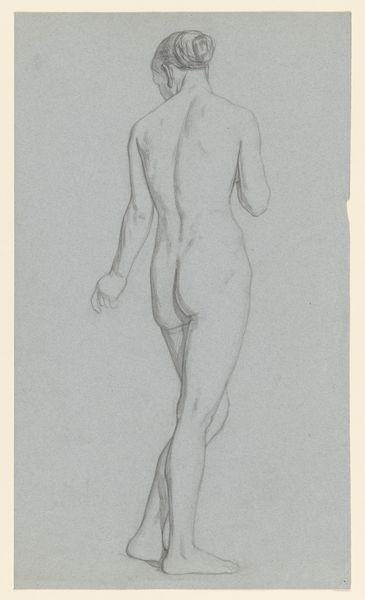
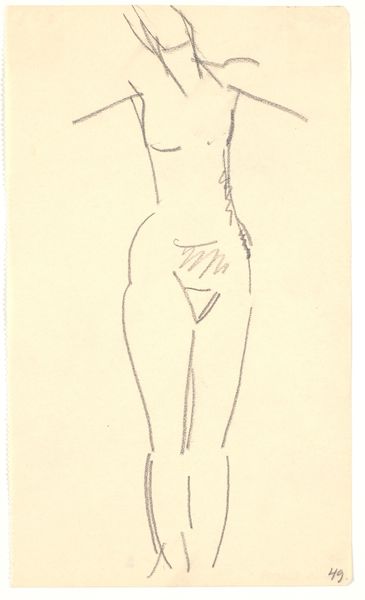
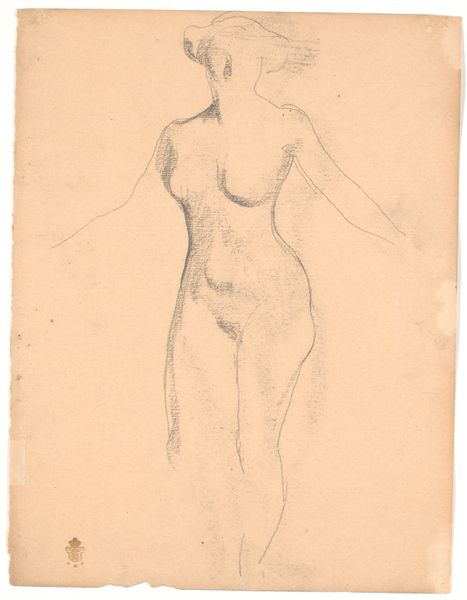
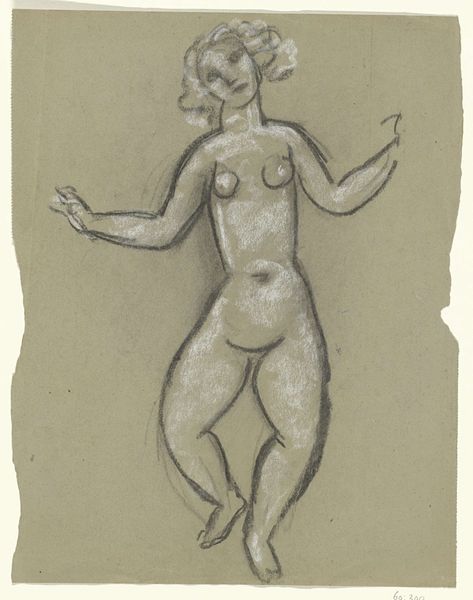
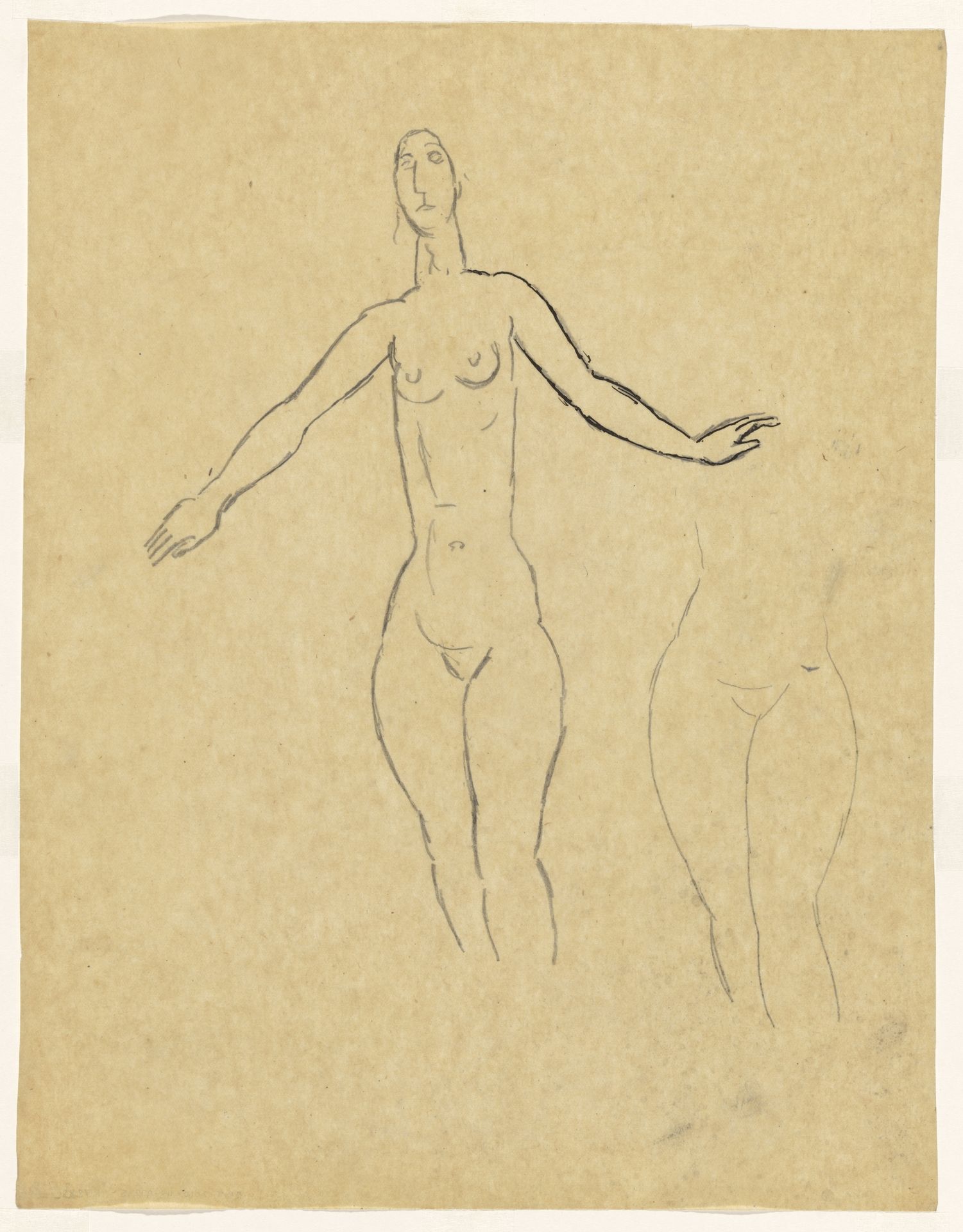
Leo Gestel made this sketch of a female nude, in the Netherlands, at a time when artistic conventions for representing the body were in flux. The drawing gives us a window onto the artist's process, but it also challenges the traditional, often idealized, depictions of the female form. Gestel's loose lines and simplified shapes seem to be taking cues from modern art movements happening elsewhere in Europe. Consider how the cultural norms of the Netherlands, with its complex relationship to both tradition and modernity, might have shaped Gestel's approach. Was he critiquing established academic standards, or was he searching for a new, more honest visual language? To understand this work more fully, we can look into the archives of art schools and exhibition records, as well as publications, in order to understand the cultural context surrounding the work. Through art history, we can appreciate how the meaning of art is rooted in its time and place.

Artwork details
- Medium
- drawing, paper, pencil
- Dimensions
- height 330 mm, width 259 mm
- Location
- Rijksmuseum
- Copyright
- Rijks Museum: Open Domain
Tags
Comments
Share your thoughts
About this artwork
Leo Gestel made this sketch of a female nude, in the Netherlands, at a time when artistic conventions for representing the body were in flux. The drawing gives us a window onto the artist's process, but it also challenges the traditional, often idealized, depictions of the female form. Gestel's loose lines and simplified shapes seem to be taking cues from modern art movements happening elsewhere in Europe. Consider how the cultural norms of the Netherlands, with its complex relationship to both tradition and modernity, might have shaped Gestel's approach. Was he critiquing established academic standards, or was he searching for a new, more honest visual language? To understand this work more fully, we can look into the archives of art schools and exhibition records, as well as publications, in order to understand the cultural context surrounding the work. Through art history, we can appreciate how the meaning of art is rooted in its time and place.
Comments
Share your thoughts