1840
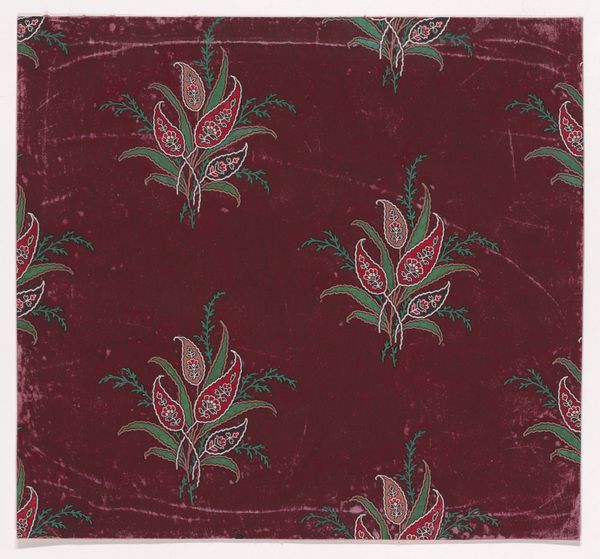
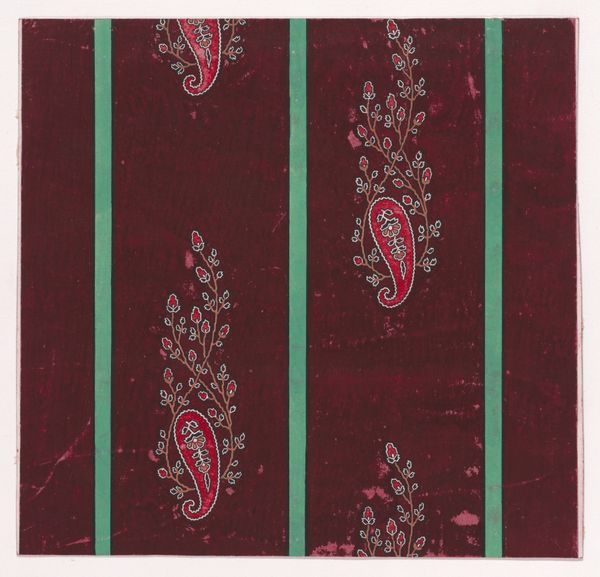
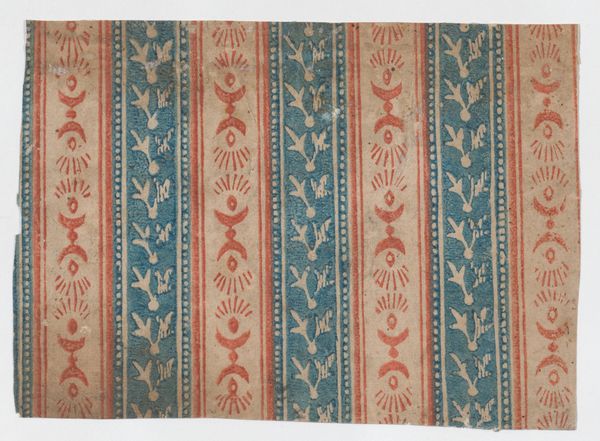
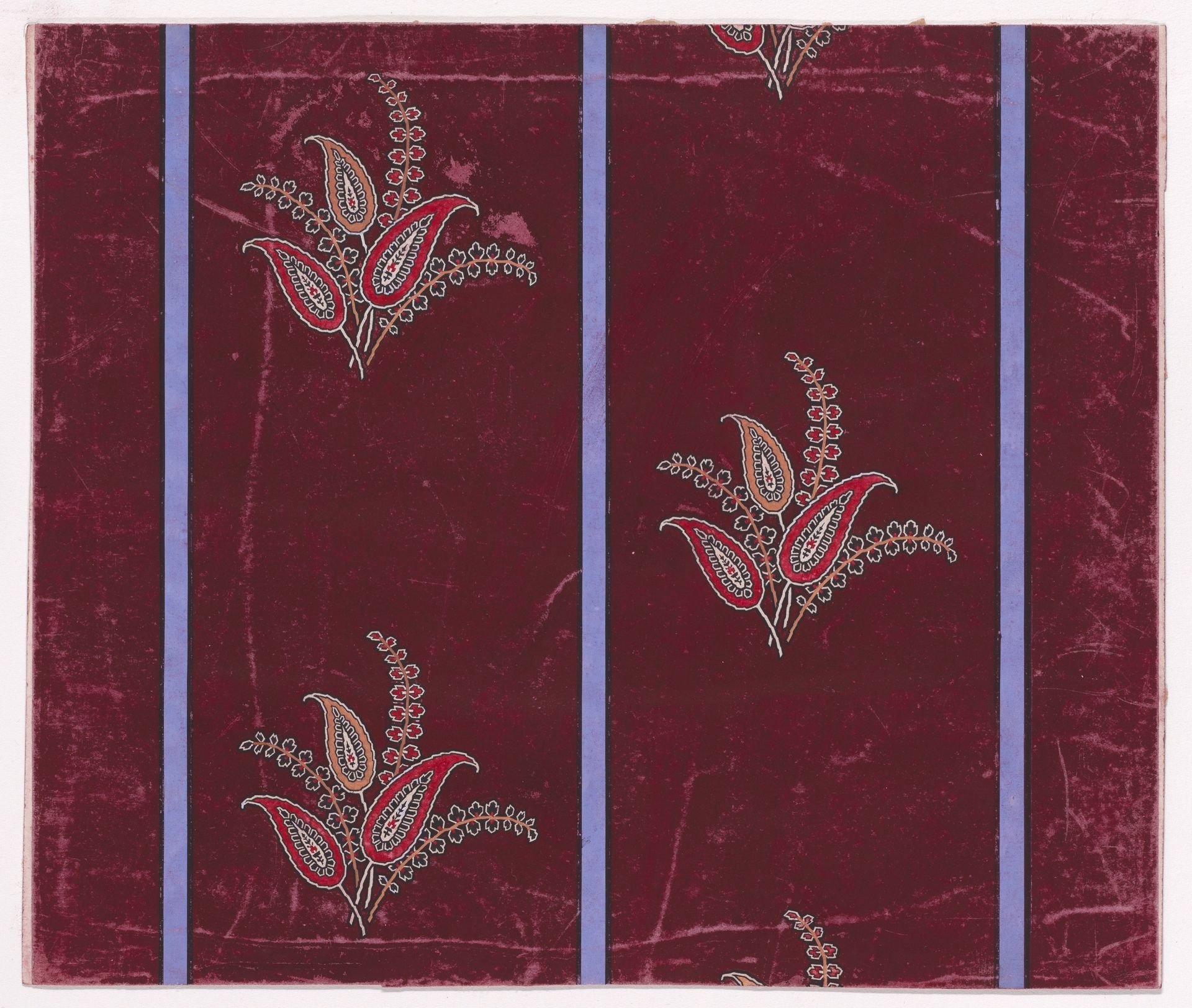
Textile Design with Alternating Vertical Rows of Bunches of Large Paisley-Inspired Stylized Leaves and Branches with Pairs of Stylized Leaves Separated by Vertical Stripes


Listen to curator's interpretation
Curatorial notes
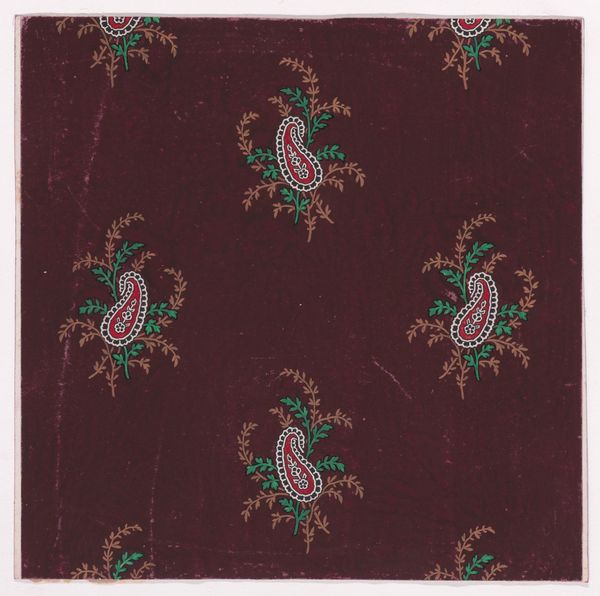
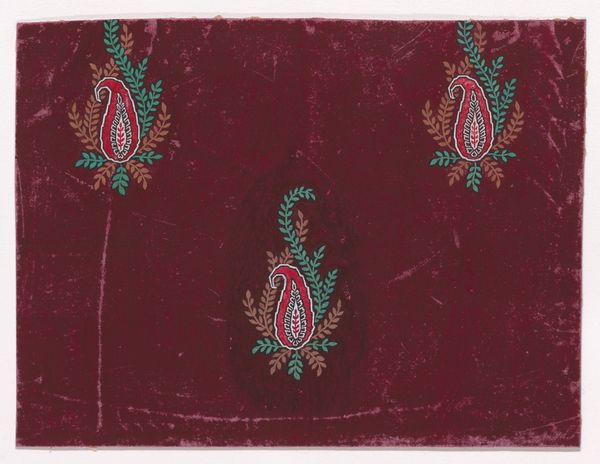
Editor: Here we have an anonymous textile design from around 1840, showcasing stylized paisley leaves and branches. It looks like a print on fabric, and I find its repetitive pattern quite captivating. What's your take on this, from your perspective? Curator: The key here is materiality. It’s a textile design, a blueprint for something meant to be produced, consumed, and quite literally worn. These paisley patterns were extremely popular, feeding into a huge market. It begs the question: where was it produced, by whom, and for what social class? Think of the labour involved – from the designer to the artisans realizing the design in fabric, possibly under exploitative conditions. Editor: So you're emphasizing the production process and its societal implications? How does that affect how we see the piece itself? Curator: Precisely! This isn't just decoration. It reflects Victorian consumer culture, the burgeoning textile industry, and global trade routes that brought the paisley motif to the forefront. Look at the design – it suggests mass production, efficiency, and affordability for a certain segment of society. We need to question whose story is missing. What materials were used, and from where were they sourced? Editor: That’s fascinating; I never thought about it in terms of labour and economics. It shifts my perspective quite a bit. Curator: It challenges that high art/craft binary, right? It asks us to value the often-overlooked labour embedded within these decorative forms, considering how its materials and creation reflect the culture that made it. Editor: I'll definitely be looking at textiles differently from now on, keeping in mind the whole story behind its making. Thanks!