About this artwork
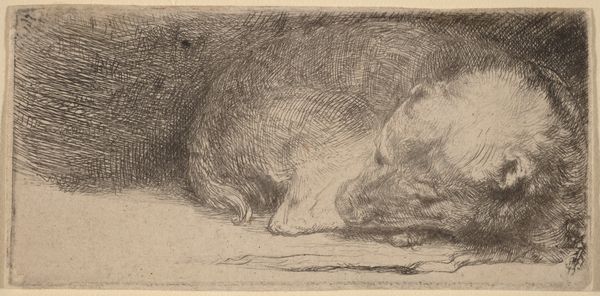
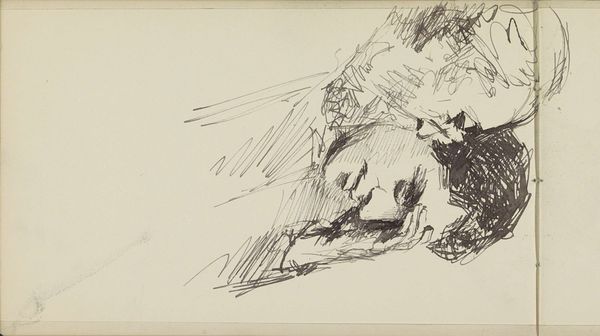
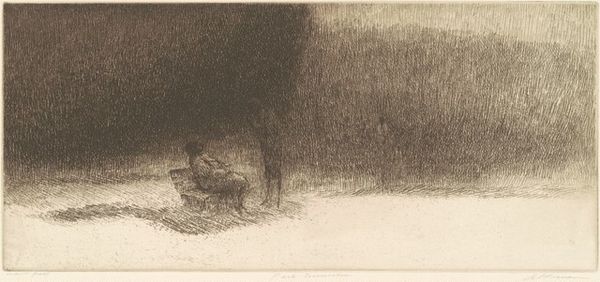
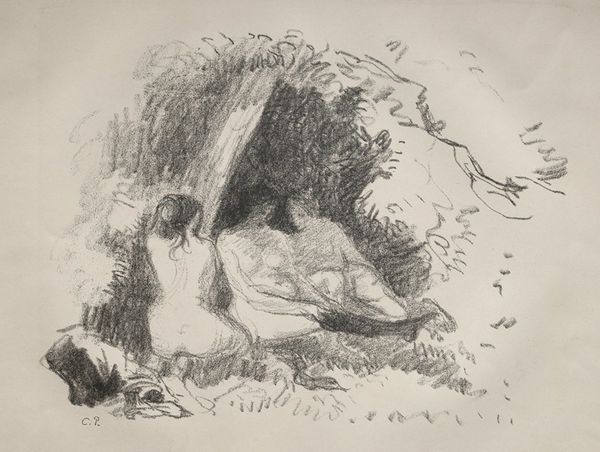
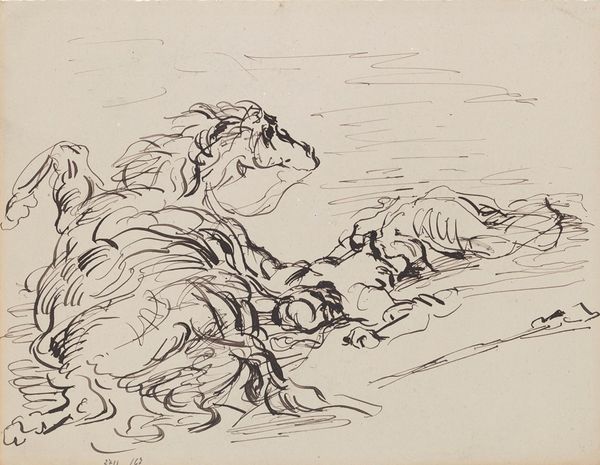
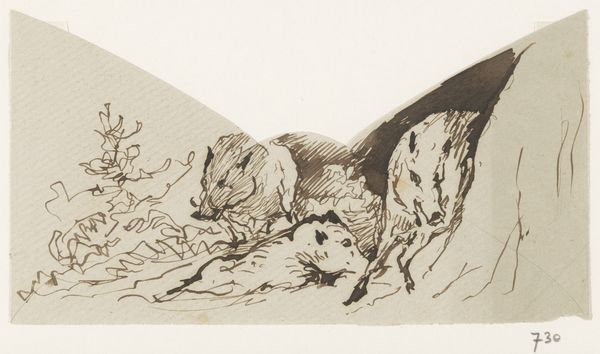
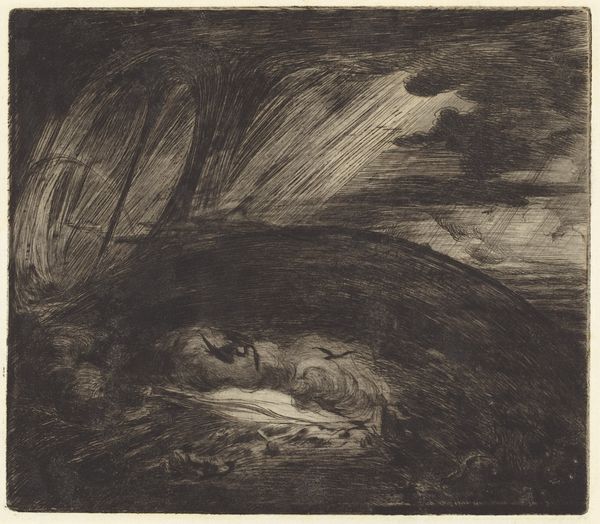
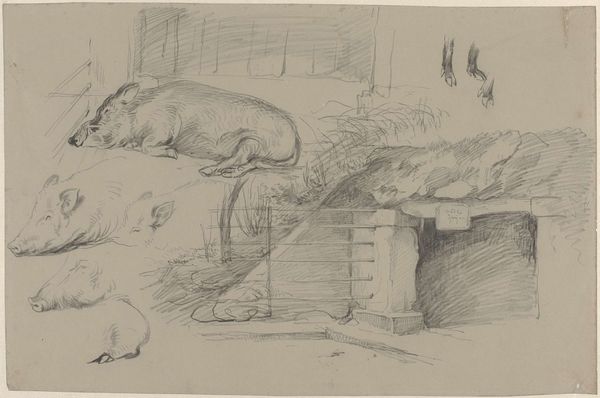
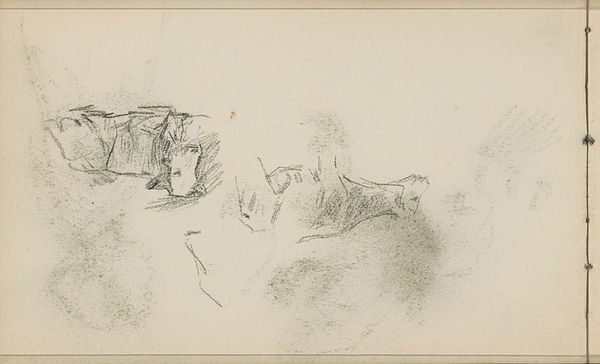
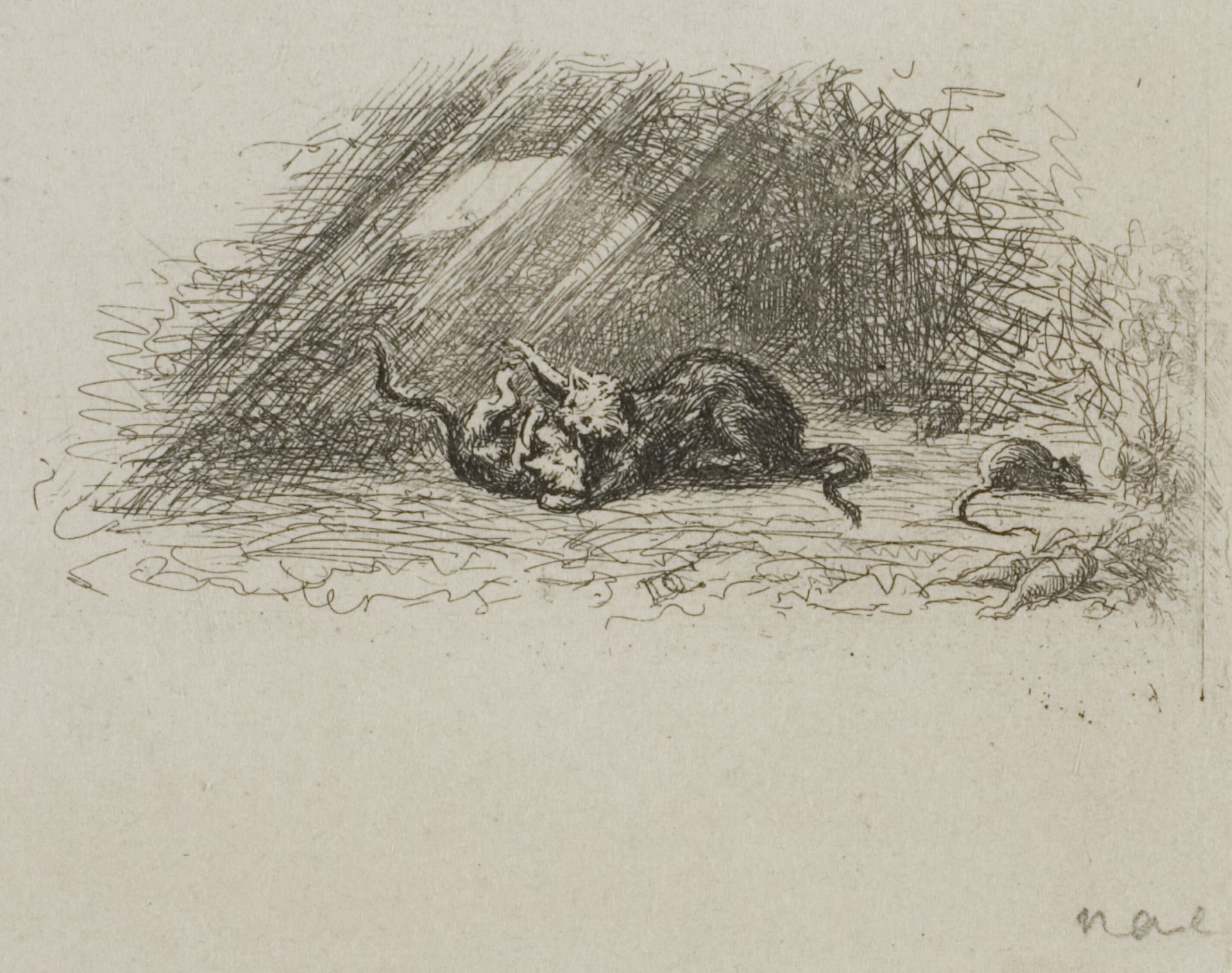
Charles-François Daubigny made this etching, titled “The Cedar of Lebanon”, sometime in the 19th century. The image depicts rodents, one consuming another, in a loose and informal style, far from the concerns with realism that dominated the French Academy. Daubigny was a key figure in the Barbizon School, a group of artists who rejected urban life and academic painting in favor of rural landscapes and direct observation. They paved the way for the Impressionists. But here we see an interest in a different kind of observation, focusing on a scene of animal predation, a seemingly marginal subject in a world dominated by human affairs. Historical context is crucial here. The Barbizon artists often challenged the norms of the art world and traditional social hierarchies through their choice of subject matter. Primary sources from that time, such as letters or exhibition reviews, can really help us to further contextualize the meaning of this work.
The Cedar of Lebanon 1842


Artwork details
- Medium
- drawing, print, etching, paper
- Dimensions
- 179 × 115 mm (image); 278 × 187 mm (sheet)
- Location
- The Art Institute of Chicago
- Copyright
- Public Domain
Tags
drawing
animal
etching
paper
realism
Comments
No comments
About this artwork
Charles-François Daubigny made this etching, titled “The Cedar of Lebanon”, sometime in the 19th century. The image depicts rodents, one consuming another, in a loose and informal style, far from the concerns with realism that dominated the French Academy. Daubigny was a key figure in the Barbizon School, a group of artists who rejected urban life and academic painting in favor of rural landscapes and direct observation. They paved the way for the Impressionists. But here we see an interest in a different kind of observation, focusing on a scene of animal predation, a seemingly marginal subject in a world dominated by human affairs. Historical context is crucial here. The Barbizon artists often challenged the norms of the art world and traditional social hierarchies through their choice of subject matter. Primary sources from that time, such as letters or exhibition reviews, can really help us to further contextualize the meaning of this work.
Comments
No comments