About this artwork
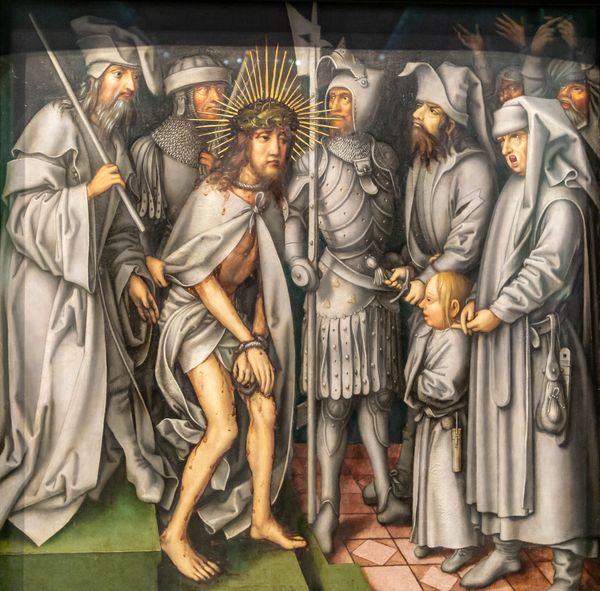
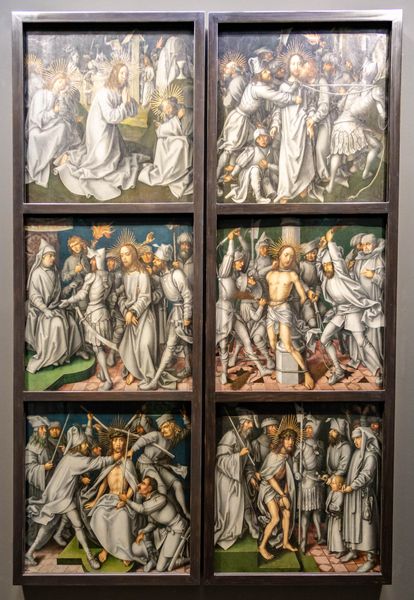
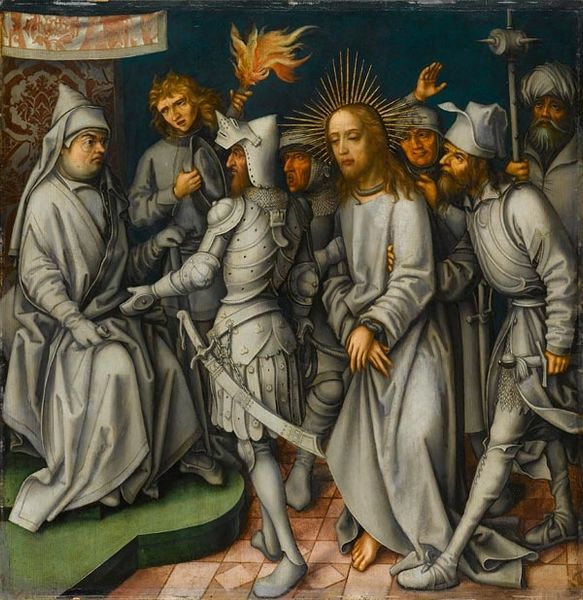
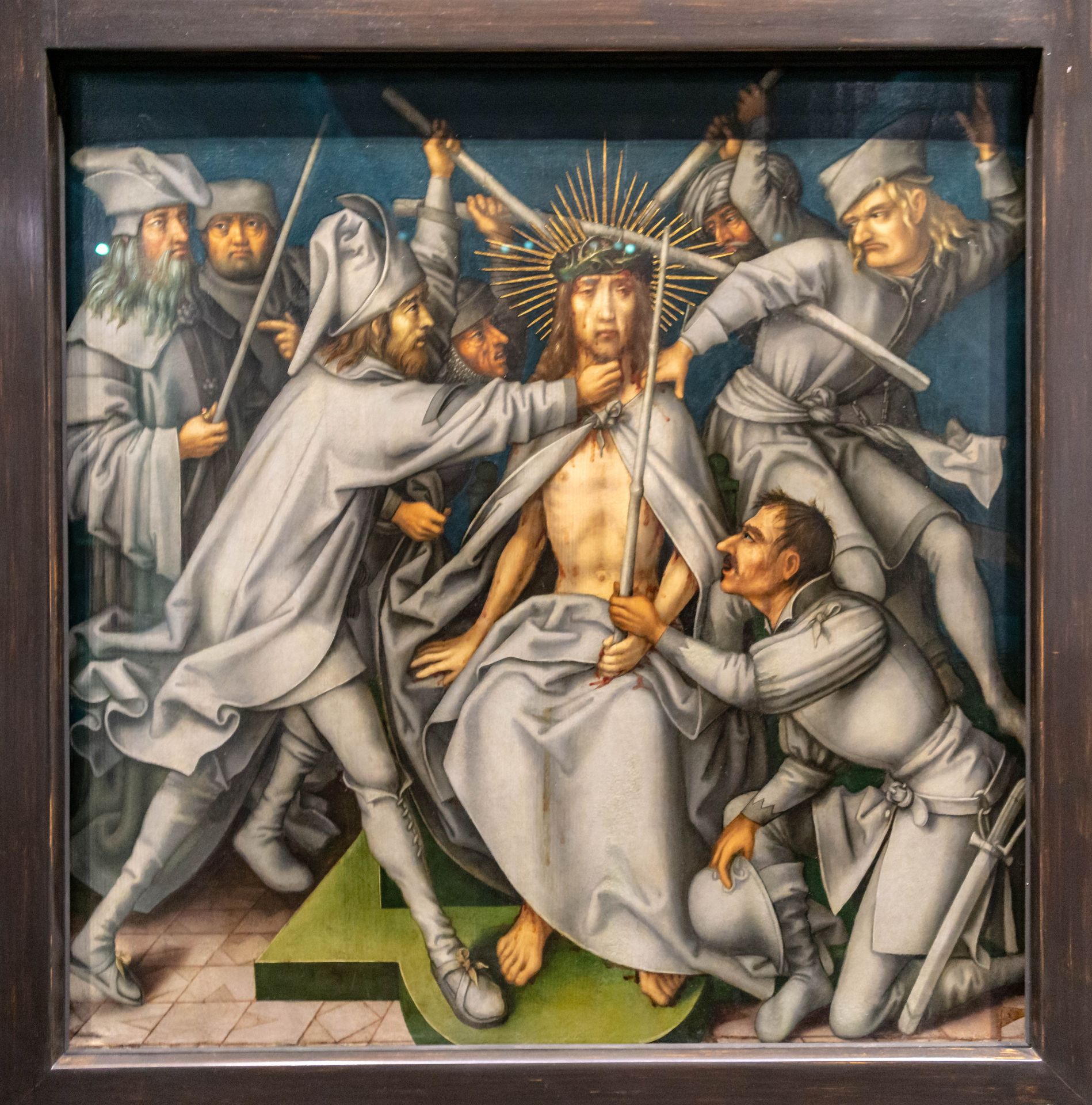
"The Crown of Thorns," was painted in Germany around 1500 by Hans Holbein the Elder, using oil paint on wood panel. The use of grisaille, painting in shades of grey, directs our attention to Holbein's technical virtuosity and his acute observation of form and texture. But it also throws the painting's devotional purpose into sharp relief. The scene of Christ's torment is rendered with a muted palette, heightening the emotional impact. Holbein’s attention to detail brings the scene to life: the glint of light on metal, the folds of fabric, the expressions on the faces of the tormentors. Look closely, and you’ll see how each figure is rendered with individual characteristics. This was a period of transition in Europe, with the rise of merchant class and the growing importance of individual identity, which Holbein has captured in his work. By focusing on materials, making, and social context, we can understand how this painting reflects both artistic skill and the broader cultural currents of its time, blurring the lines between craft and fine art.
The crown of thorns (Grey Passion-5) 1500

Hans Holbein the Elder
1460 - 1524Location
Staatsgalerie Stuttgart, Stuttgart, GermanyArtwork details
- Medium
- painting, oil-paint
- Location
- Staatsgalerie Stuttgart, Stuttgart, Germany
- Copyright
- Public domain
Tags
narrative-art
painting
oil-paint
figuration
oil painting
history-painting
northern-renaissance
Comments
No comments
About this artwork
"The Crown of Thorns," was painted in Germany around 1500 by Hans Holbein the Elder, using oil paint on wood panel. The use of grisaille, painting in shades of grey, directs our attention to Holbein's technical virtuosity and his acute observation of form and texture. But it also throws the painting's devotional purpose into sharp relief. The scene of Christ's torment is rendered with a muted palette, heightening the emotional impact. Holbein’s attention to detail brings the scene to life: the glint of light on metal, the folds of fabric, the expressions on the faces of the tormentors. Look closely, and you’ll see how each figure is rendered with individual characteristics. This was a period of transition in Europe, with the rise of merchant class and the growing importance of individual identity, which Holbein has captured in his work. By focusing on materials, making, and social context, we can understand how this painting reflects both artistic skill and the broader cultural currents of its time, blurring the lines between craft and fine art.
Comments
No comments