1900 - 1930
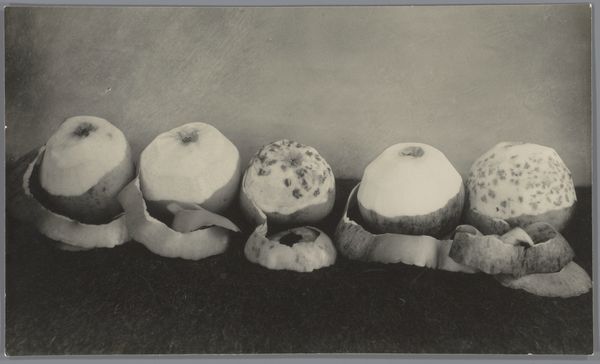
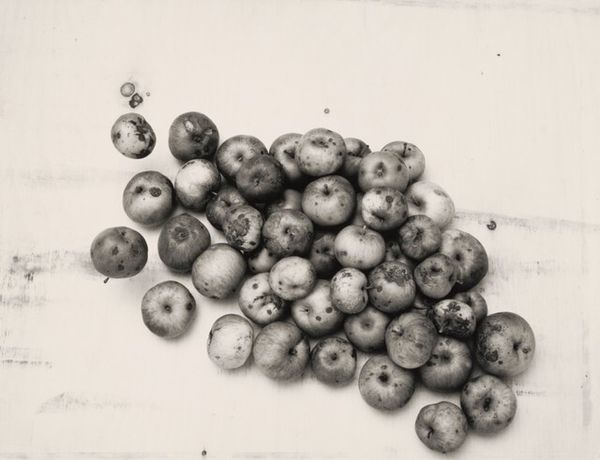
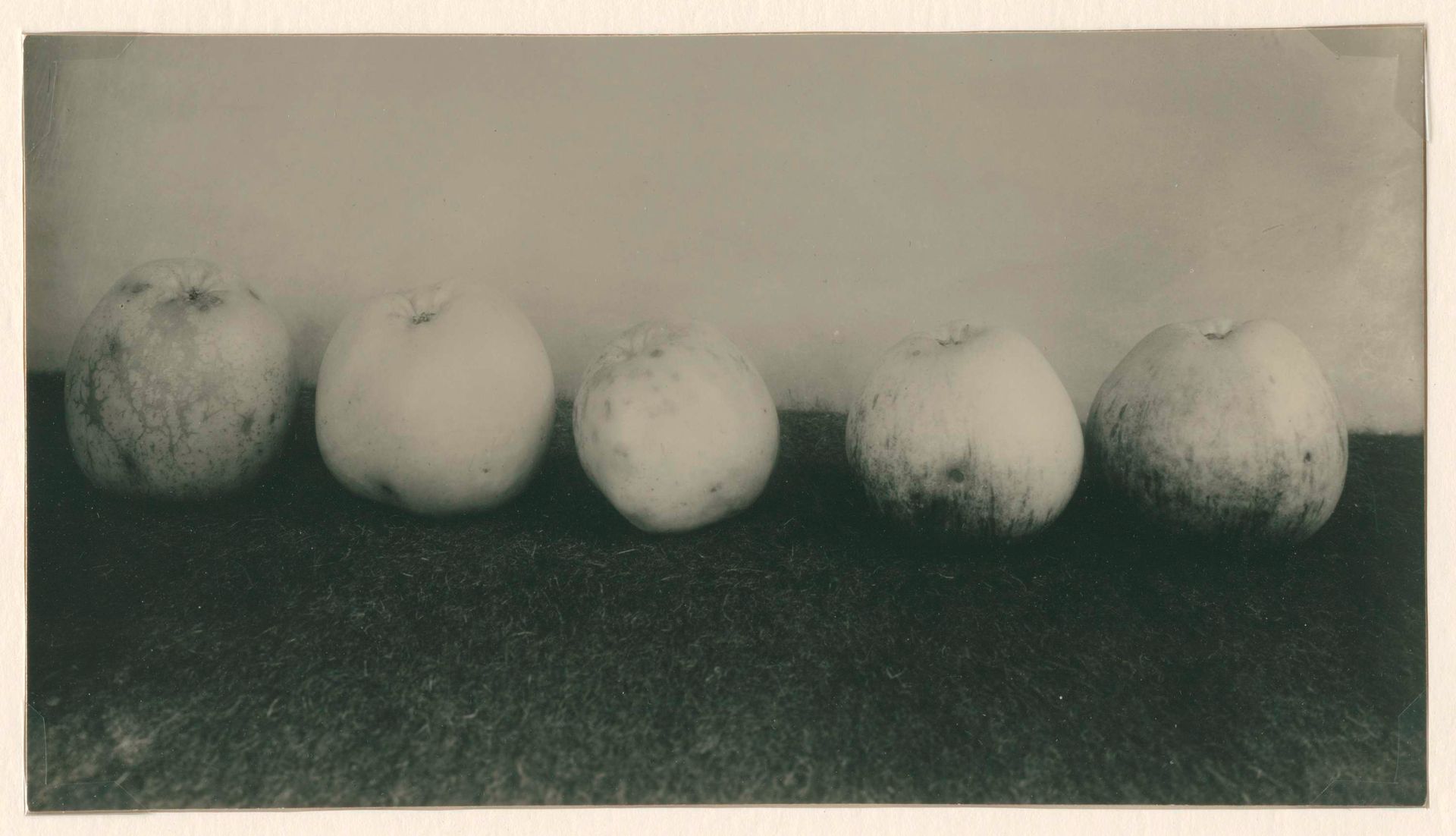
Stilleven met vijf appels

Richard Tepe
1864 - 1952Location
RijksmuseumListen to curator's interpretation
Curatorial notes
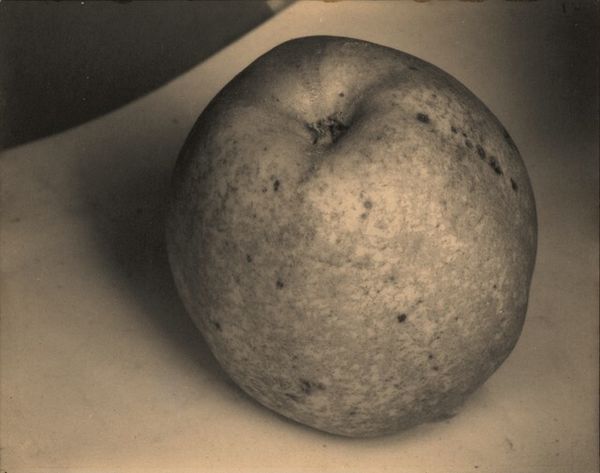
Editor: Here we have Richard Tepe’s “Stilleven met vijf appels,” a gelatin silver print made sometime between 1900 and 1930. It’s deceptively simple—just five apples lined up—but the light and shadows give it a real sense of depth. I am quite curious: what story do you think Tepe is telling here? Curator: A story? Well, every still life is a little memento mori, a quiet reminder that even the juiciest apple will eventually decay. But these aren't those plump, rosy, Renaissance-style apples. These feel a bit... worn. The mottled skins, the muted tones…it almost feels like he's captured a quiet moment of contemplation on the beauty of imperfection, no? Like life isn't always glossy and perfect. And I wonder what drew him to photography rather than painting; maybe a wish to show life ‘as is’. What do you think? Editor: I see what you mean! They're definitely not the picture-perfect fruit we're used to seeing. Do you think that adds a layer of meaning, contrasting ideals with reality? Curator: Absolutely! Tepe has found his unique way to convey his personal touch. Did you notice how the ground almost dissolves to a shadow, too? It is not very Renaissance is it, the high contrast and lack of sharp detail... it suggests the world is made of more vague contours, uncertainty even! I am tempted to reach into myself, trying to find what these apples mean to me. Editor: That’s a very beautiful perspective. Thinking about it now, I initially saw just five apples, but it is more complex than that! It's got me thinking about how something so ordinary can hold so much meaning. Curator: Exactly! It's why art is so interesting—isn't it just magical, don't you think, how our lives intertwine with artworks that are able to teach us things we hadn't grasped previously!