1796
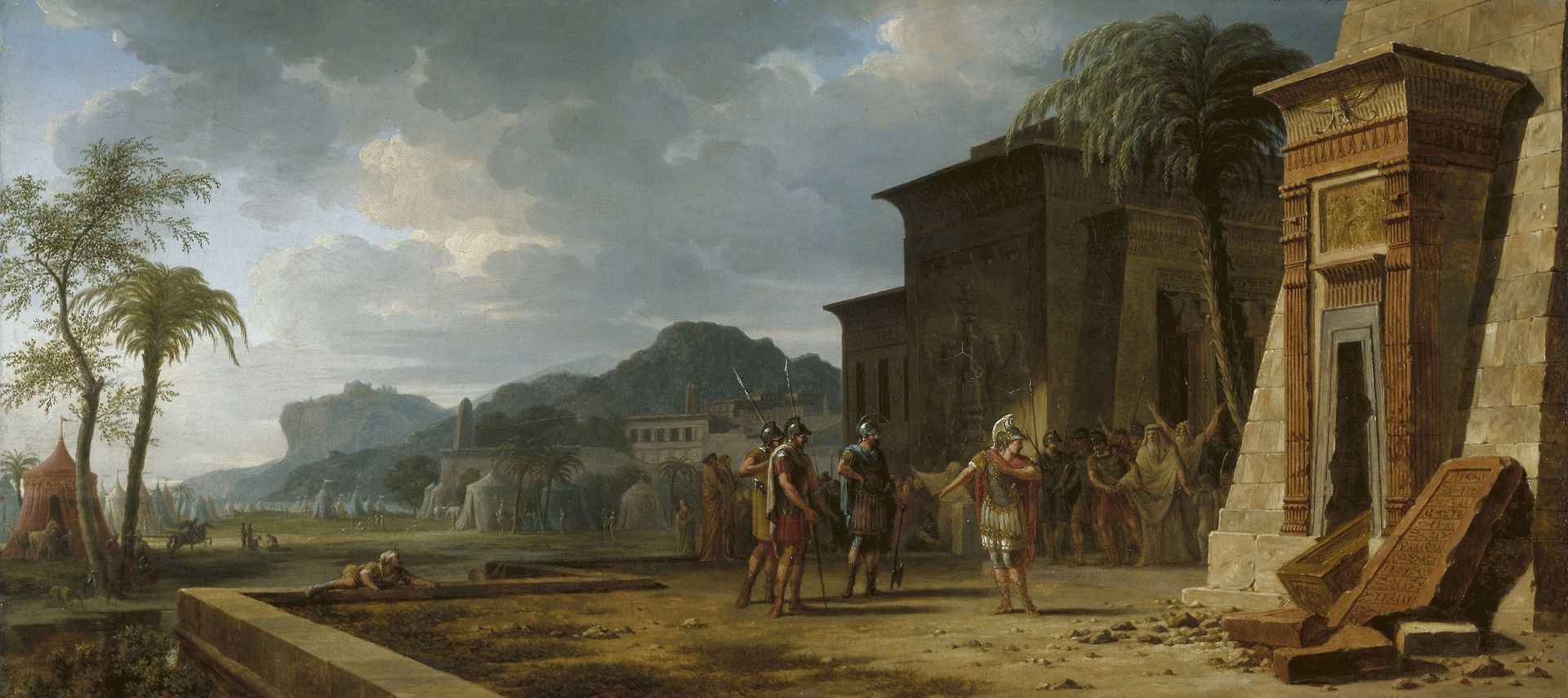
Alexander at the Tomb of Cyrus the Great

Pierre-Henri de Valenciennes
1750 - 1819
The Art Institute of Chicago
Art Institute of Chicago, Chicago, IL, USListen to curator's interpretation
Curatorial notes
Pierre-Henri de Valenciennes painted Alexander at the Tomb of Cyrus, capturing a pivotal historical encounter. Dominating the scene is the tomb, adorned with hieroglyphs – symbols of ancient wisdom. Consider the image of Alexander, frozen in a gesture of respect or contemplation, and observe how it echoes through the ages. You see it mirrored in countless depictions of conquerors and leaders throughout history. This gesture, laden with the weight of admiration and recognition of power, carries an emotional and psychological intensity, engaging viewers on a deep, subconscious level. The toppled stones at the tomb's base poignantly speak of lost grandeur and shifting powers. Such motifs recur in art across epochs, reminding us of the cyclical nature of history. This motif has persisted and evolved, resurfacing in different contexts to evoke themes of mortality and transience. It reminds us that even the mightiest empires fade, leaving behind ruins that whisper stories of their past glory.