albumen-print, paper, photography, albumen-print
#
albumen-print
#
toned paper
#
16_19th-century
#
greek-and-roman-art
#
landscape
#
paper
#
photography
#
ancient-mediterranean
#
cityscape
#
albumen-print
Copyright: Public Domain
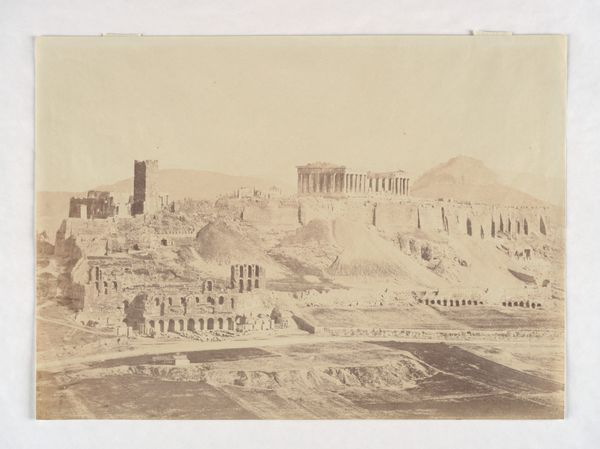
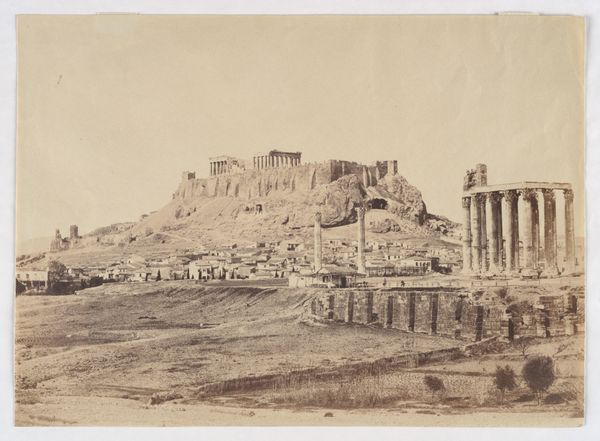
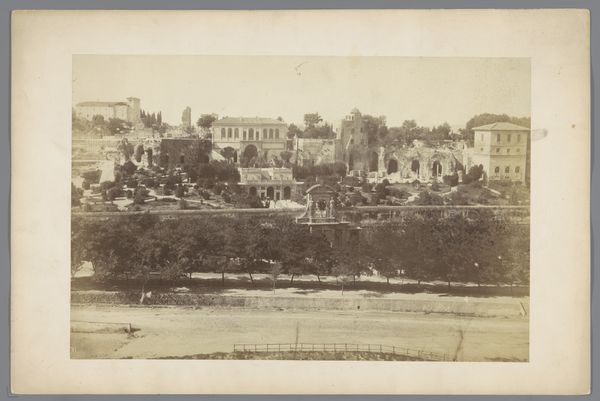
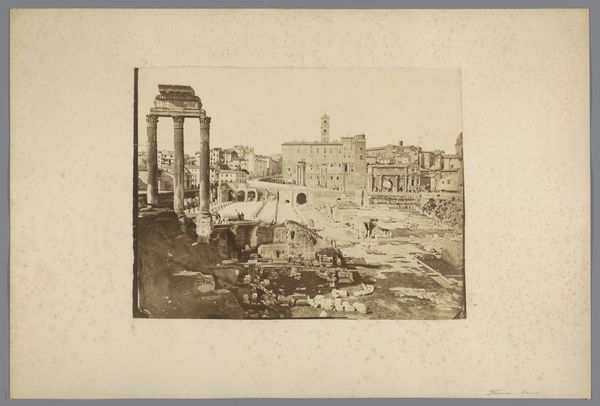
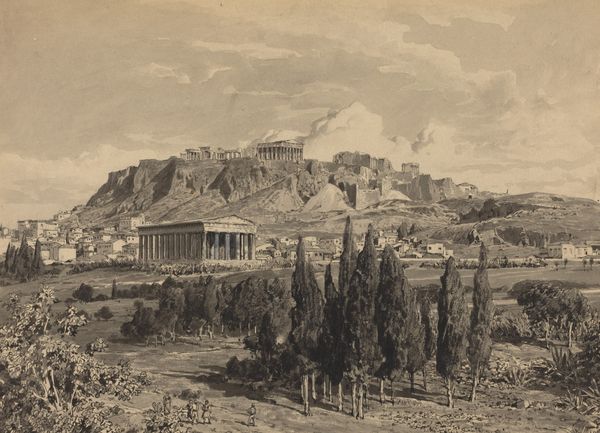
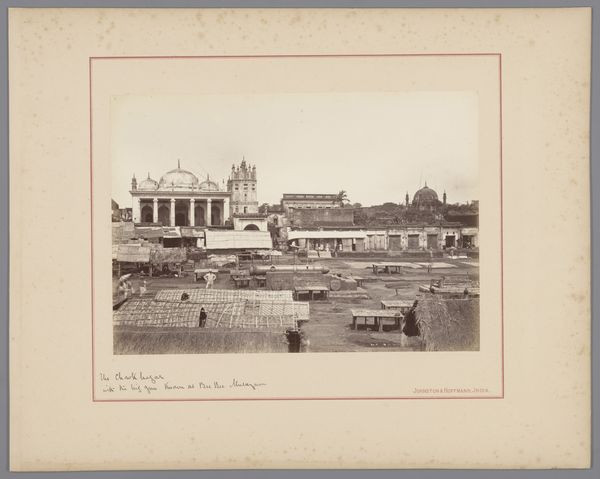
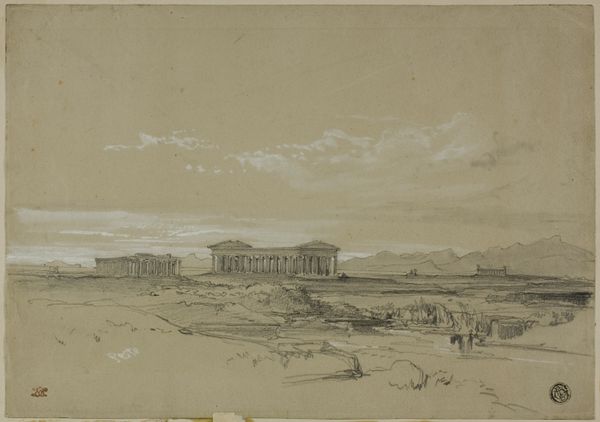
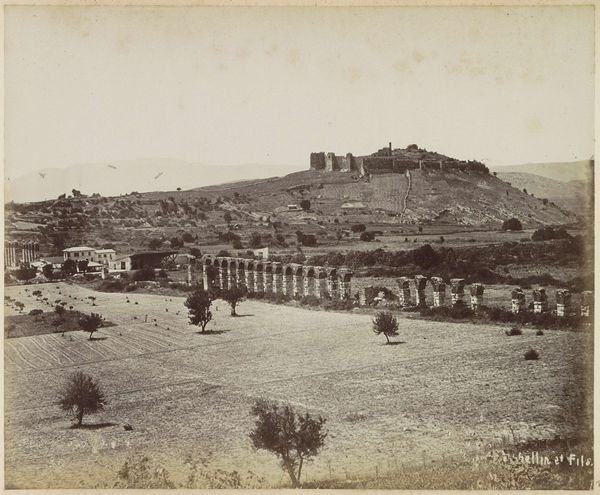
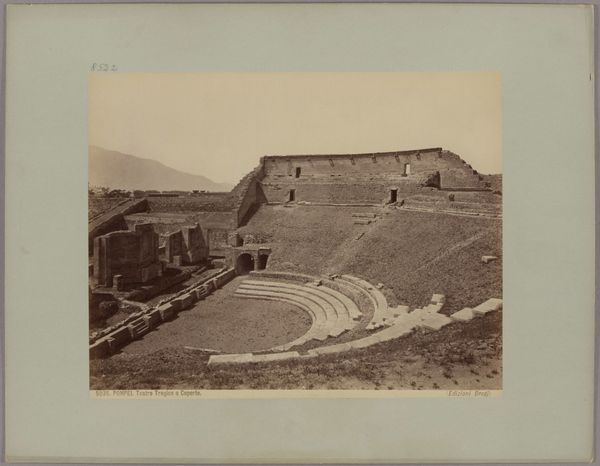
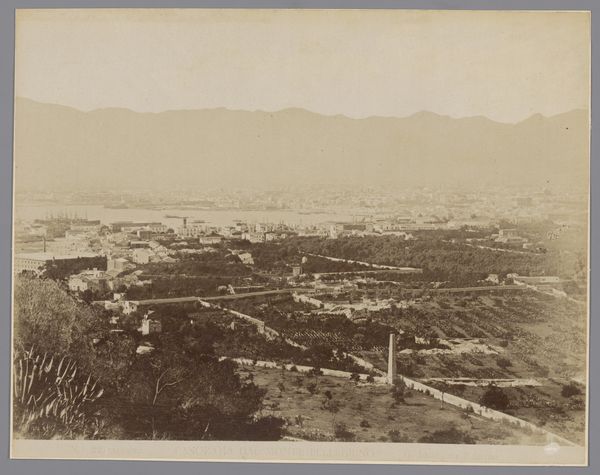
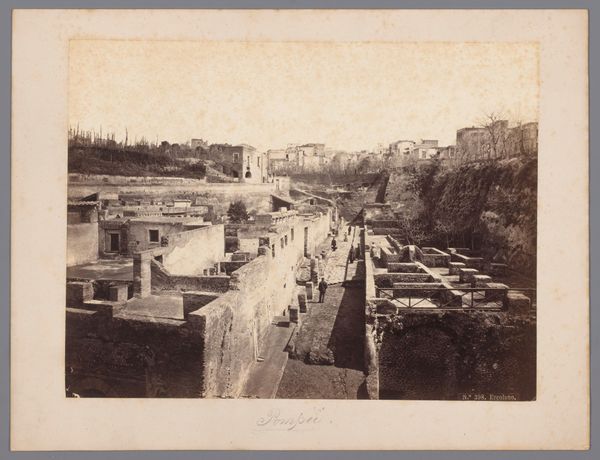
Curator: What we have here is a view of Athens in 1878, captured in an albumen print. The photographer, working during a period of renewed interest in antiquity, framed a specific view to accentuate certain themes... Editor: Immediately striking, even from a distance, is the clarity of its linear perspective; the crisp horizontals formed by the temples juxtapose the more blurred organic texture of the trees. I find that visual dynamic rather compelling. Curator: I'm drawn to the texture too. Considering that the artist, Eadweard Muybridge, created this from a glass negative using albumen—egg white—on paper, you can truly appreciate the tonal range he manages to capture here. Look at the almost palpable stonework of the Parthenon in the distance. Editor: Precisely, though I'd add, it's not just what he's capturing but how it’s then being circulated and consumed, consider who is buying and trading this 'artifact', the labor involved. It becomes a key vehicle through which archeological findings are being distributed in late 19th century society, an interesting question to think about when consuming images from far away places, like Athens in this case. Curator: An excellent point. Focusing on the internal aspects of the composition, it's all too apparent how Muybridge is setting up layers of symbolic contrast between nature and civilization, past and present, ideal form and earthly decay. The composition, particularly the arrangement of ancient sites against the 'common' foliage below, speaks directly to notions of civilization layered upon the base 'state of nature'. Editor: I suppose it is that constructed narrative that interests me less so, but more who exactly in late 19th century western society gets to interpret it and use it for their social consumption or means to acquire. Considering the materials involved – from its delicate albumen printing to photographic chemistry — these artifacts aren't just representations but products. Curator: Very well. We’ve clearly seen Muybridge’s intentional layering and framing serve a purpose, it allows us to ponder themes of both historical legacy and constructed narrative. Editor: Absolutely, and to ask about what the means and routes by which those historical legacies are transformed into commodity.
Comments
No comments
Be the first to comment and join the conversation on the ultimate creative platform.
 Collect
 React
React Comment
More like this