About this artwork
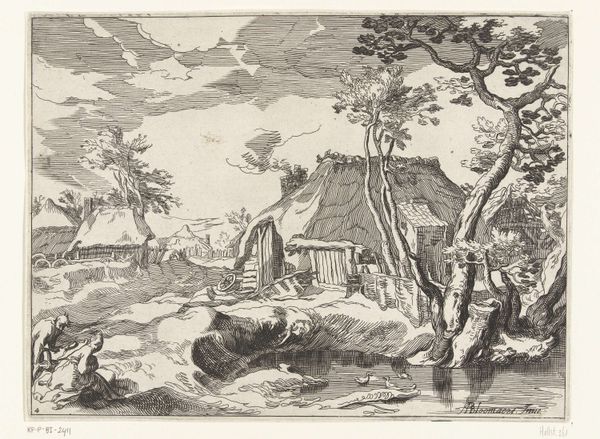
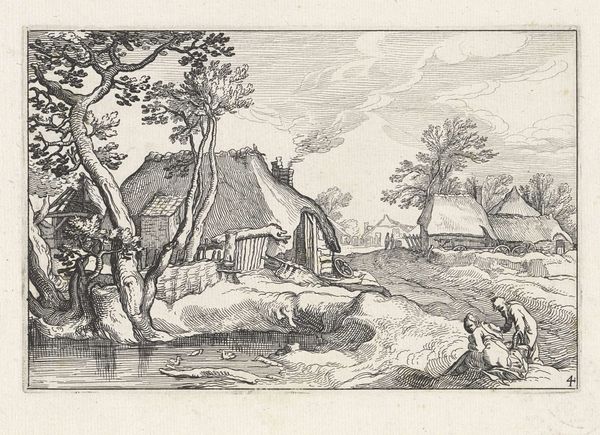
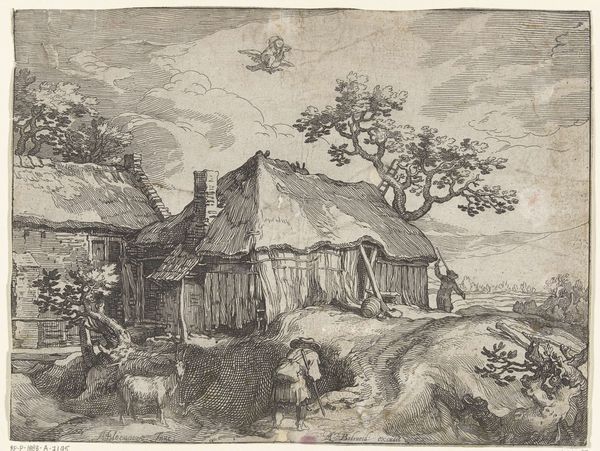
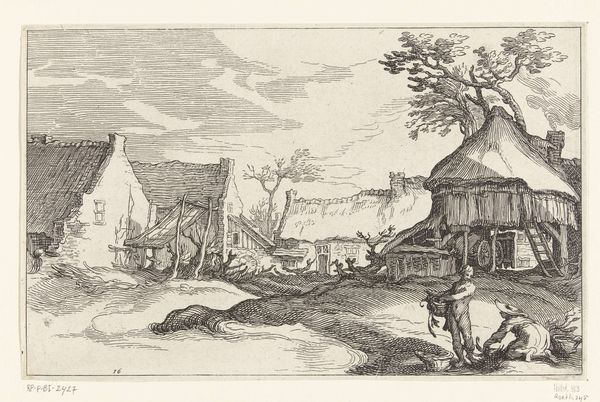
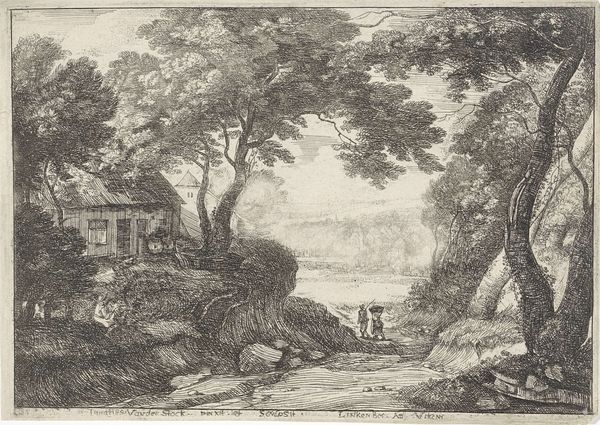
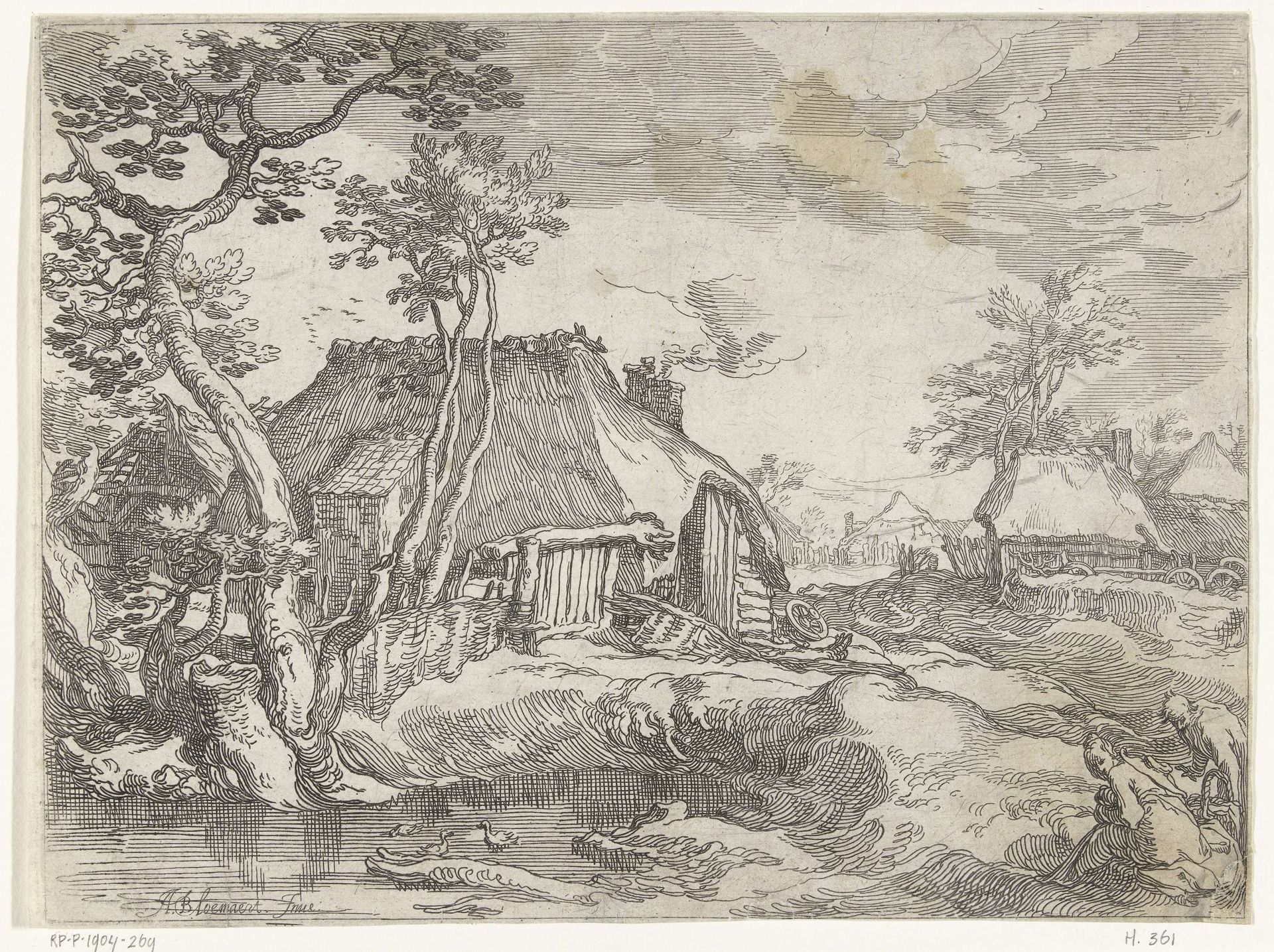
Boëtius Adamsz. Bolswert created this landscape with farmhouses along a country road as an etching. Looking at this 17th-century Dutch scene, we’re drawn into the daily lives of rural folk. Bolswert invites us to consider the foundational role of agriculture in the Netherlands' golden age, where land reclamation and trade intersected. The etching technique itself is part of this story. Printmaking flourished as an industry in the Netherlands and supported international trade. Bolswert's work evokes a sense of place, yet also taps into broader cultural questions about land use and economy. The landscape suggests a kind of social contract that reflects not only the economic structures of its time, but perhaps even a progressive vision of humanity's place within the natural world. To fully appreciate such an artwork, one might look at period maps, economic surveys, and even literature. These resources help us reveal how art acts as a mirror, reflecting and shaping society's values and structures.
Landschap met boerderijen aan landweg 1612 - 1614

Boëtius Adamsz. Bolswert
@boetiusadamszbolswertLocation
RijksmuseumArtwork details
- Medium
- drawing, print, etching, ink
- Dimensions
- height 196 mm, width 262 mm
- Location
- Rijksmuseum
- Copyright
- Rijks Museum: Open Domain
Tags
drawing
pen drawing
dutch-golden-age
pen sketch
etching
landscape
ink
genre-painting
Comments
No comments
About this artwork
Boëtius Adamsz. Bolswert created this landscape with farmhouses along a country road as an etching. Looking at this 17th-century Dutch scene, we’re drawn into the daily lives of rural folk. Bolswert invites us to consider the foundational role of agriculture in the Netherlands' golden age, where land reclamation and trade intersected. The etching technique itself is part of this story. Printmaking flourished as an industry in the Netherlands and supported international trade. Bolswert's work evokes a sense of place, yet also taps into broader cultural questions about land use and economy. The landscape suggests a kind of social contract that reflects not only the economic structures of its time, but perhaps even a progressive vision of humanity's place within the natural world. To fully appreciate such an artwork, one might look at period maps, economic surveys, and even literature. These resources help us reveal how art acts as a mirror, reflecting and shaping society's values and structures.
Comments
No comments