About this artwork
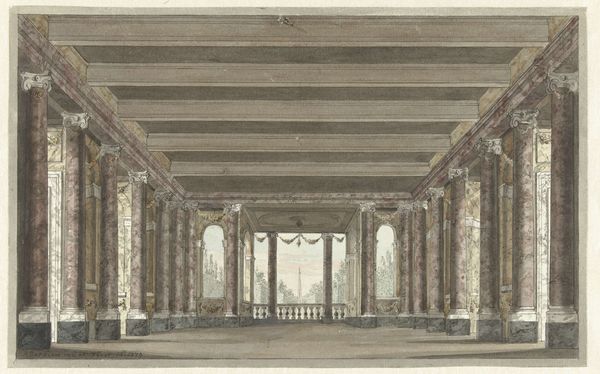
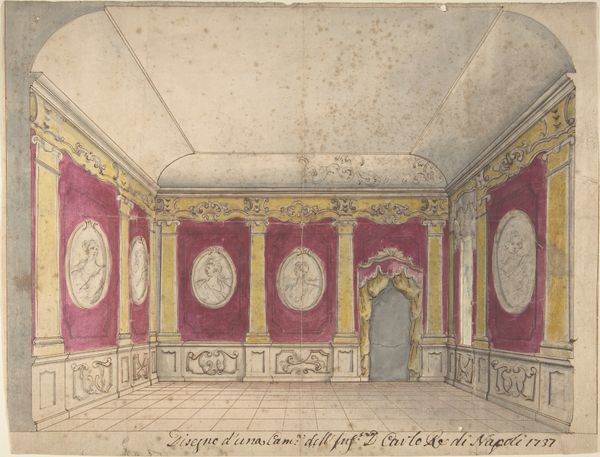
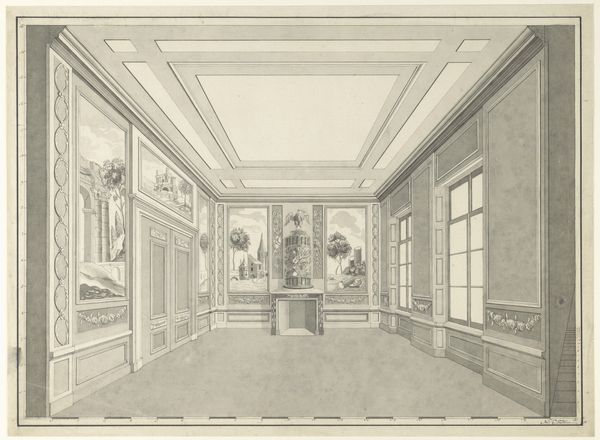
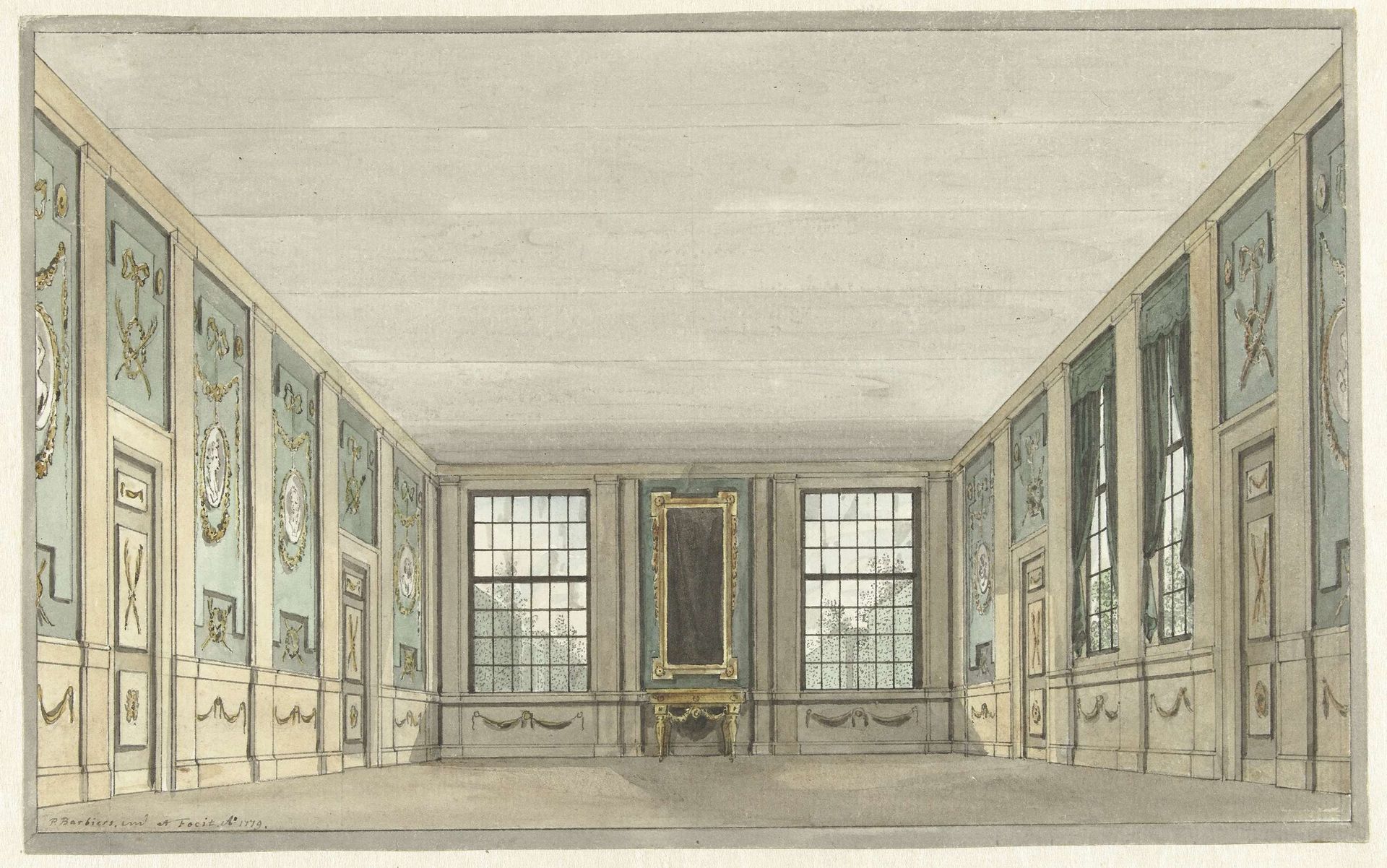
Pieter Barbiers made this stage set design using pen, grey ink and watercolour. It’s a peek into the world of theatrical production, where art meets the demands of entertainment. The material itself – watercolour on paper – is humble, yet capable of great precision. Notice the way Barbiers has used thin washes of colour to create depth and shadow, giving the illusion of a grand interior. The architecture is Neoclassical, suggesting wealth and power. The walls are divided into panels, adorned with delicate ornamentation. But consider what this room really represents: the aspirations of a society eager to display its refinement. Stage design is all about creating an illusion, and in this case, it’s an illusion of luxury accessible to a paying public. It’s a reminder that art is always embedded in its social context. Far from a straightforward depiction, this set design shows the convergence of aesthetics, labor, and social class.

Artwork details
- Medium
- drawing, watercolor, ink, architecture
- Dimensions
- height 175 mm, width 280 mm
- Copyright
- Rijks Museum: Open Domain
Tags
drawing
neoclacissism
watercolor
ink
geometric
architectural drawing
architecture drawing
architecture
Comments
Be the first to share your thoughts about this work.
About this artwork
Pieter Barbiers made this stage set design using pen, grey ink and watercolour. It’s a peek into the world of theatrical production, where art meets the demands of entertainment. The material itself – watercolour on paper – is humble, yet capable of great precision. Notice the way Barbiers has used thin washes of colour to create depth and shadow, giving the illusion of a grand interior. The architecture is Neoclassical, suggesting wealth and power. The walls are divided into panels, adorned with delicate ornamentation. But consider what this room really represents: the aspirations of a society eager to display its refinement. Stage design is all about creating an illusion, and in this case, it’s an illusion of luxury accessible to a paying public. It’s a reminder that art is always embedded in its social context. Far from a straightforward depiction, this set design shows the convergence of aesthetics, labor, and social class.
Comments
Be the first to share your thoughts about this work.