About this artwork
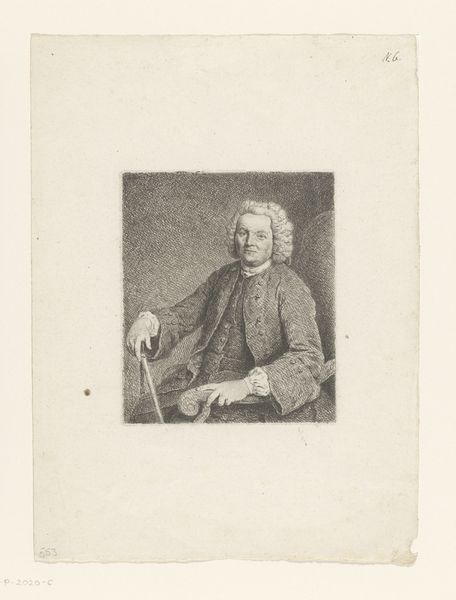
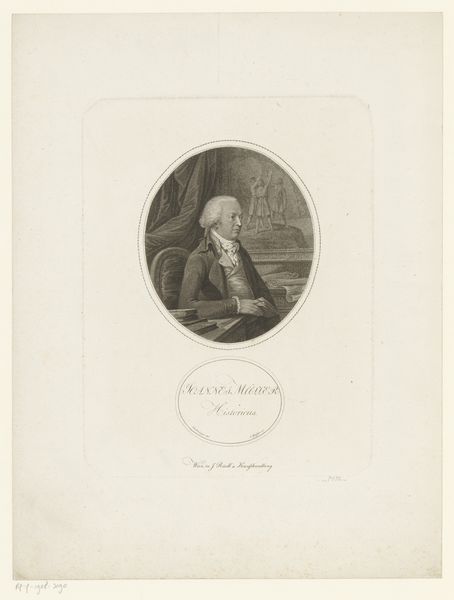
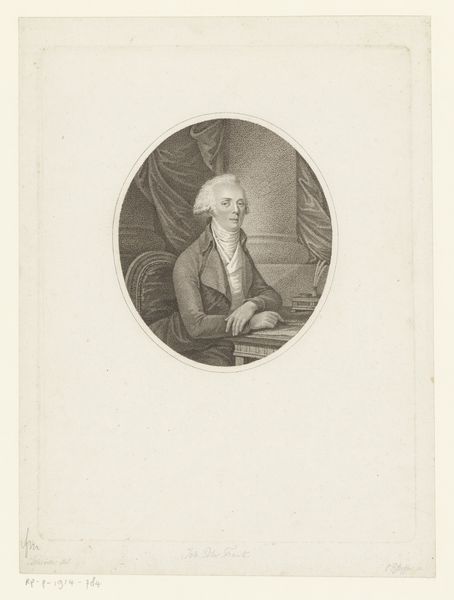
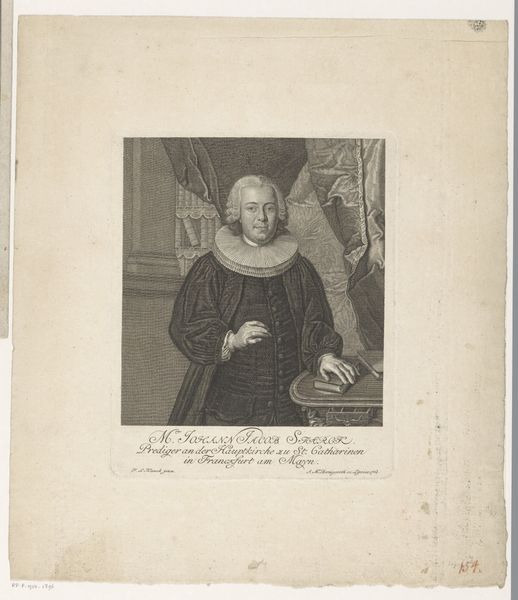
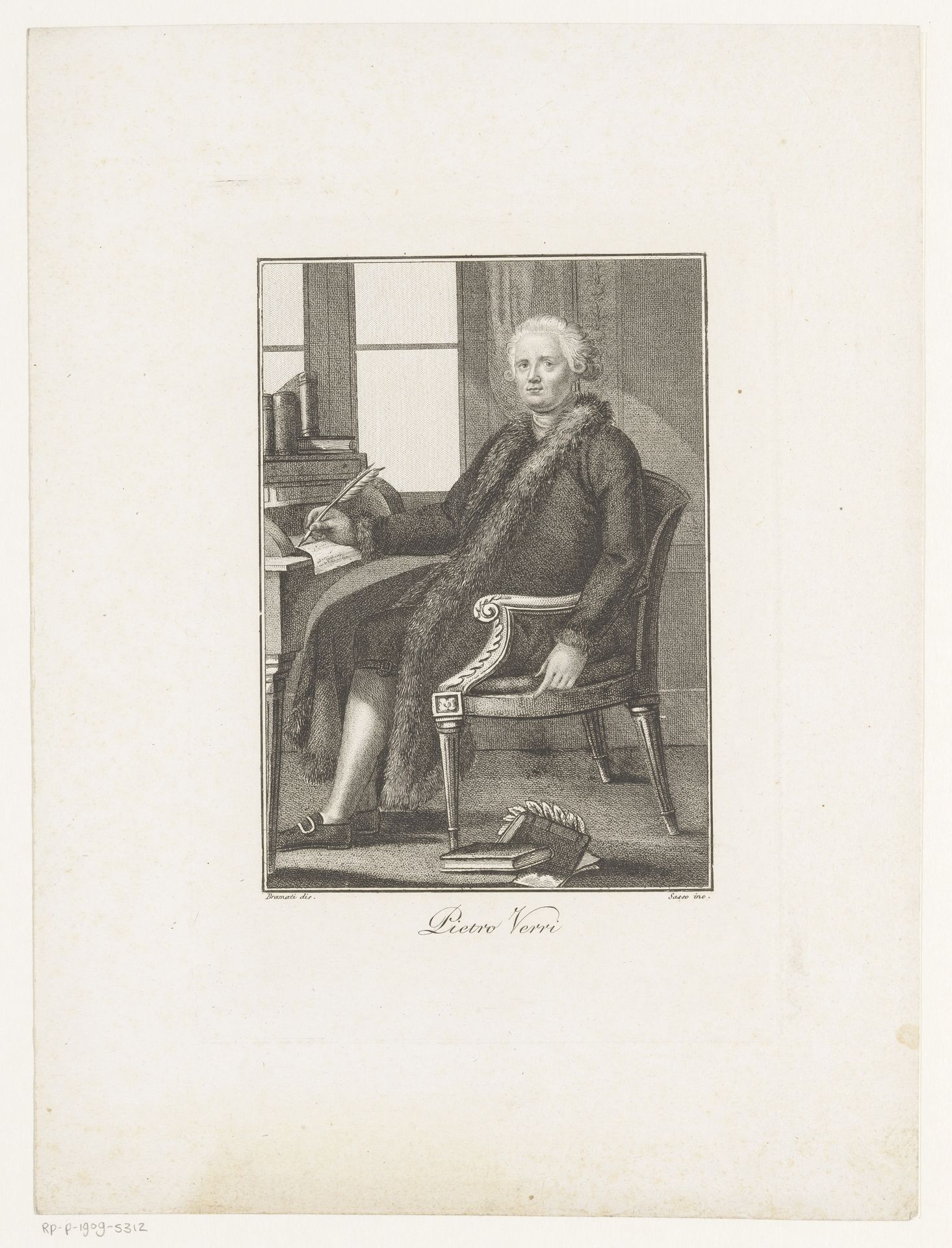
Editor: Here we have Giovanni Antonio Sasso's "Portrait of philosopher and economist Pietro Verri," made around 1809 to 1816, seemingly an engraving. The formality of the pose strikes me, yet there's a sense of pensiveness. What do you make of this piece? Curator: It's compelling how Sasso uses the conventions of portraiture to engage with Verri’s intellectual and political significance. Consider the historical context: Verri was a key figure in the Italian Enlightenment, advocating for legal and social reforms. The portrait isn’t merely a likeness; it's a statement. Editor: A statement? How so? Curator: Notice the quill and the books; they signify Verri's role as a writer and thinker. The fur coat hints at his status but also perhaps at a certain discomfort with the prevailing social norms. How might Verri's progressive ideas challenge the power structures of his time? Editor: So, the portrait subtly alludes to Verri's role as a reformer. Do you see any elements related to social or class commentary? Curator: Absolutely. While seemingly celebrating an individual, it asks us to consider the role of intellectuals in shaping society. It also shows a member of the elite, but we should reflect whether it idealises him. Whose voices might be missing from this image? It would be a different piece if the picture showed one of the workers Verri sought to reform. Editor: That makes me think about how portraits often reflect the perspectives of those in power. It gives me a new lens through which to consider this one. Curator: Exactly! By analyzing visual elements, we can unveil a dialogue between Verri's individual identity and his complex interaction within socio-political spheres. It highlights the ongoing power dynamics embedded within representation itself. Editor: I'm glad you made me think beyond face value and appreciate art’s capacity to instigate critical dialogues on identity, power, and representation.
Portret van filosoof en econoom Pietro Verri c. 1809 - 1816

Artwork details
- Medium
- drawing, engraving
- Dimensions
- height 224 mm, width 155 mm
- Copyright
- Rijks Museum: Open Domain
Tags
portrait
pencil drawn
drawing
neoclacissism
pencil drawing
history-painting
engraving
Comments
No comments
About this artwork
Editor: Here we have Giovanni Antonio Sasso's "Portrait of philosopher and economist Pietro Verri," made around 1809 to 1816, seemingly an engraving. The formality of the pose strikes me, yet there's a sense of pensiveness. What do you make of this piece? Curator: It's compelling how Sasso uses the conventions of portraiture to engage with Verri’s intellectual and political significance. Consider the historical context: Verri was a key figure in the Italian Enlightenment, advocating for legal and social reforms. The portrait isn’t merely a likeness; it's a statement. Editor: A statement? How so? Curator: Notice the quill and the books; they signify Verri's role as a writer and thinker. The fur coat hints at his status but also perhaps at a certain discomfort with the prevailing social norms. How might Verri's progressive ideas challenge the power structures of his time? Editor: So, the portrait subtly alludes to Verri's role as a reformer. Do you see any elements related to social or class commentary? Curator: Absolutely. While seemingly celebrating an individual, it asks us to consider the role of intellectuals in shaping society. It also shows a member of the elite, but we should reflect whether it idealises him. Whose voices might be missing from this image? It would be a different piece if the picture showed one of the workers Verri sought to reform. Editor: That makes me think about how portraits often reflect the perspectives of those in power. It gives me a new lens through which to consider this one. Curator: Exactly! By analyzing visual elements, we can unveil a dialogue between Verri's individual identity and his complex interaction within socio-political spheres. It highlights the ongoing power dynamics embedded within representation itself. Editor: I'm glad you made me think beyond face value and appreciate art’s capacity to instigate critical dialogues on identity, power, and representation.
Comments
No comments