About this artwork
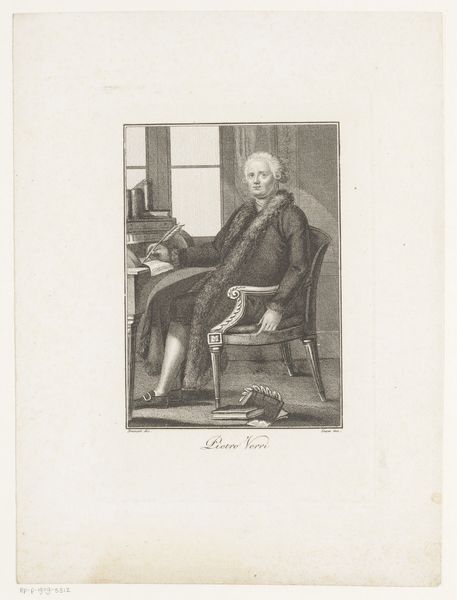
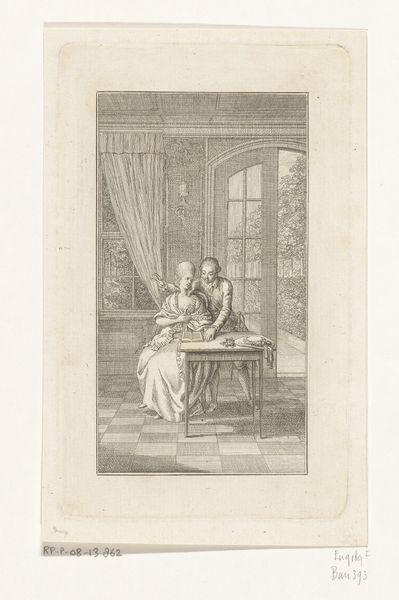
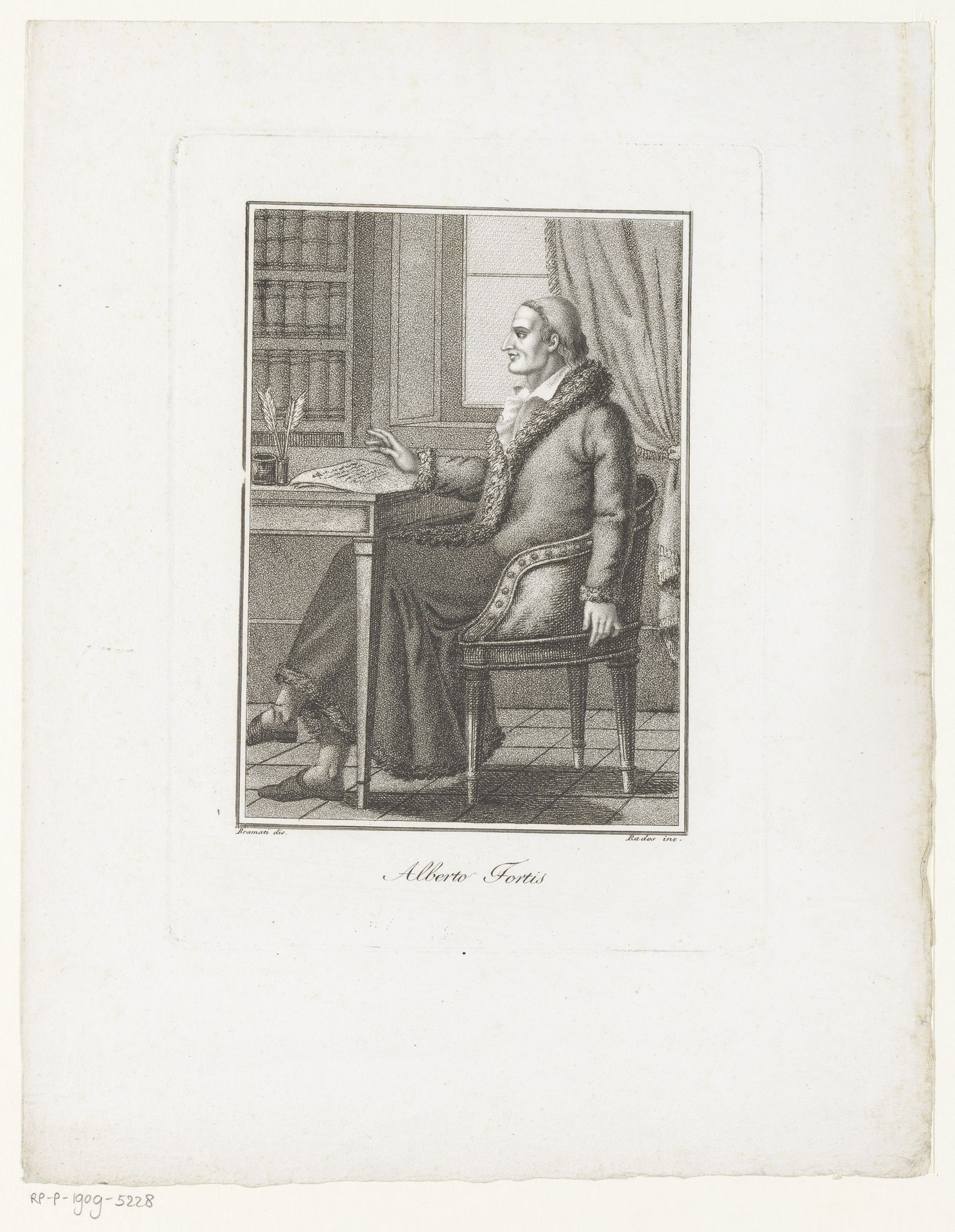
Luigi Rados made this print of Alberto Fortis sometime after 1773. It depicts the writer in his study, surrounded by the accoutrements of intellectual life. Rados was working in a period where printmaking served as a vital means of circulating images and ideas, forming public opinion. This print, in particular, hints at the power and status of writers and intellectuals in late 18th-century society. The setting is domestic, yet the figure of Fortis takes centre stage, alluding to a bourgeois class, with their private libraries, which enabled the production of new thinking. The window and the books represent knowledge and progress, but Fortis is well-dressed and is in a comfortable setting, suggesting that these privileges were reserved for a select few. To fully appreciate this print, it is useful to delve into the social and intellectual history of the period. By looking at publications and letters from the time, we can gain a deeper understanding of the role images played in shaping cultural values.

Artwork details
- Medium
- drawing, print, engraving
- Dimensions
- height 215 mm, width 155 mm
- Copyright
- Rijks Museum: Open Domain
Tags
Comments
Share your thoughts
About this artwork
Luigi Rados made this print of Alberto Fortis sometime after 1773. It depicts the writer in his study, surrounded by the accoutrements of intellectual life. Rados was working in a period where printmaking served as a vital means of circulating images and ideas, forming public opinion. This print, in particular, hints at the power and status of writers and intellectuals in late 18th-century society. The setting is domestic, yet the figure of Fortis takes centre stage, alluding to a bourgeois class, with their private libraries, which enabled the production of new thinking. The window and the books represent knowledge and progress, but Fortis is well-dressed and is in a comfortable setting, suggesting that these privileges were reserved for a select few. To fully appreciate this print, it is useful to delve into the social and intellectual history of the period. By looking at publications and letters from the time, we can gain a deeper understanding of the role images played in shaping cultural values.
Comments
Share your thoughts