1504 - 1505
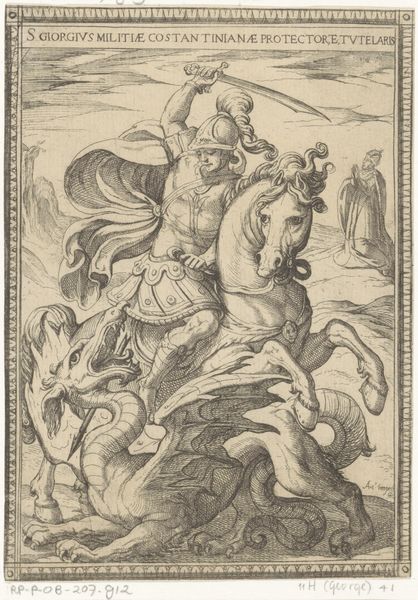
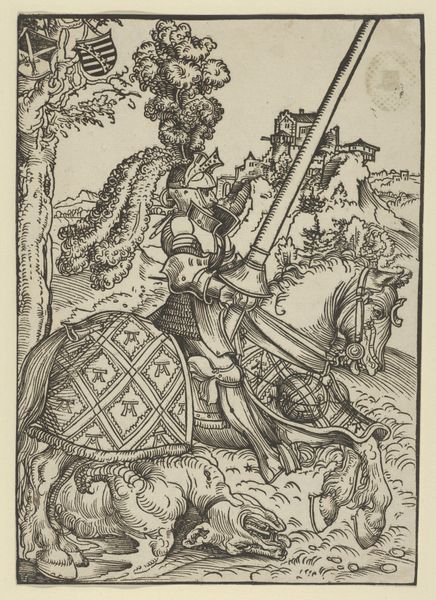
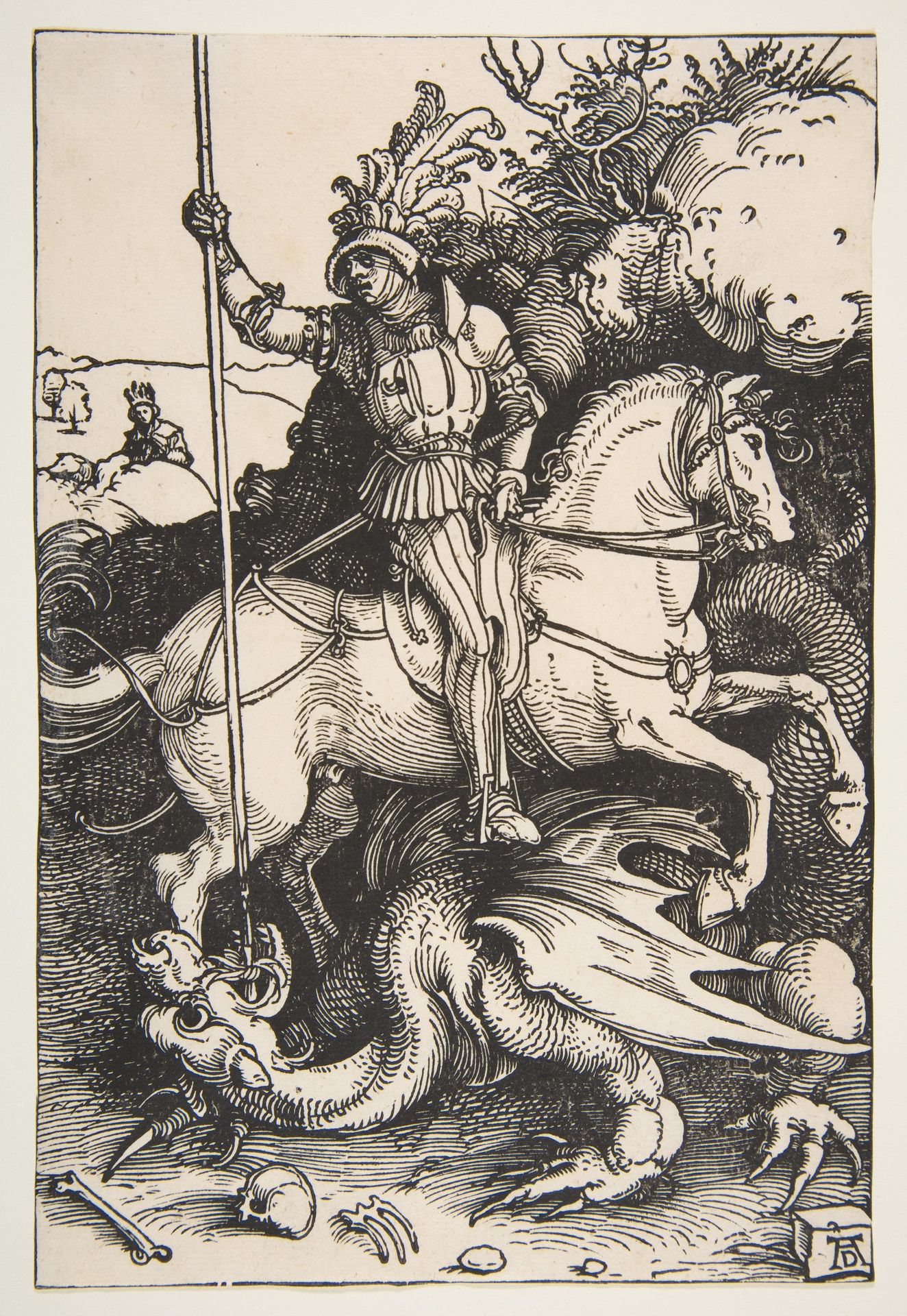
Saint George Slaying the Dragon


Listen to curator's interpretation
Curatorial notes
Albrecht Dürer created this woodcut, Saint George Slaying the Dragon, in Germany sometime in the late 15th or early 16th century. Dürer's image presents Saint George, a Christian knight, locked in combat with a fearsome dragon, and it's full of cultural and historical associations. In the context of the Holy Roman Empire, where Dürer lived, the image of Saint George would have been a potent symbol of Christian virtue triumphing over evil. The dragon, a pagan symbol, represents the challenges to Christian order. Dürer’s masterful use of line and form creates a dynamic composition. The Protestant Reformation began during Dürer’s lifetime. The image of Saint George, who defends the Christian faith, may reflect the religious and political tensions of the time. To fully understand Dürer’s work, we need to consider the social and political forces at play in his time. Primary sources, such as letters and historical documents, can shed light on the conditions that shaped his art. Art is a product of its time, embedded in a web of social and institutional forces.