About this artwork
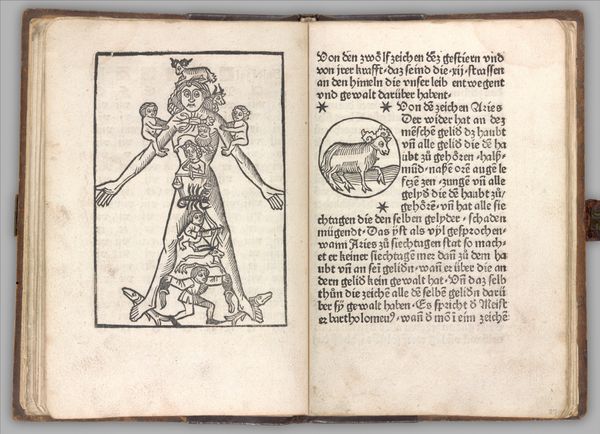
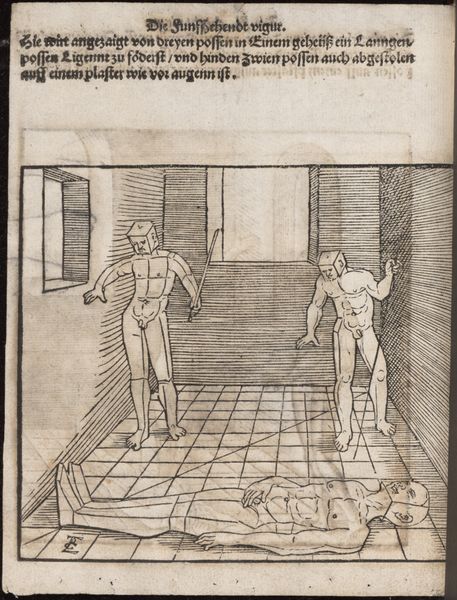
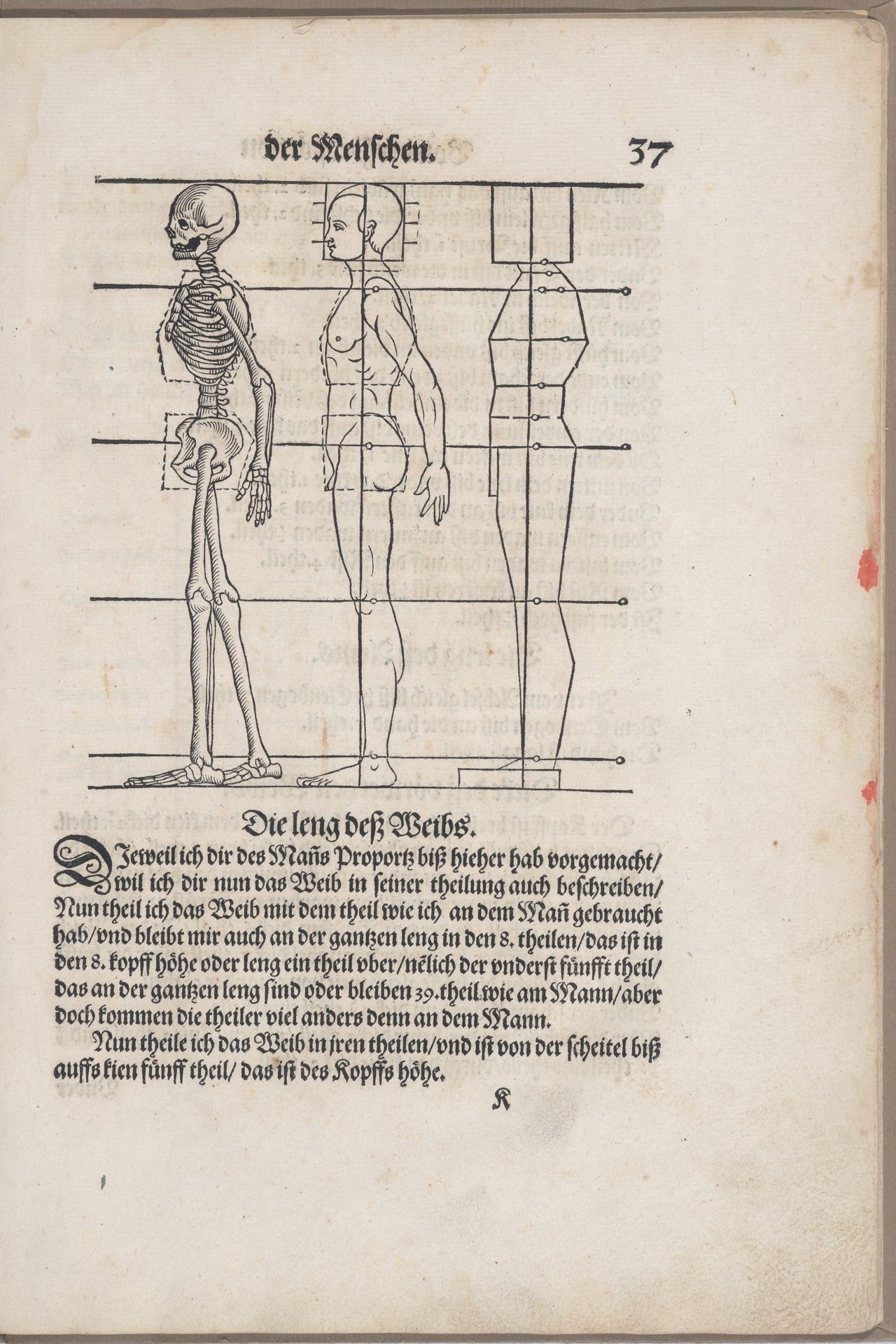
This image, from Heinrich Lautensack's treatise, intricately blends art and science to explore human proportion. Note how the skeletal figure on the left transitions to a figure with flesh and skin in the centre, and then a wire-frame diagram on the right, capturing the Renaissance fascination with ideal form. The very act of dissecting the human form into geometric frameworks echoes a tradition stretching back to ancient Greece, where artists sought mathematical perfection in beauty. Consider, too, Vitruvius's famous man, where the human body is inscribed within a circle and square, a symbol of cosmic harmony. Lautensack carries this forward, inviting us to reflect on how the motif of the dissected human body persists, evolving from scientific inquiry to a powerful expression of the human condition and our endless quest for understanding. The image evokes a deep, subconscious understanding of mortality and the quest for order in a chaotic world.
Des Circkels unnd Richtscheyts, auch der Perspectiva und Proportion der Menschen und Rosse, kurtze, doch gründtliche underweisung deß rechten gebrauchs 1564

Heinrich Lautensack
@heinrichlautensack
The Metropolitan Museum of Art
Metropolitan Museum of Art, New York, NYArtwork details
- Medium
- drawing, print, paper, ink
- Dimensions
- Overall: 11 3/4 x 8 1/4 x 1/2 in. (29.9 x 21 x 1.3 cm)
- Location
- Metropolitan Museum of Art, New York, NY
- Copyright
- Public Domain
Tags
portrait
drawing
book
figuration
paper
11_renaissance
ink
history-painting
academic-art
Comments
No comments
About this artwork
This image, from Heinrich Lautensack's treatise, intricately blends art and science to explore human proportion. Note how the skeletal figure on the left transitions to a figure with flesh and skin in the centre, and then a wire-frame diagram on the right, capturing the Renaissance fascination with ideal form. The very act of dissecting the human form into geometric frameworks echoes a tradition stretching back to ancient Greece, where artists sought mathematical perfection in beauty. Consider, too, Vitruvius's famous man, where the human body is inscribed within a circle and square, a symbol of cosmic harmony. Lautensack carries this forward, inviting us to reflect on how the motif of the dissected human body persists, evolving from scientific inquiry to a powerful expression of the human condition and our endless quest for understanding. The image evokes a deep, subconscious understanding of mortality and the quest for order in a chaotic world.
Comments
No comments