About this artwork
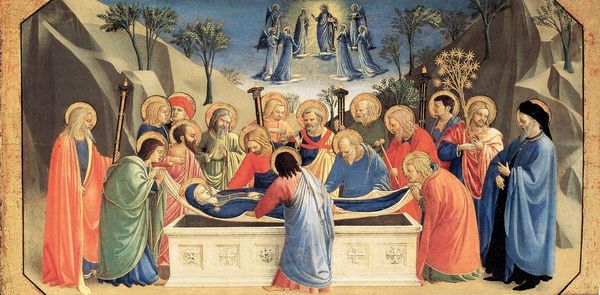
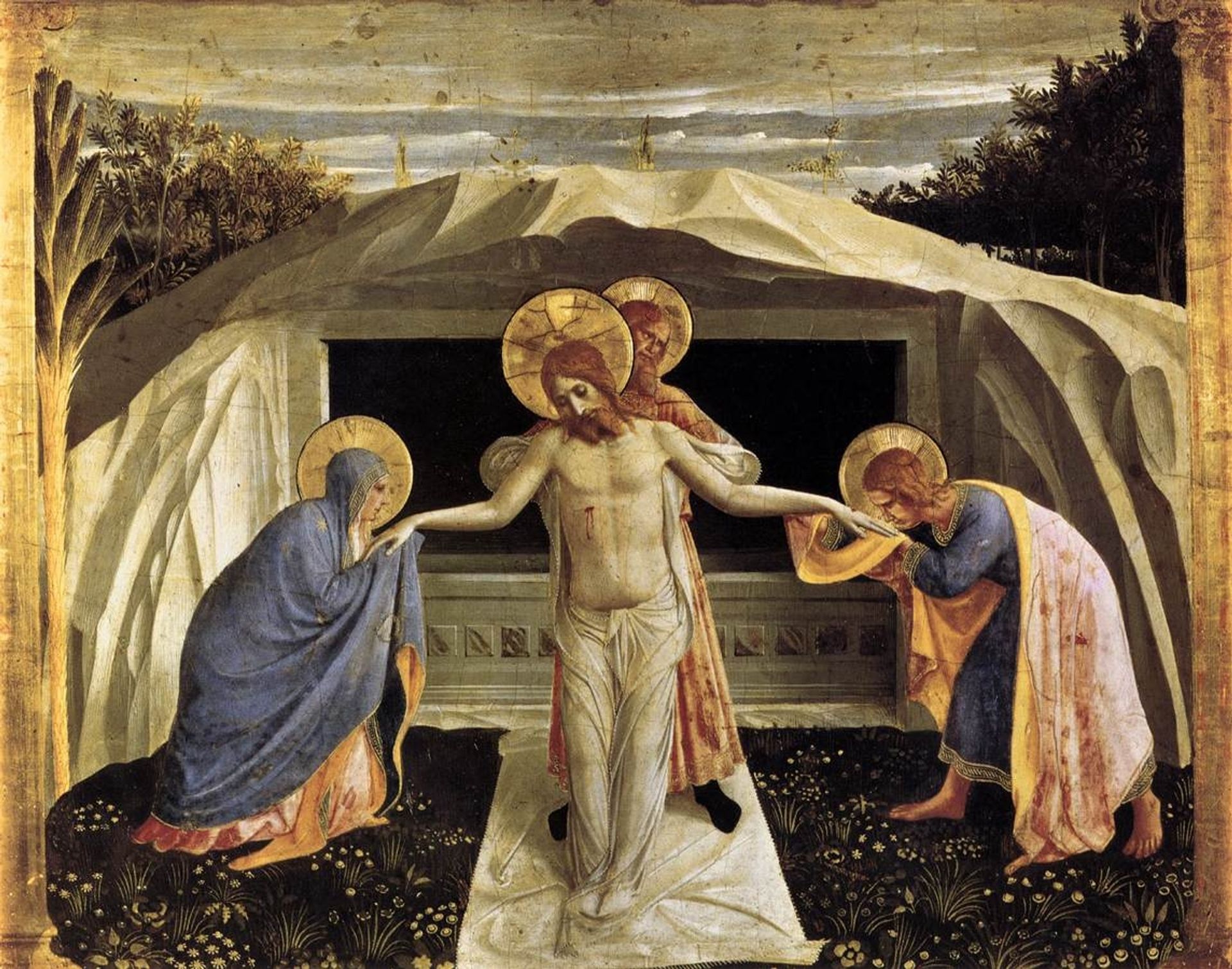
Fra Angelico painted this small panel of the Entombment in Florence in the early 1400s, most likely on commission for a private chapel within a Dominican monastery. It depicts a scene of solemnity and religious significance: Christ’s body being prepared for burial. The painting is rich in religious symbolism that would have resonated deeply with the monastic community for whom it was painted. We see Mary and other holy figures attending to Christ's body with reverence. This reflects the Dominican order’s emphasis on piety and devotion. The scene is also a commentary on the social structures of the time, offering a vision of spiritual equality and redemption through faith, an idea that challenged the rigid hierarchies of Renaissance society. To fully appreciate this work, consider the institutional history of the Dominican order in Florence and explore theological texts popular during the early Renaissance. These sources shed light on the social and intellectual world that shaped Fra Angelico's art.
Entombment
1440

Fra Angelico
1395 - 1455
Alte Pinakothek, Bayerische Staatsgemäldesammlungen
Alte Pinakothek, Munich, GermanyArtwork details
- Medium
- painting, oil-paint, fresco
- Dimensions
- 38 x 46 cm
- Location
- Alte Pinakothek, Munich, Germany
- Copyright
- Public domain
Tags
Comments
Share your thoughts
About this artwork
Fra Angelico painted this small panel of the Entombment in Florence in the early 1400s, most likely on commission for a private chapel within a Dominican monastery. It depicts a scene of solemnity and religious significance: Christ’s body being prepared for burial. The painting is rich in religious symbolism that would have resonated deeply with the monastic community for whom it was painted. We see Mary and other holy figures attending to Christ's body with reverence. This reflects the Dominican order’s emphasis on piety and devotion. The scene is also a commentary on the social structures of the time, offering a vision of spiritual equality and redemption through faith, an idea that challenged the rigid hierarchies of Renaissance society. To fully appreciate this work, consider the institutional history of the Dominican order in Florence and explore theological texts popular during the early Renaissance. These sources shed light on the social and intellectual world that shaped Fra Angelico's art.
Comments
Share your thoughts