About this artwork
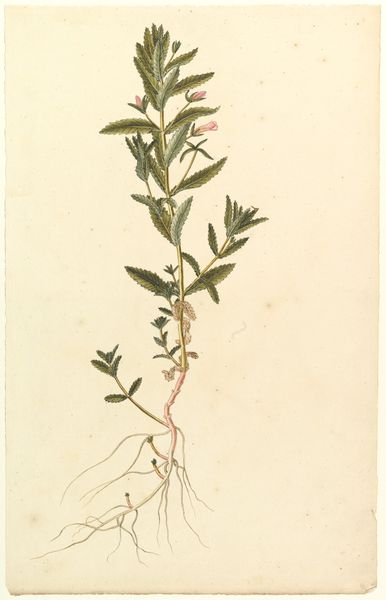
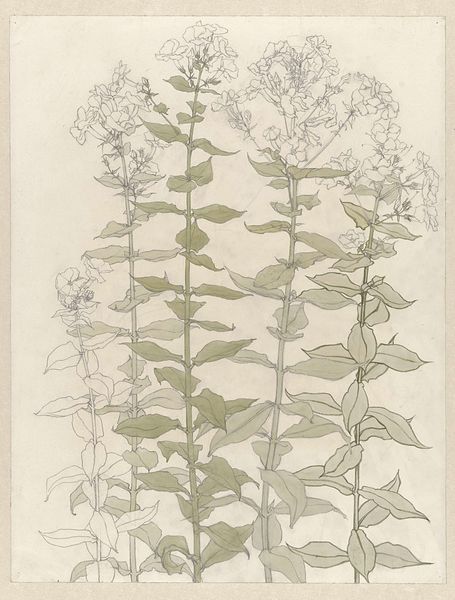
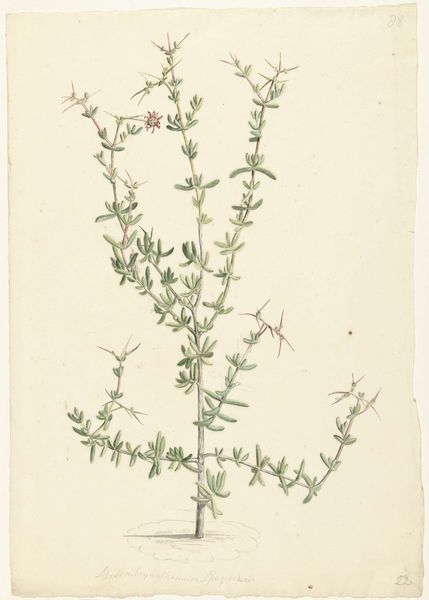
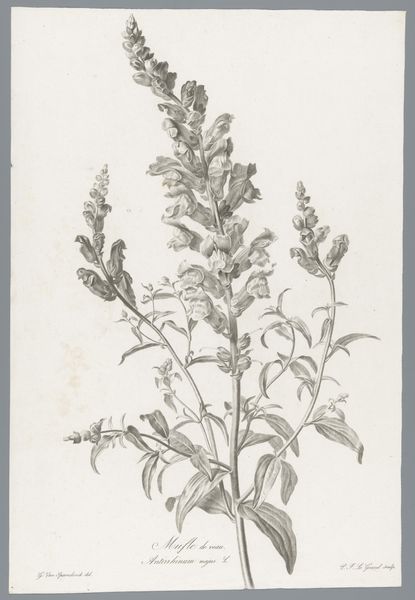
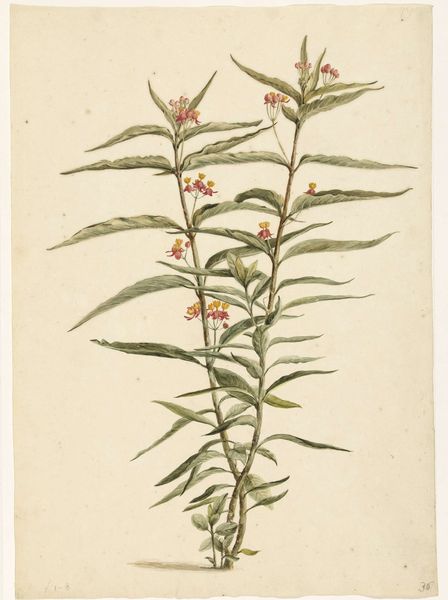
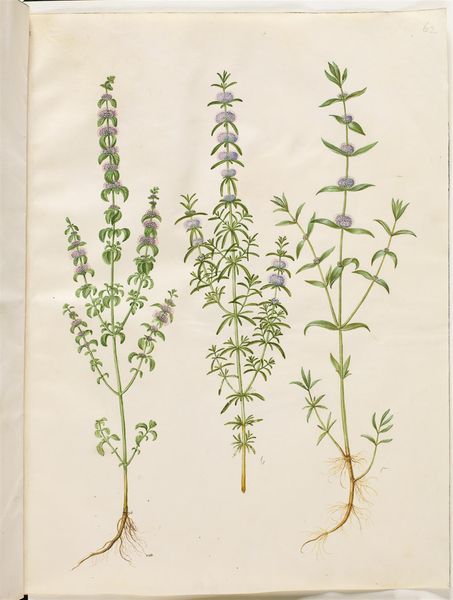
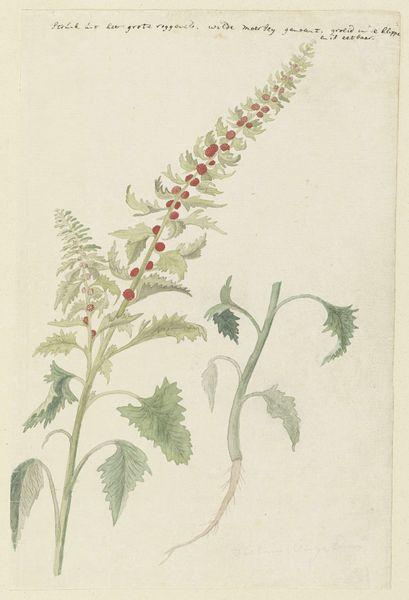
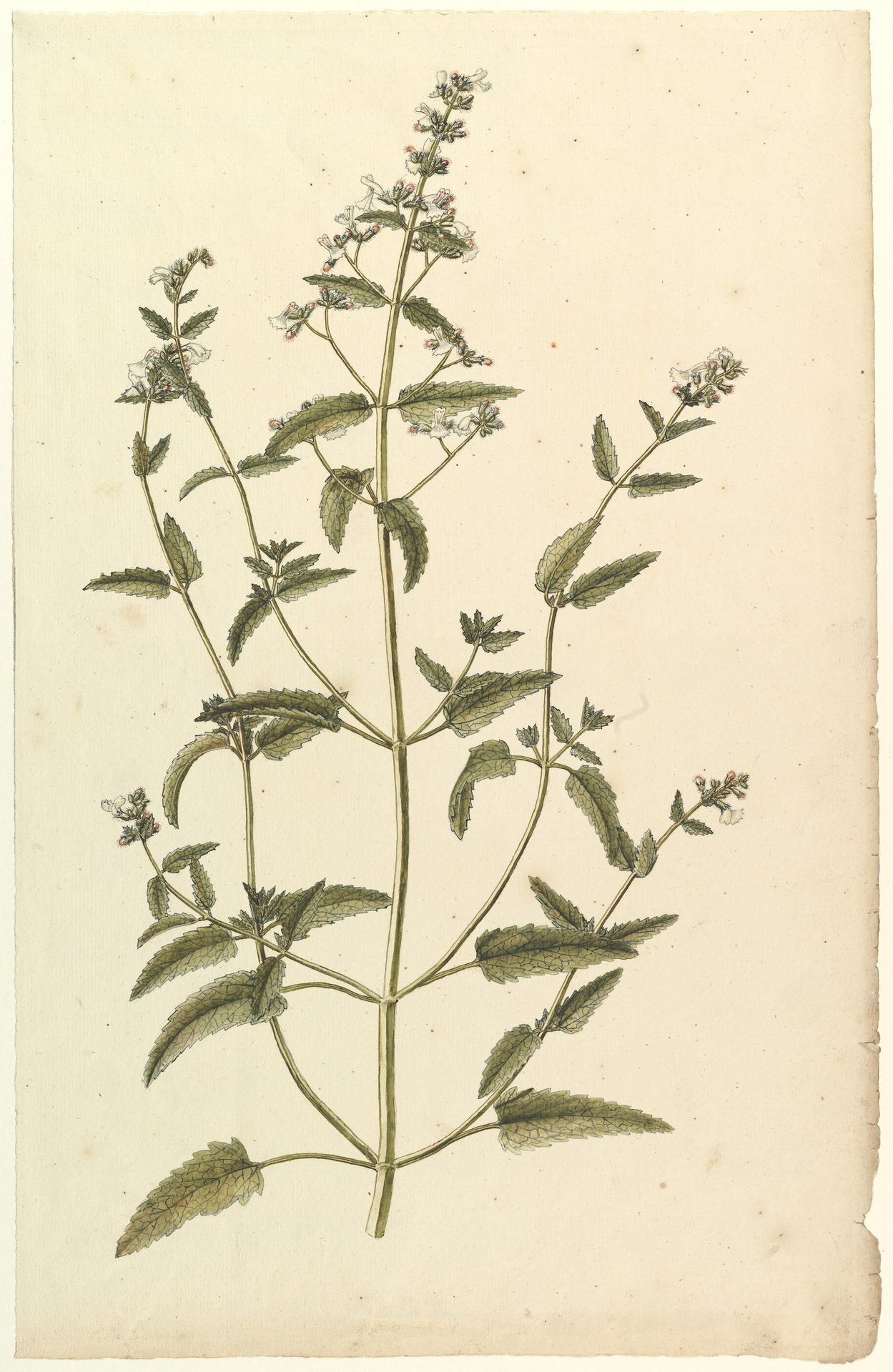
This is an anonymous botanical study of a nettle family species, rendered with ink and watercolor on paper. The composition is dominated by the verticality of the main stem, around which leaves and small, clustered flowers are organized with meticulous symmetry. The palette is restrained, focusing on the subtle gradations of green in the leaves, contrasted with the delicate whites of the flowers, all set against the creamy background of the paper. The artist’s careful attention to detail serves not just a scientific purpose, but also highlights a semiotic structure. Each leaf and flower is rendered as a sign, contributing to a precise botanical taxonomy. The use of watercolor allows for a soft, almost ethereal quality, which destabilizes the boundary between scientific illustration and aesthetic appreciation. Note the delicate lines defining each leaf and stem, creating a tension between precision and fluidity. This tension reflects the complexities inherent in the act of representation itself. It underscores the study's function as both documentation and interpretation.
Botanical Study with a Species of the Nettle Family (genus Urtica)
1820


Artwork details
- Medium
- drawing, print, paper, ink
- Dimensions
- 19 11/16 x 12 1/2 in. (50 x 31.8 cm)
- Location
- Metropolitan Museum of Art, New York, NY
- Copyright
- Public Domain
Tags
Comments
Share your thoughts
About this artwork
This is an anonymous botanical study of a nettle family species, rendered with ink and watercolor on paper. The composition is dominated by the verticality of the main stem, around which leaves and small, clustered flowers are organized with meticulous symmetry. The palette is restrained, focusing on the subtle gradations of green in the leaves, contrasted with the delicate whites of the flowers, all set against the creamy background of the paper. The artist’s careful attention to detail serves not just a scientific purpose, but also highlights a semiotic structure. Each leaf and flower is rendered as a sign, contributing to a precise botanical taxonomy. The use of watercolor allows for a soft, almost ethereal quality, which destabilizes the boundary between scientific illustration and aesthetic appreciation. Note the delicate lines defining each leaf and stem, creating a tension between precision and fluidity. This tension reflects the complexities inherent in the act of representation itself. It underscores the study's function as both documentation and interpretation.
Comments
Share your thoughts