About this artwork
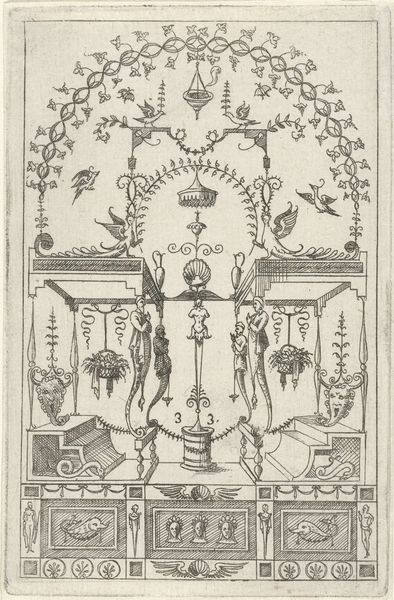
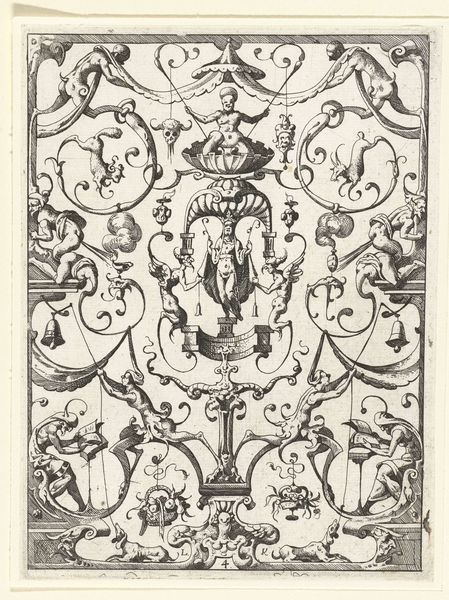
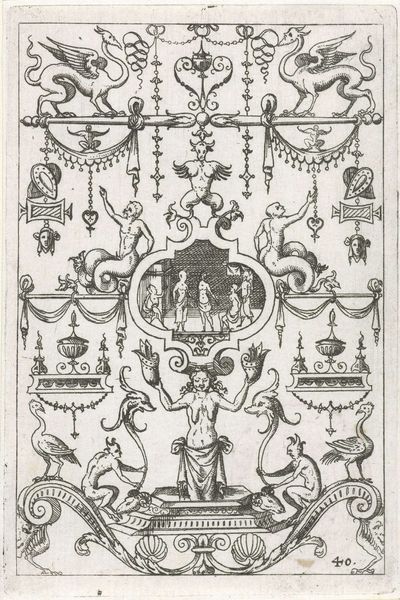
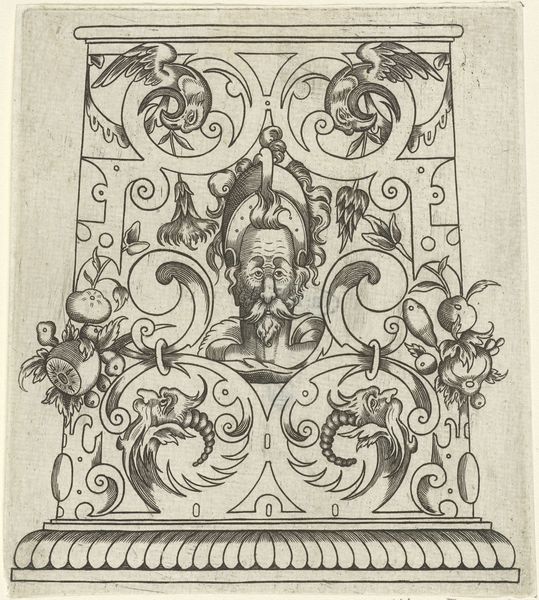
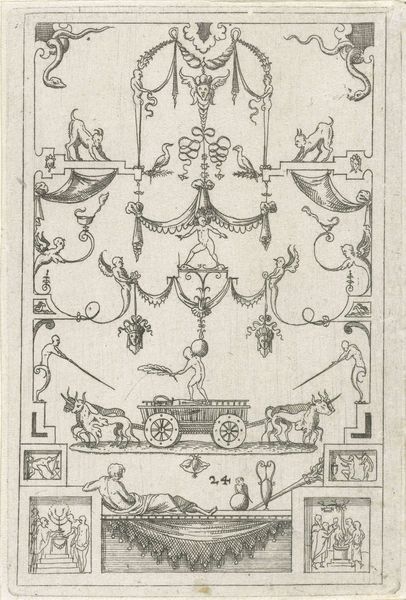
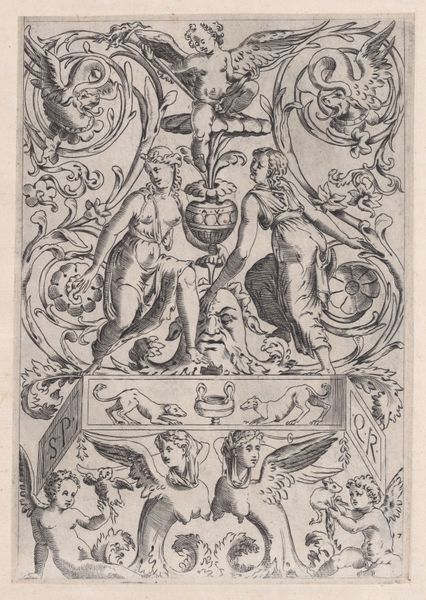
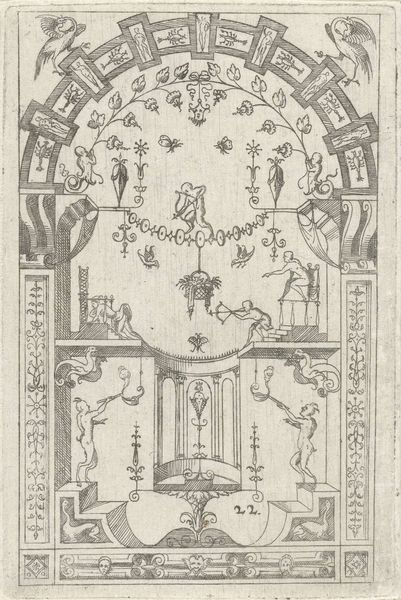
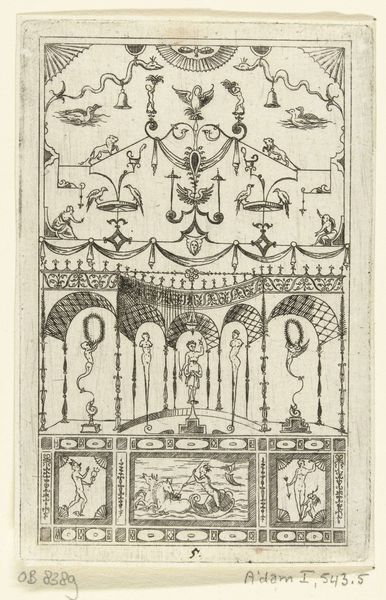
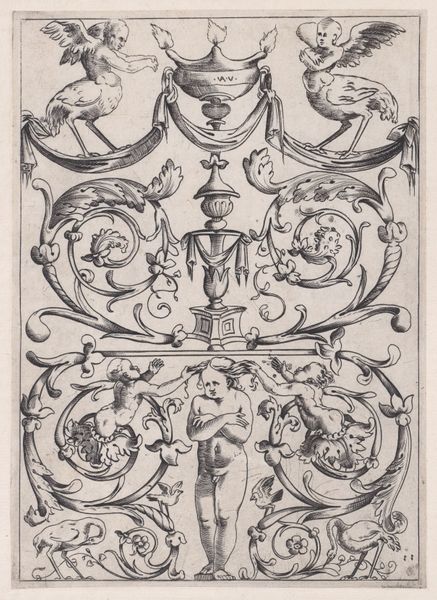
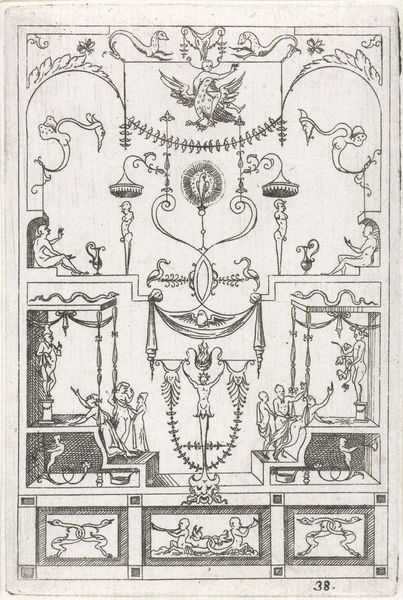
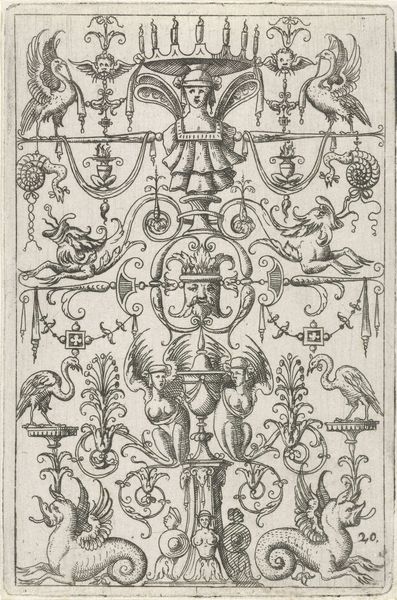
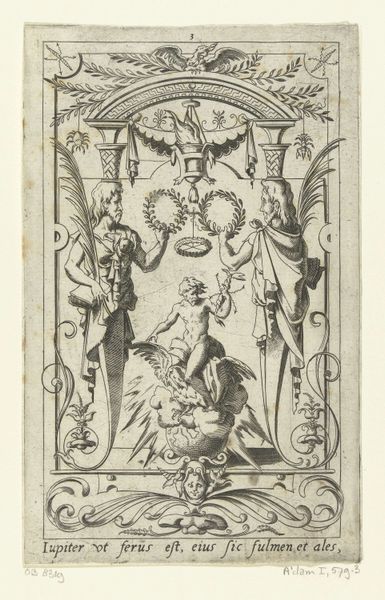
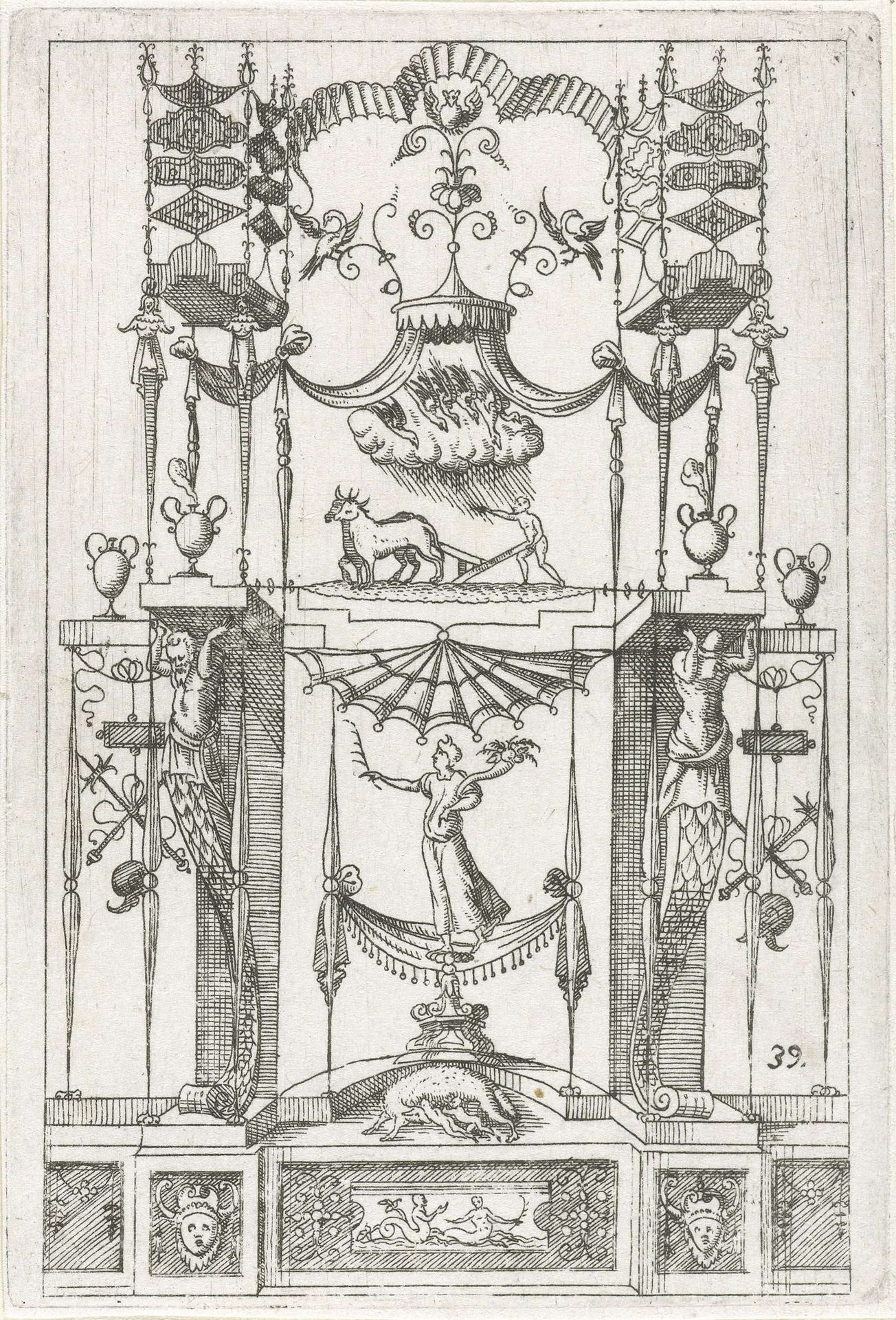
This is a design for panel decoration, printed from an engraving by Hans Sibmacher in around 1600 in Nuremberg, Germany. The image creates meaning through the use of classical and mythological imagery in an architectural setting. The composition is divided into horizontal registers. At the top, we see Romulus and Remus being suckled by the she-wolf. Below this, there is an image of a woman standing under a parasol. Given the presence of Romulus and Remus, and the other motifs, it seems likely that the woman is a personification of the city of Rome. The presence of these classical themes reflects the importance of classical learning during the Renaissance, and the ways in which classical imagery was used to create a sense of civic identity and pride in early modern Europe. The development of the printing press, and the rise of print culture, was key to the dissemination of such images. To understand this image better, we might research the printmaking industry in Nuremberg, the visual language of civic humanism, and the traditions of classical learning in Northern Europe.
Vlakdecoratie met middenonder Romulus en Remus bij de wolvin
c. 1525 - 1594

Artwork details
- Dimensions
- height 104 mm, width 71 mm
- Copyright
- Rijks Museum: Open Domain
Comments
Share your thoughts
About this artwork
This is a design for panel decoration, printed from an engraving by Hans Sibmacher in around 1600 in Nuremberg, Germany. The image creates meaning through the use of classical and mythological imagery in an architectural setting. The composition is divided into horizontal registers. At the top, we see Romulus and Remus being suckled by the she-wolf. Below this, there is an image of a woman standing under a parasol. Given the presence of Romulus and Remus, and the other motifs, it seems likely that the woman is a personification of the city of Rome. The presence of these classical themes reflects the importance of classical learning during the Renaissance, and the ways in which classical imagery was used to create a sense of civic identity and pride in early modern Europe. The development of the printing press, and the rise of print culture, was key to the dissemination of such images. To understand this image better, we might research the printmaking industry in Nuremberg, the visual language of civic humanism, and the traditions of classical learning in Northern Europe.
Comments
Share your thoughts