About this artwork
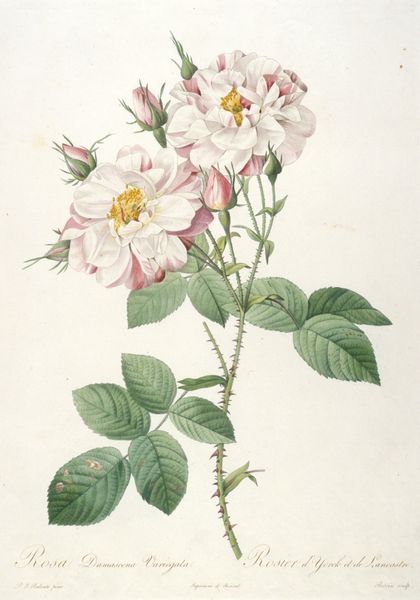
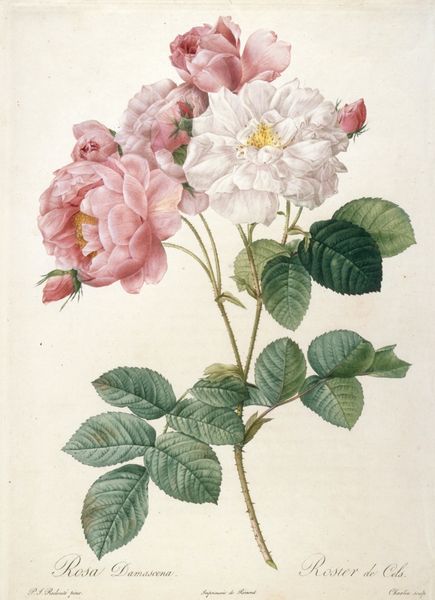
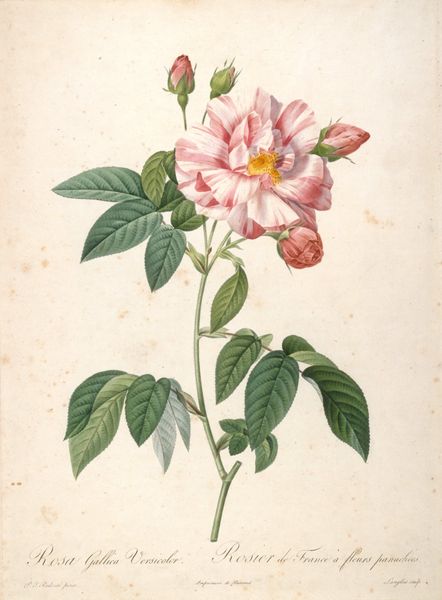
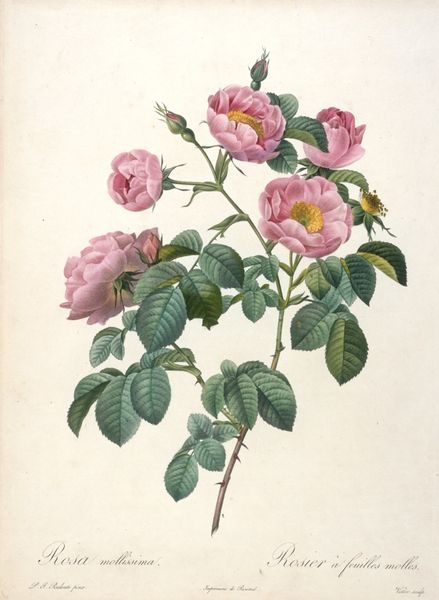
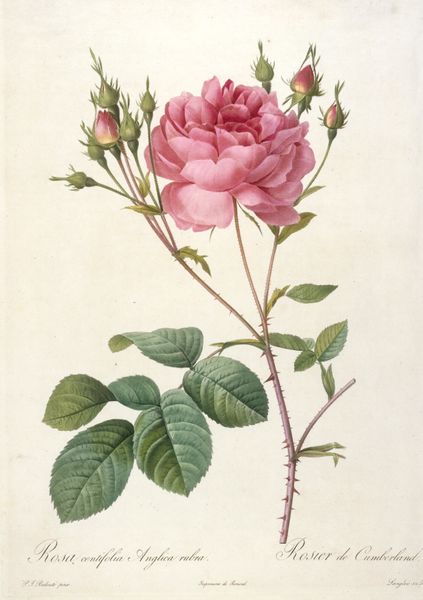
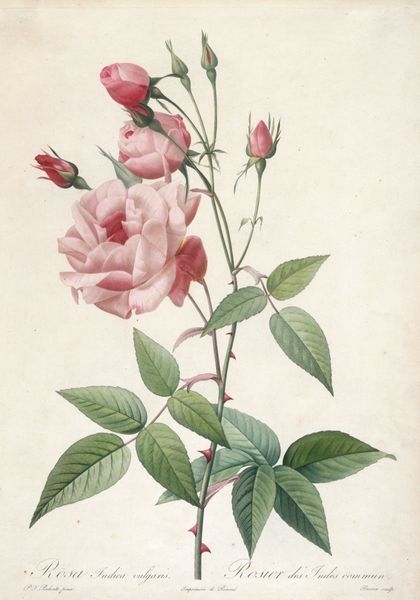
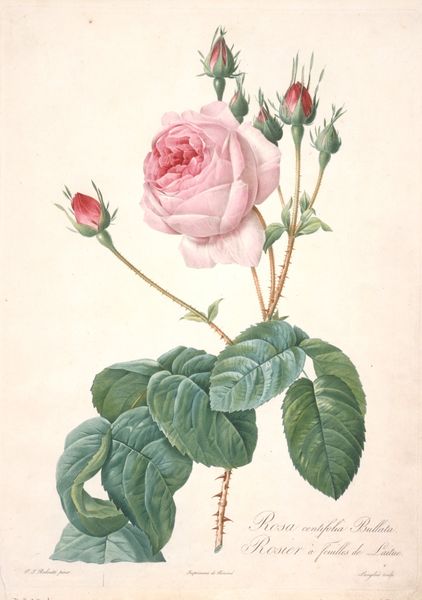
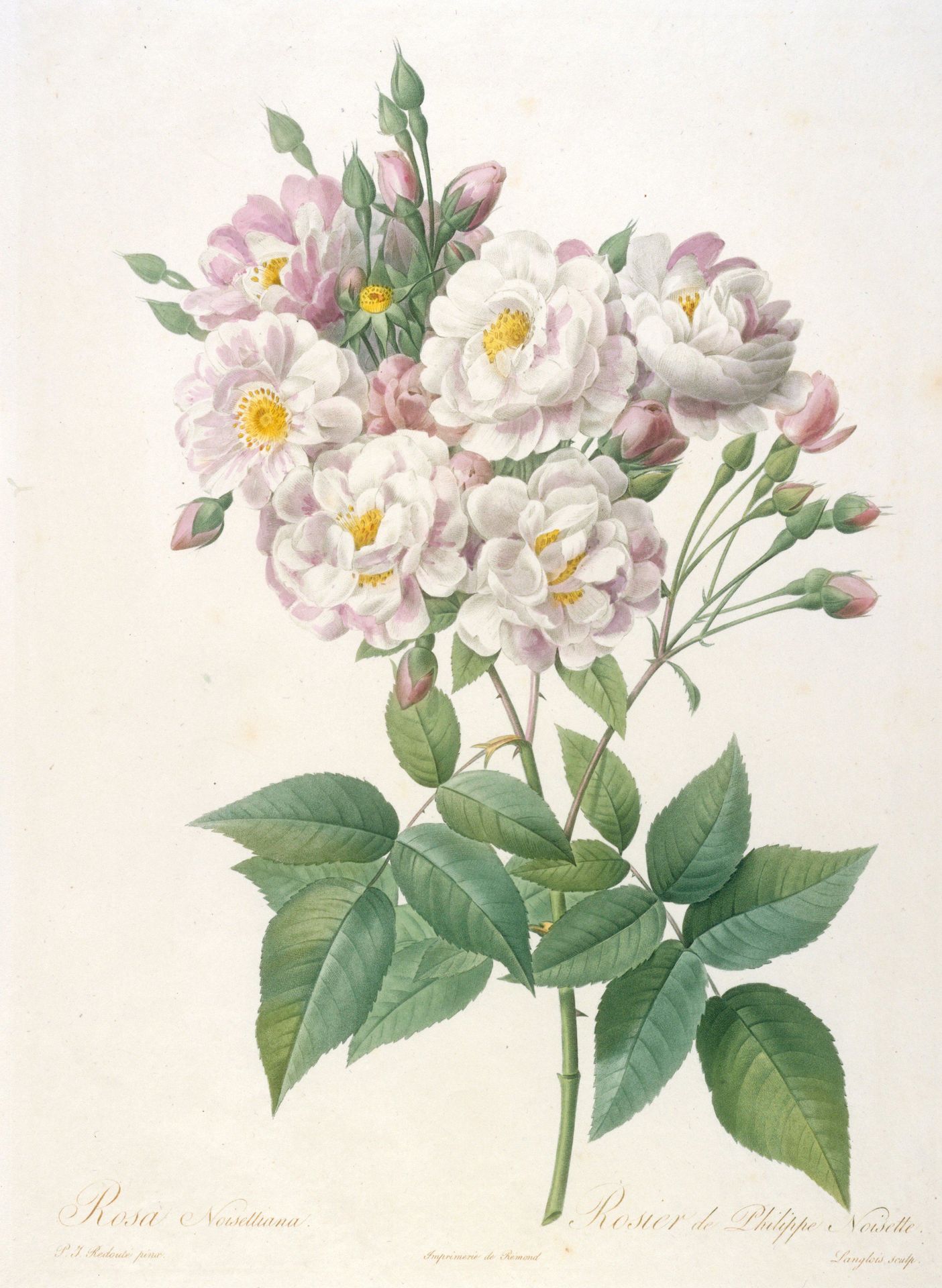
This print was made by François Langlois, called Ciartres. It depicts the Rosa noisettiana, or Rosebush of Philippe Noisette. Look closely, and you’ll see the subtle modulations of tone in the petals and leaves. These were achieved through a printmaking technique called stipple engraving. It’s a painstaking process, using a cluster of tiny dots to build up an image rather than lines. Langlois then added watercolor by hand to complete the effect. This wasn’t just a commercial decision; it was about scientific accuracy. In the late 18th and early 19th centuries, botanical illustration was a serious business. Stipple engraving allowed for a greater degree of naturalism than traditional line engraving, which would have been considered too stylized. So next time you see a flower in a book, remember the artistry and labor that went into its making. It’s a reminder that even the most delicate of images can be the result of hard work and technical skill. The print is not just an object of beauty, but a testament to the value of precision, and the beauty of craft.
Rosa noisettiana (Rosebush of Philippe Noisette) 1817 - 1824

François Langlois (called Ciartres)
1759 - 1840
Minneapolis Institute of Art
Minneapolis Institute of ArtArtwork details
- Medium
- drawing, print, watercolor
- Dimensions
- 13 7/8 x 10 1/4 in. (35.24 x 26.04 cm) (plate)
- Location
- Minneapolis Institute of Art
- Copyright
- Public Domain
Tags
drawing
watercolor
romanticism
watercolour illustration
botanical art
watercolor
Comments
No comments
About this artwork
This print was made by François Langlois, called Ciartres. It depicts the Rosa noisettiana, or Rosebush of Philippe Noisette. Look closely, and you’ll see the subtle modulations of tone in the petals and leaves. These were achieved through a printmaking technique called stipple engraving. It’s a painstaking process, using a cluster of tiny dots to build up an image rather than lines. Langlois then added watercolor by hand to complete the effect. This wasn’t just a commercial decision; it was about scientific accuracy. In the late 18th and early 19th centuries, botanical illustration was a serious business. Stipple engraving allowed for a greater degree of naturalism than traditional line engraving, which would have been considered too stylized. So next time you see a flower in a book, remember the artistry and labor that went into its making. It’s a reminder that even the most delicate of images can be the result of hard work and technical skill. The print is not just an object of beauty, but a testament to the value of precision, and the beauty of craft.
Comments
No comments