About this artwork
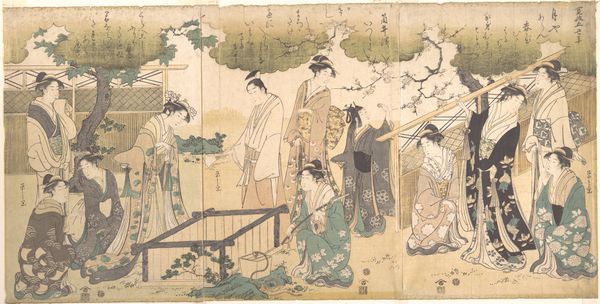
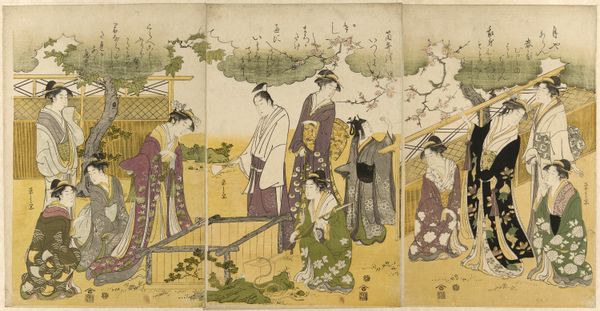
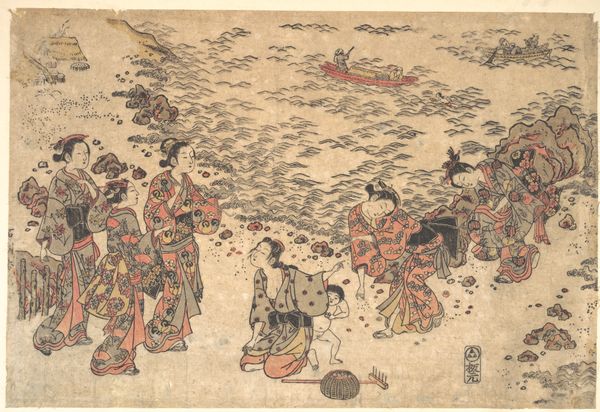
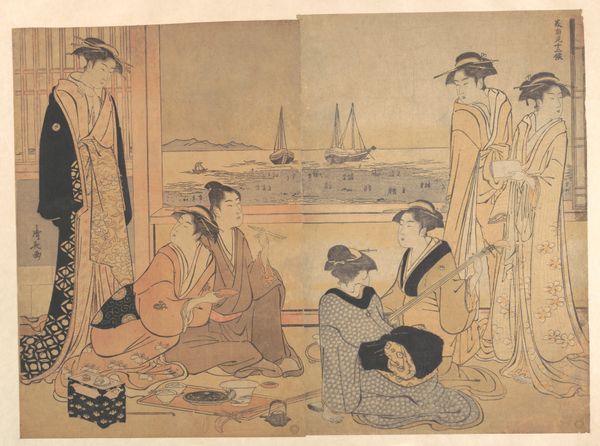
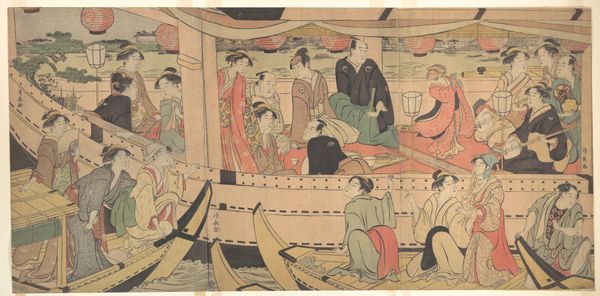
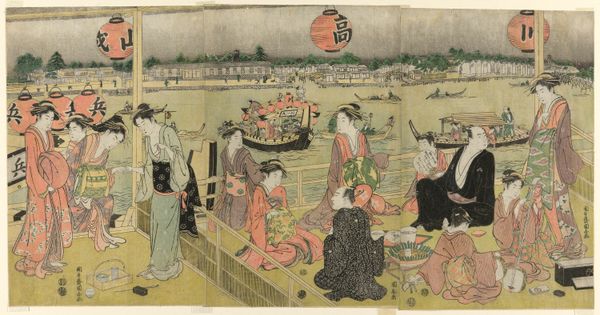
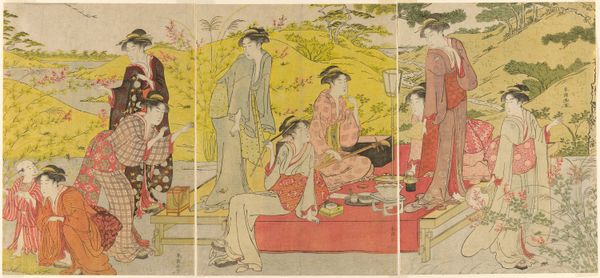
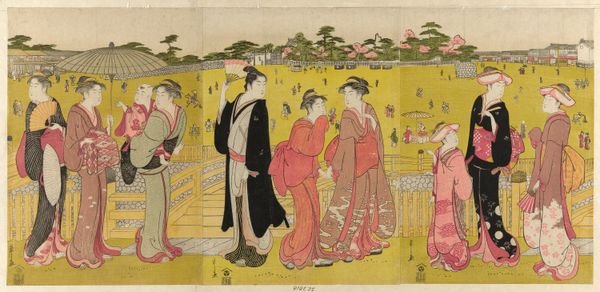
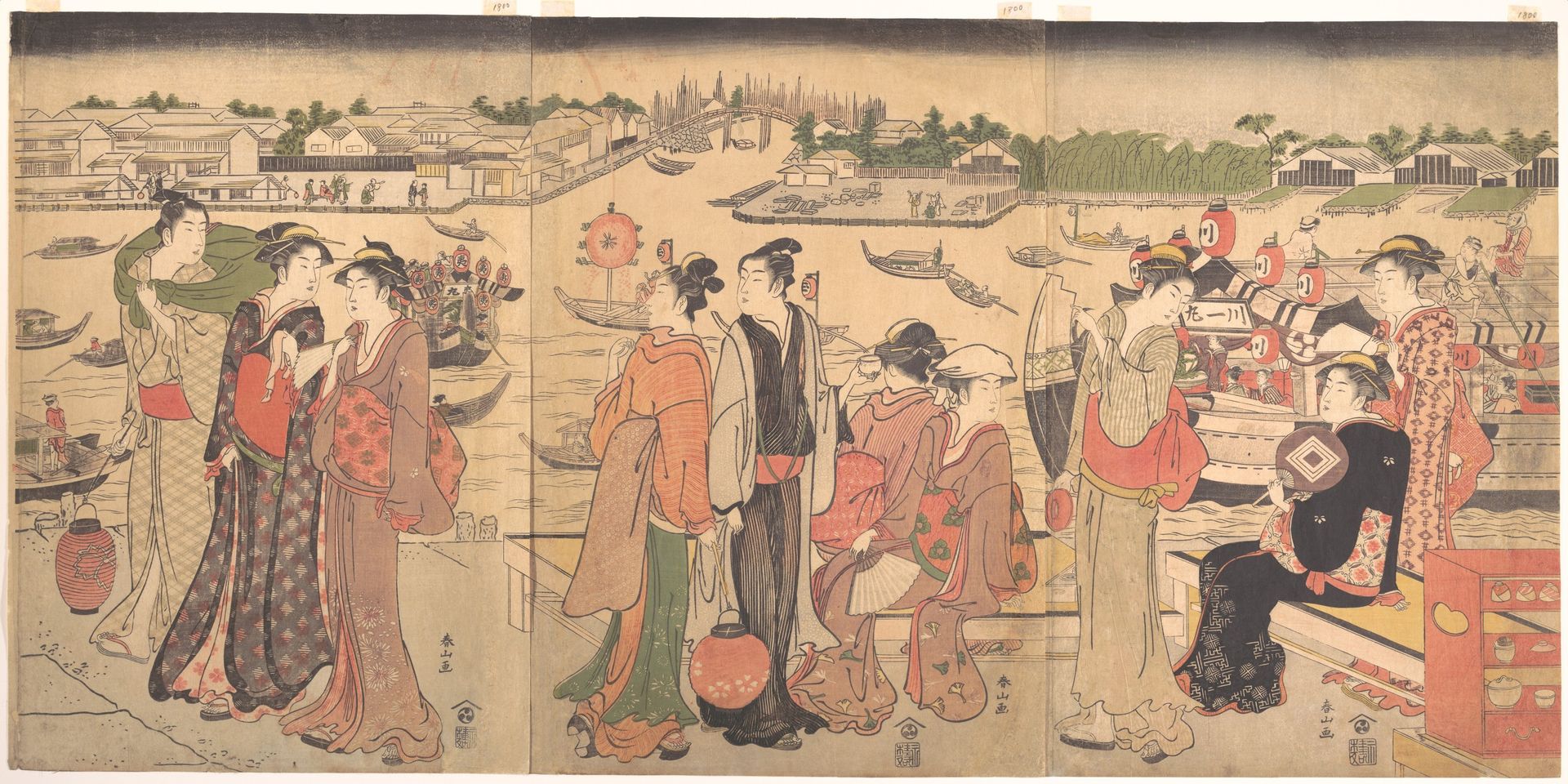
Katsukawa Shunzan made this woodblock print called ‘Festival by the Sumida River’ sometime in the late 18th century. It captures the vibrant atmosphere and social interactions of a festival in Edo-period Japan. The Sumida River was a vital waterway for commerce and leisure, and festivals were important social events. Woodblock prints like this one played a crucial role in disseminating images of popular culture to a broad audience. They were often commissioned by publishers and sold in print shops, shaping public perceptions of beauty and fashion. Here, the artist presents women in elegant kimonos, enjoying the festivities along the riverbank, with details on their clothing and hairstyles that offer insights into the fashion trends and social customs of the time. These prints reflect the values and aspirations of a rapidly changing urban society. By studying these visual representations alongside historical documents, we can gain a deeper understanding of the cultural dynamics that shaped Edo-period Japan.
Festival by the Sumida River
1767 - 1799


Artwork details
- Medium
- print, woodblock-print
- Dimensions
- A: H. 15 in. (38.1 cm); W. 10 1/4 in. (26 cm) B: H. 14 15/16 in. (37.9 cm); W. 10 1/4 in. (26 cm) C: H. 14 7/8 in. (37.9 cm); W. 10 1/4 in. (26 cm)
- Location
- Metropolitan Museum of Art, New York, NY
- Copyright
- Public Domain
Tags
Comments
Share your thoughts
About this artwork
Katsukawa Shunzan made this woodblock print called ‘Festival by the Sumida River’ sometime in the late 18th century. It captures the vibrant atmosphere and social interactions of a festival in Edo-period Japan. The Sumida River was a vital waterway for commerce and leisure, and festivals were important social events. Woodblock prints like this one played a crucial role in disseminating images of popular culture to a broad audience. They were often commissioned by publishers and sold in print shops, shaping public perceptions of beauty and fashion. Here, the artist presents women in elegant kimonos, enjoying the festivities along the riverbank, with details on their clothing and hairstyles that offer insights into the fashion trends and social customs of the time. These prints reflect the values and aspirations of a rapidly changing urban society. By studying these visual representations alongside historical documents, we can gain a deeper understanding of the cultural dynamics that shaped Edo-period Japan.
Comments
Share your thoughts